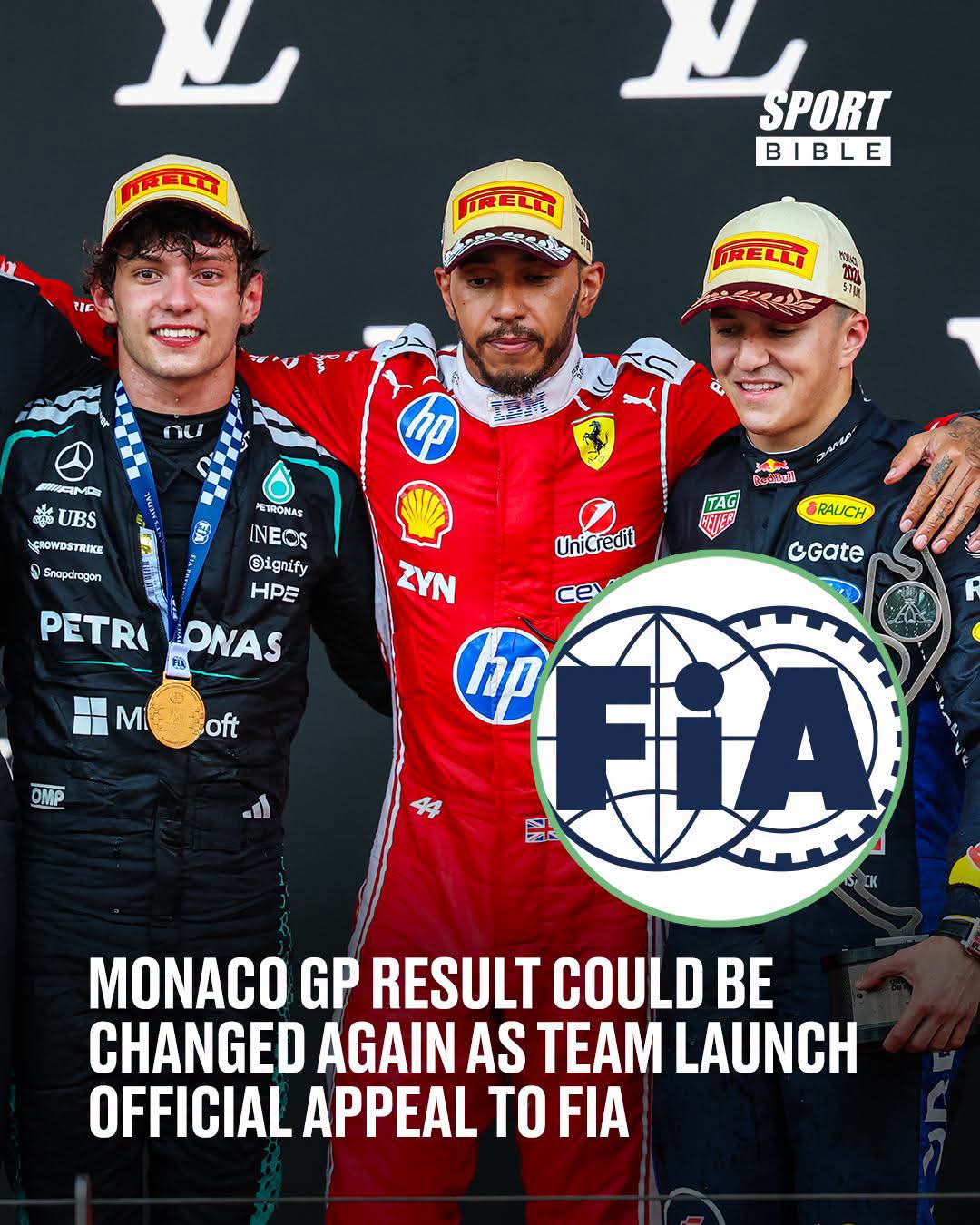
The fallout from the 2026 Monaco Grand Prix may not be over just yet. Days after the chequered flag fell in Monte Carlo, Alpine has officially launched a review of the penalty that stripped Pierre Gasly of a long-awaited podium finish, opening the door for another dramatic change to the race classification.
What initially looked like a settled result could now become one of the most controversial officiating stories of the season. If Alpine succeeds in its challenge, the finishing order could be rewritten, championship points redistributed, and fresh questions raised about Formula 1’s pit lane enforcement procedures.
With the Barcelona-Catalunya Grand Prix approaching, the Monaco controversy has suddenly become one of the biggest talking points in the paddock.
WHY ALPINE IS FIGHTING THE MONACO PENALTY
Pierre Gasly crossed the finish line in third place at Monaco, delivering what appeared to be one of Alpine’s strongest performances in recent years.
However, celebrations quickly turned into frustration when the French driver was hit with penalties for a pit lane speeding infringement. The punishment ultimately dropped him from the podium positions down to seventh in the final classification.
The controversy stems from Monaco’s unusually strict pit lane policing, where several drivers were penalized for exceeding the speed limit by incredibly small margins.
Gasly was among drivers recorded at just 60.1 km/h in a pit lane restricted to 60 km/h.
For Alpine, the issue is not simply the penalty itself. The team believes there may be grounds to challenge how the infringement was detected and measured, which is why it has requested a formal right of review.
THE FIA’S REVIEW PROCESS EXPLAINED
A right of review is not a straightforward appeal.
Under FIA regulations, Alpine must first demonstrate that it possesses a significant and relevant new element that was unavailable to the stewards when the original decision was made.
Only if that threshold is met will the FIA proceed to re-examine the penalty itself.
Historically, these reviews are difficult to win. Teams rarely succeed because the FIA requires compelling new evidence rather than simple disagreement with a ruling.
That makes Alpine’s challenge particularly intriguing.
The team would not be investing resources into the process unless it believed there was a realistic possibility of exposing a flaw in the original decision.
THE PIT LANE SPEEDING CONTROVERSY REFUSES TO GO AWAY
One reason this story has gained so much attention is the unusual number of pit lane speeding penalties handed out during the Monaco Grand Prix weekend.
Several drivers found themselves punished for exceeding the limit by the smallest possible margins. This immediately sparked discussions among drivers, engineers, and analysts about the precision of Formula 1’s timing systems.
Questions emerged regarding pit entry lines, transponder locations, and measurement consistency.
Although FIA officials have publicly stated that no irregularities were found within their systems, the sheer volume of penalties raised eyebrows throughout the paddock.
When multiple experienced Formula 1 drivers fall foul of the same rule during a single event, it naturally invites scrutiny.
WHO STANDS TO BENEFIT IF THE APPEAL SUCCEEDS?
The most obvious beneficiary would be Pierre Gasly himself.
If his penalty were overturned, he would regain third place and secure Alpine’s first podium finish in a significant period. Such a result would provide a major morale boost for both driver and team during a challenging season.
However, the ripple effects extend far beyond Gasly.
Several drivers who inherited positions due to the penalty would be pushed down the order. That includes drivers from Racing Bulls and McLaren, potentially costing them valuable championship points.
In a season where every point matters, even a small adjustment can influence both championship battles and financial rewards at the end of the year.
THE CONSTRUCTORS’ CHAMPIONSHIP COULD SEE A MAJOR SWING
Perhaps the most significant consequence involves the Constructors’ Championship.
Alpine currently finds itself locked in a fierce midfield battle where point margins remain extremely tight.
A restored podium would dramatically increase Alpine’s advantage over direct rivals, particularly Racing Bulls, who benefited significantly from Monaco’s revised classification.
The difference between third and seventh is not merely symbolic. It represents a substantial points swing that could influence championship positions for months.
In modern Formula 1, finishing one place higher in the Constructors’ standings can be worth millions in prize money and additional commercial benefits.
WHAT ABOUT THE OTHER PENALIZED DRIVERS?
One of the most complicated aspects of the situation is the precedent it could create.
Several drivers served their penalties during the race and saw their results compromised as a consequence.
If Gasly’s sanction is ultimately removed, rival teams may begin questioning why their own penalties remain in place.
That does not necessarily mean additional reviews would be successful, but it would certainly intensify scrutiny on Monaco’s officiating decisions.
Formula 1 teams pay close attention to consistency, and any perception of unequal treatment tends to become a major talking point very quickly.
WHY THIS STORY MATTERS BEYOND MONACO
This dispute is about more than one podium finish.
It touches on a larger issue facing Formula 1: the balance between strict rule enforcement and practical racing realities.
Technology has become so precise that penalties can now be triggered by fractions of a kilometer per hour. While consistency is essential, many fans and drivers question whether punishments for such tiny infractions always serve the spirit of competition.
Monaco has reignited that debate.
The outcome of Alpine’s review could influence how pit lane regulations are interpreted and enforced in future races, especially under the increasingly sophisticated systems used in modern Formula 1.
WHAT HAPPENS NEXT?
The FIA hearing represents Alpine’s first hurdle.
If officials determine that the team has presented new and relevant evidence, a second stage review could follow. Only then would the original penalty itself be reconsidered.
At this stage, predicting the outcome remains difficult.
The FIA rarely overturns race penalties after the fact, which means Alpine faces an uphill battle. However, the unusual circumstances surrounding Monaco’s pit lane speeding penalties make this case more intriguing than most.
For now, Kimi Antonelli’s dominant Monaco victory remains secure, as does Isack Hadjar’s breakthrough podium finish. But further down the order, uncertainty remains.
And until the FIA reaches its final decision, one of the most dramatic races of the 2026 Formula 1 season may still have another twist left to come.