Ferrari arrived in Mexico City with genuine momentum. Performance upgrades had delivered a clear step forward, and the red cars locked out the front of the grid. By Turn 4 on the opening lap, Lewis Hamilton and Charles Leclerc were running one-two. In a race where overtaking is notoriously difficult, that position should have been decisive. Instead, the two teammates collided in a messy, avoidable scrap that sent both wide, handed Max Verstappen the lead, and left Fred Vasseur seething.
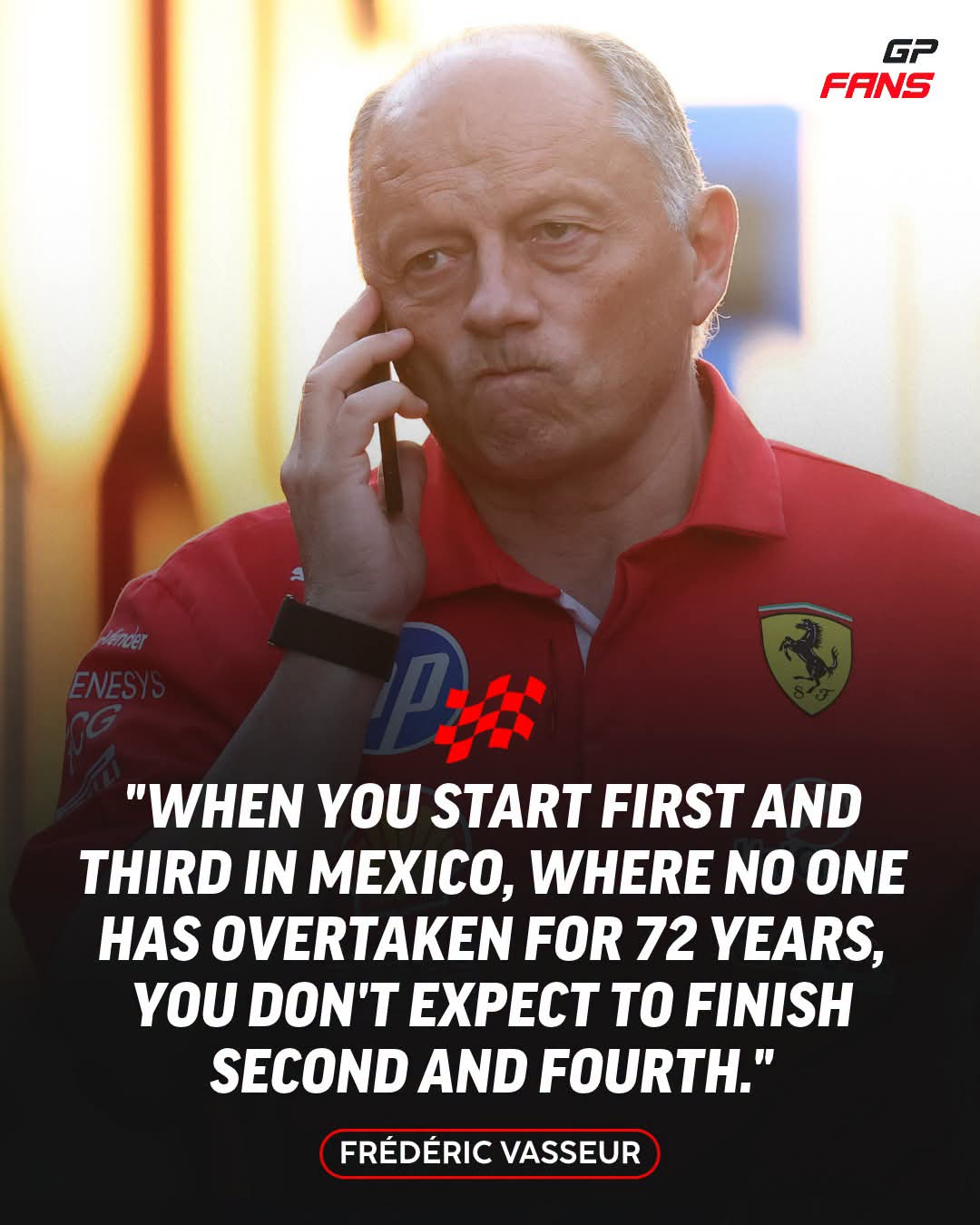
The Ferrari team principal did not hide his anger. He described the result as hard to swallow, a lack of respect for the brand, the sponsors, and the roughly 2,000 people working day and night at the factory. When you sit one-two at that point of the circuit, he said, you do not expect to leave without the win. Yet that is exactly what happened.
THE FIRST-LAP MELTDOWN THAT COST FERRARI THE RACE
Hamilton started from pole. Leclerc launched strongly into second. The pair then fought hard through the opening corners. Contact and track limits followed. Leclerc cut across the circuit between Turns 4 and 5, collecting a time penalty. Hamilton ran wide and dropped behind Verstappen. What should have been a controlled Ferrari one-two turned into a recovery exercise. Verstappen controlled the race from the front and took the victory. Hamilton recovered to second. Leclerc finished fourth.
The layout of the Autódromo Hermanos Rodríguez has long punished early-lap aggression. Narrow sections and limited overtaking opportunities mean small mistakes become massive. Ferrari knew this. Previous seasons had already shown how easily a strong starting position can evaporate in Mexico. That knowledge made the clash even harder for Vasseur to accept.
WHY VASSEUR’S ANGER RUNS DEEPER THAN ONE RACE
This was not an isolated moment of poor judgment. Hamilton and Leclerc have had previous on-track friction this season. Each time, the team has tried to manage the situation with quiet discussions and public calls for calm. Mexico crossed a line. Vasseur framed the issue as one of respect rather than pure racing instinct. Drivers race for themselves in the heat of the moment, but they also represent a larger organization. When personal battles cost the team a win that was sitting on the table, the collective effort of the entire staff is undermined.
The timing amplifies the damage. Ferrari had finally shown the kind of pure pace that can challenge at the front consistently. Throwing that away in the opening corners wastes not only points but also the psychological boost that comes with converting performance into results. For a team still rebuilding its championship credentials, these moments matter.
THE IMPACT ON HAMILTON, LECLERC, AND THE FERRARI PROJECT
Hamilton has never been shy about expressing frustration when he feels opportunities are lost through team-mate interference. His radio messages and body language after the race made clear he was not happy. Leclerc, for his part, has always raced hard and has previously argued that simply handing position over can open the door for rivals. Both perspectives contain truth. Both also ignore the bigger picture when the team is in a position to dominate.
The drivers now face internal conversations that will test the delicate balance Ferrari has tried to maintain. Open warfare would be disastrous. Clear team orders or stricter first-lap protocols may be required. History shows that unresolved driver tension eventually leaks into strategy, morale, and public messaging. Ferrari cannot afford that distraction while the car is competitive.
For the broader organization the cost is real. Development resources, sponsor expectations, and the energy of the workforce all suffer when race-day execution fails. A win in Mexico would have been a statement. Instead, the team left with a sour second and fourth and a public dressing-down from its own boss.
WHAT THIS MEANS FOR THE CHAMPIONSHIP AND THE SPORT
Kimi Antonelli sealed the drivers’ title with a podium finish, becoming Formula 1’s youngest world champion. The Mexican Grand Prix will be remembered for that landmark and for Verstappen’s opportunistic win. Ferrari’s self-inflicted wound will sit in the footnotes as a cautionary tale.
The constructors’ battle remains open. Points left on the table in Mexico will be felt later in the season. More importantly, the episode raises questions about how modern Formula 1 teams manage two elite, highly competitive drivers in an era of intense media scrutiny and tight performance margins. Allowing free racing sounds pure. It becomes expensive when the cars collide and the result is gifted to a rival.
LOOKING AHEAD: CLEAR AIR OR MORE STORMS
São Paulo arrives quickly. Ferrari has another chance to convert pace into a win, and the team will want to demonstrate that the Mexico mess has been addressed. Expect frank internal meetings, possible adjustments to race protocols, and careful public messaging designed to show unity.
Whether Vasseur’s visible anger produces lasting change remains to be seen. Drivers of Hamilton and Leclerc’s calibre do not suddenly become passive. The challenge for Ferrari is to channel that competitiveness toward external rivals rather than each other. If the team can solve that internal equation, the performance gains already made can still deliver the results the factory deserves. If not, Mexico will be remembered as the day a certain victory slipped away because the red cars could not stay out of each other’s way.
Formula 1 rarely forgives such moments. Fred Vasseur made sure everyone understood that on Sunday night. The coming weeks will show whether the message landed.