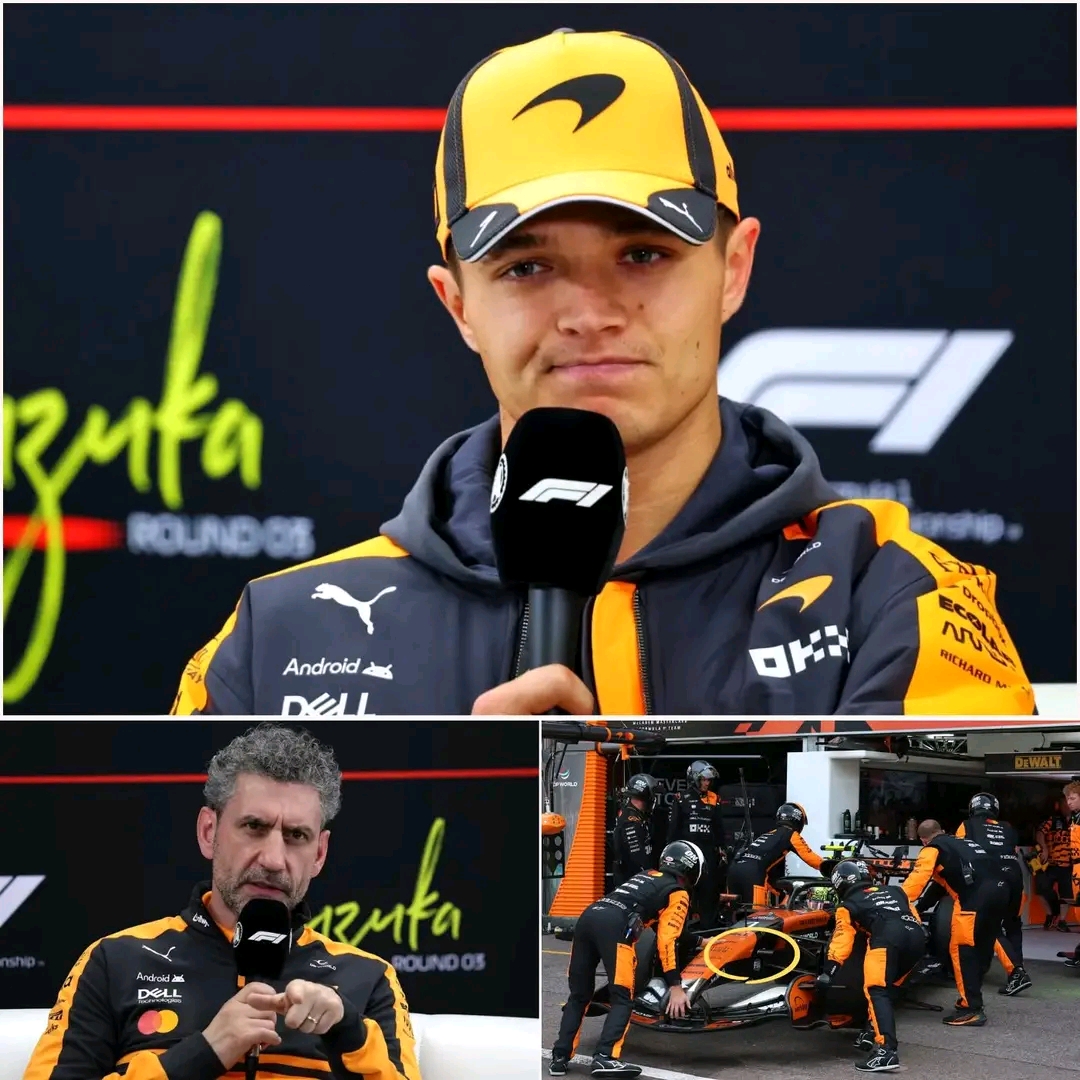
A wave of tension has reportedly emerged around Lando Norris following claims of frustration over repeated issues with his car, often referred to in discussions as the MCL40.
According to circulating paddock reports, Norris expressed anger about ongoing performance inconsistencies, suggesting that repeated “fixes” to his car have been short-term solutions rather than real progress. The emotional tone of the comments has fueled speculation about internal pressure within McLaren Racing.
While the exact wording and context remain debated in media circles, the story has quickly gained traction because it touches on one of Formula 1’s most sensitive topics: perceived fairness between teammates.
WHY THIS STORY MATTERS IN FORMULA 1
Even when teams deny internal conflict, stories like this matter because they strike at the core of modern F1 performance dynamics.
McLaren is one of the closest midfield-to-front-running projects in Formula 1 right now. With both Norris and teammate Oscar Piastri pushing for podiums, any hint of imbalance can quickly become a championship storyline rather than just a garage issue.
In elite racing, the smallest perception of unequal development can affect:
Driver confidence under pressure
Engineering direction and upgrades
Qualifying performance gaps
Long-term contract and team loyalty discussions
Even if no favoritism exists, perception alone can shape media narratives and fan debates.
MCLAREN’S DEVELOPMENT CHALLENGE UNDER THE SPOTLIGHT
McLaren’s recent technical progress has been widely praised, but it has also introduced a difficult balancing act.
Upgrades in Formula 1 rarely perform identically for both cars at every stage. Slight setup differences, tire preparation windows, and even track evolution can create performance gaps that look like favoritism from the outside.
This is where internal communication becomes critical. If one driver feels updates are not translating equally, frustration can build quickly, especially when championship points are on the line.
For a team fighting at the sharp end again, these issues are not unusual. But they are highly visible.
ANDREA STELLA’S REPORTED RESPONSE AND TEAM UNITY MESSAGE
Team principal Andrea Stella is said to have addressed the growing noise directly, strongly dismissing any suggestion that McLaren is prioritizing one driver over another.
The message from the team leadership, as reported, appears focused on reinforcing internal unity and protecting the working relationship between engineers and drivers.
From a management perspective, this kind of public response is important because:
It prevents escalation into a media-driven controversy
It reassures sponsors and stakeholders
It protects driver morale inside the garage
It reduces external pressure during development cycles
Stella’s approach reflects McLaren’s broader culture shift in recent years toward transparency and structured teamwork.
DRIVER DYNAMICS: NORRIS VS PIASTRI
The pairing of Norris and Piastri remains one of the most competitive in Formula 1.
Norris brings experience, consistency, and leadership within the team structure. Piastri brings calm execution, rapid learning, and racecraft that continues to improve at a high rate.
When two closely matched drivers push each other, even minor setup differences can appear magnified. That is often where internal tension narratives emerge, even if the reality is far more technical than emotional.
This dynamic is not unique to McLaren. It is a recurring theme in top teams where both drivers are expected to score heavily every weekend.
IMPACT ON THE CHAMPIONSHIP PICTURE
If McLaren continues to fight at the front, internal harmony becomes as important as raw pace.
Any disruption between drivers could indirectly affect:
Race strategy execution
Pit wall decision-making confidence
Qualifying experimentation risk levels
Long-run development direction
For Norris specifically, maintaining consistency is crucial if he wants to stay in long-term championship contention. For Piastri, continued strong performances strengthen his position as a future title contender.
WHAT HAPPENS NEXT FOR MCLAREN
Looking ahead, McLaren’s priority will likely be to calm speculation and focus on data-driven performance validation.
Expect the team to:
Continue emphasizing equal treatment policies
Refine upgrade evaluation tools across both cars
Reinforce internal communication between engineers and drivers
Avoid public disputes during high-pressure race weekends
The next few races will be key in determining whether this story fades or evolves into a deeper narrative about intra-team competition.
FINAL THOUGHTS: MORE NOISE THAN CRISIS?
At this stage, the situation appears more like amplified frustration than a structural team crisis. Formula 1 teams regularly deal with uneven performance perceptions, especially when margins are tight.
However, when drivers of Norris’ and Piastri’s caliber are involved, even small comments can quickly become major headlines.
For McLaren, the real test is not just speed on track, but stability off it. If they can keep both drivers aligned, they remain one of the strongest forces in modern Formula 1 development.
If not, internal pressure could become as challenging as any rival on the grid.