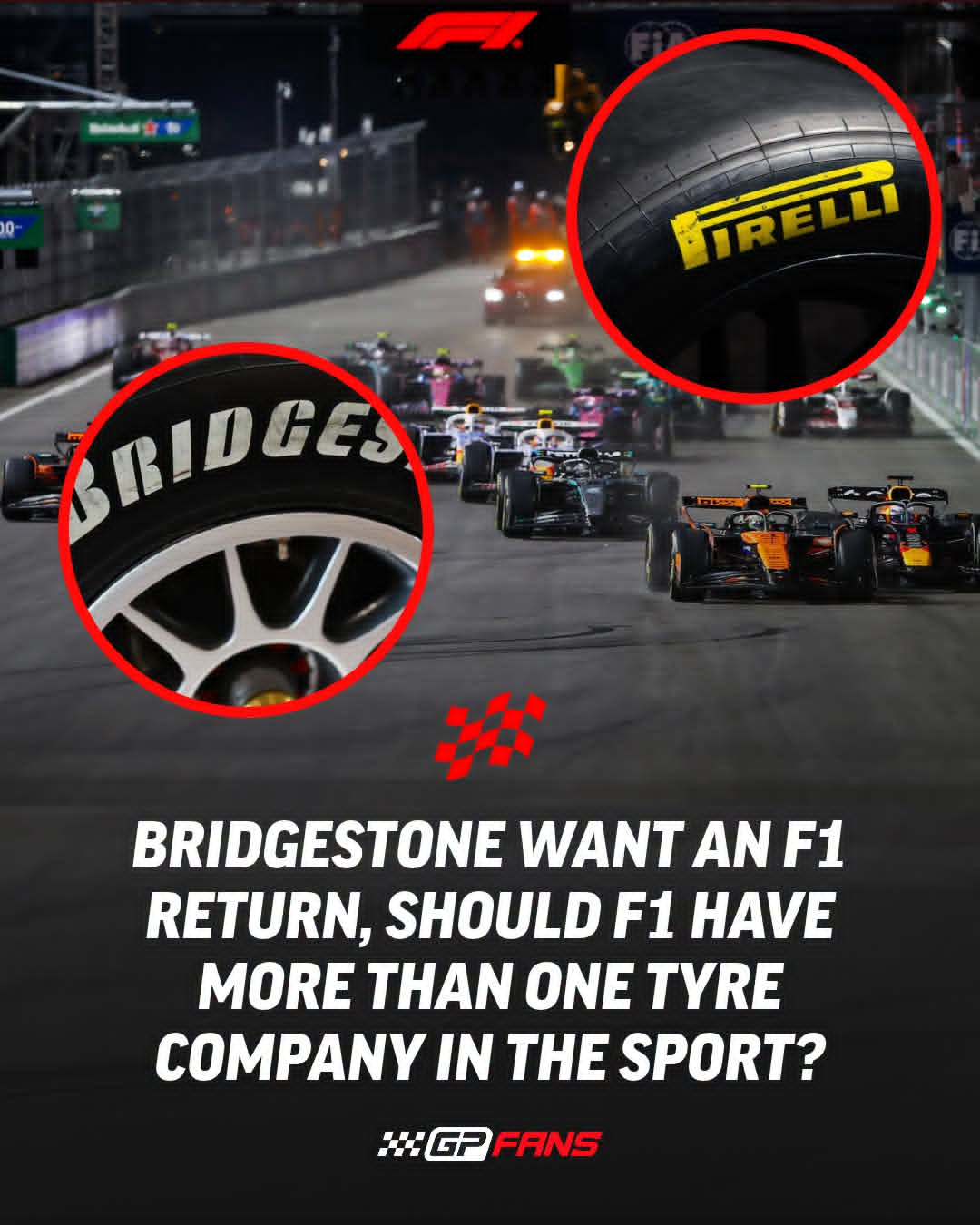
Formula 1 fans of a certain vintage still get a rush remembering the raw intensity of the Bridgestone versus Michelin battles that defined the early 2000s. Different compounds, different philosophies, different strengths at different tracks — and the constant suspicion that the championship could be decided as much by rubber as by the cars and drivers themselves. Now, nearly two decades after that era ended, the question is back on the table: could another tyre war be brewing?
Reports emerging in late October 2026 indicate that Bridgestone is actively preparing a serious bid to return as Formula 1’s tyre supplier once Pirelli’s current exclusive deal expires at the end of 2028. Senior Bridgestone representatives have been spotted at recent races, including Singapore and the United States Grand Prix, holding background discussions. The Japanese manufacturer is said to be assembling a stronger technical, commercial and business package than the one that fell just short in the previous tender process.
Pirelli has been the sole supplier since 2011. Its contract was extended through 2028 earlier this year. That means any change would only take effect from the 2029 season at the earliest. Michelin and Hankook have also been linked with potential interest, raising the possibility of a competitive tender rather than a simple renewal.
**THE GHOST OF THE EARLY 2000S TYRE WAR**
Between 2001 and 2006, Bridgestone and Michelin fought a genuine technological and sporting battle. Teams split into camps. Some circuits favoured one manufacturer’s construction and compounds over the other. Drivers and engineers spent countless hours trying to extract the maximum from their allocated rubber while watching rivals on the other brand. The competition pushed development hard, produced dramatic races, and occasionally created chaos — most notoriously at the 2005 United States Grand Prix, when Michelin teams withdrew over safety concerns on the Indianapolis banking, leaving only six Bridgestone cars to race.
That era ended when Michelin withdrew after 2006. Bridgestone became the sole supplier until the end of 2010. Pirelli then took over with a clear brief: produce tyres that degrade in a controlled way to create strategic variety and overtaking opportunities. The single-supplier model has delivered consistency, cost control, and a more predictable (if sometimes controversial) show. It has also removed the pure technological arms race that once existed between rival manufacturers.
**WHY A RETURN TO COMPETITION MATTERS NOW**
Formula 1 has never been more popular or commercially powerful. Global audiences, massive investment from manufacturers, and a calendar that spans continents make the tyre supply contract one of the most valuable marketing and engineering platforms in motorsport. For Bridgestone, a return would reconnect the company with its most high-profile racing heritage after years focused on other series, including its upcoming role as exclusive supplier in Formula E from the 2026/27 season and its ongoing work through Firestone in IndyCar.
A competitive tender could force all parties — including the incumbent Pirelli — to raise their game. Better wet-weather performance has been a recurring driver complaint for years. Greater longevity or more consistent warm-up characteristics could change how teams approach race weekends. Different construction philosophies might suit certain car characteristics better than others, potentially shaking up the competitive order in ways a single supplier cannot.
Yet the sport has deliberately avoided multi-supplier arrangements for good reason. Parallel development programmes are enormously expensive. Logistics become more complex. Safety and parity concerns multiply. The 2005 Indianapolis fiasco remains a cautionary tale. Modern F1 also operates under tighter budget constraints and sustainability targets that make open-ended tyre wars less attractive than they once were.
**IMPACT ON TEAMS, DRIVERS AND THE CHAMPIONSHIP**
For the teams, a new supplier (or the threat of one) would force a major adaptation. Chassis, suspension and aerodynamic setups are tuned to the characteristics of the current Pirelli range. A switch would require significant development time and could temporarily favour teams that adapt fastest. Drivers would need to relearn tyre management techniques that have become second nature under the current regulations.
The championship itself could become less predictable in the short term. New compounds and constructions often produce unexpected performance swings between tracks with different surfaces, temperatures and corner types. That uncertainty can produce classic underdog stories and strategic masterclasses — or frustrating weekends where the “wrong” tyre choice decides results before the lights go out.
For the broader industry, a high-profile return by Bridgestone (or interest from Michelin) signals that the commercial value of Formula 1 continues to grow. Tyre manufacturers invest hundreds of millions over multi-year cycles. Success in F1 still carries enormous brand prestige that filters down to road-car sales and other racing programmes.
**PREDICTIONS AND THE REALITY CHECK**
A full-scale tyre war with two or more suppliers on the grid simultaneously looks unlikely. Cost, complexity and the lessons of the past all point toward continued exclusivity. The more probable outcome is a competitive tender for the exclusive rights from 2029 onward, with Bridgestone mounting a strong challenge and Pirelli fighting hard to retain the business it has held for nearly two decades.
Michelin’s long-standing philosophical objection to deliberately high-degradation tyres remains a significant barrier for the French company. Hankook has shown interest in the past but would face a steep learning curve. Bridgestone’s combination of historical pedigree, current motorsport activity, and apparent internal determination makes it the most credible challenger.
Whatever happens, the next tender will be closely watched. Formula 1 has thrived under the single-supplier model, but the nostalgia for the cut-and-thrust of the Bridgestone-Michelin years has never fully faded. Even the possibility of change injects fresh intrigue into a sport that constantly balances technological freedom against sporting fairness and commercial reality.
The rubber may still be controlled by one manufacturer for years to come. But the conversation about what comes next has already begun — and for fans who remember the last great tyre war, that alone is enough to raise the pulse.