MARTIN BRUNDLE DELIVERS PAINFUL VERDICT ON OSCAR PIASTRI AS MCLAREN STAR STRUGGLES WITH 2026 F1 CARS
Oscar Piastri entered the 2026 Formula 1 season carrying the expectations of a driver who had come agonisingly close to becoming world champion. His performances throughout much of 2025 established him as one of the sport’s most exciting young talents, but the arrival of a radically different generation of cars has transformed his campaign into a frustrating battle for consistency.
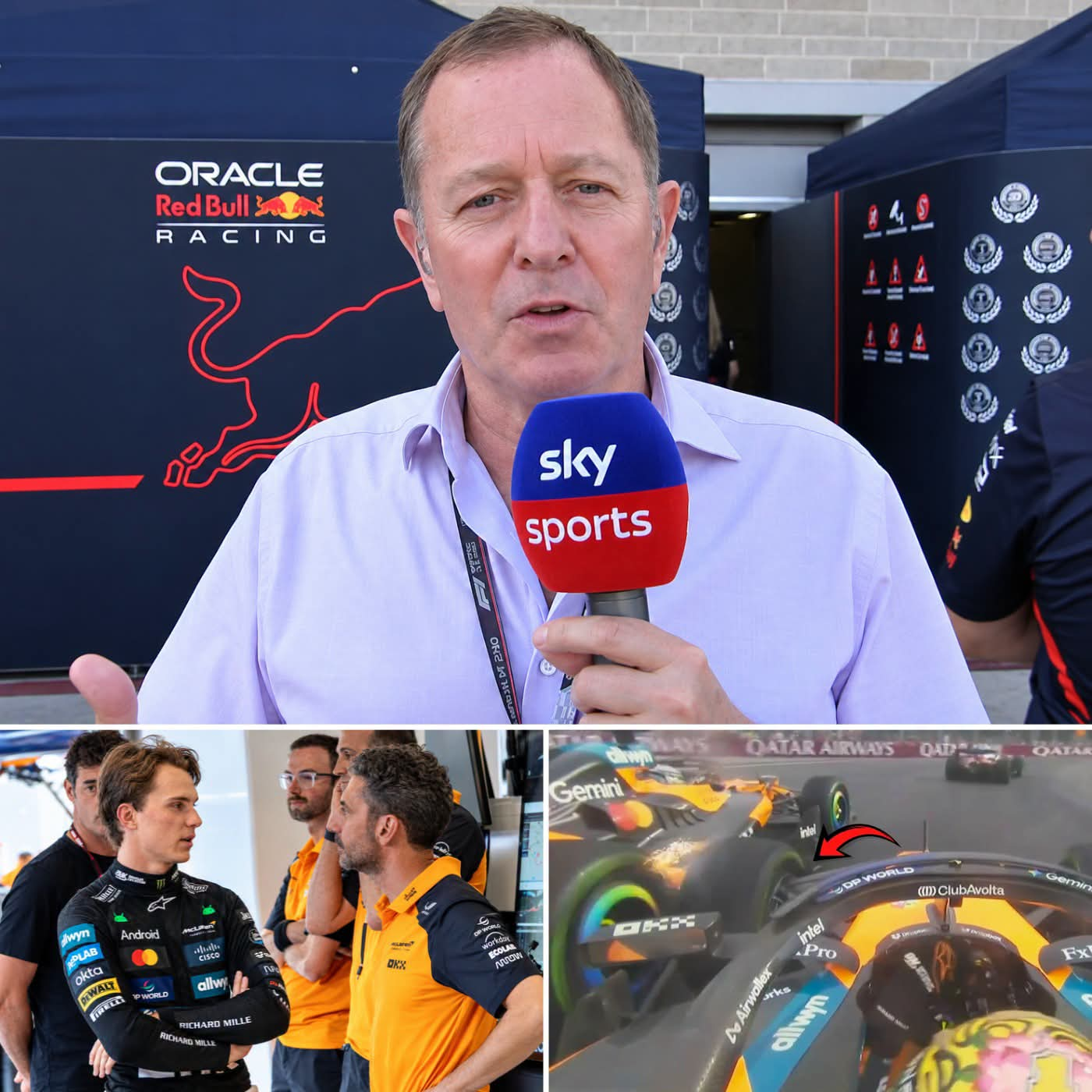
Now, former Formula 1 driver and Sky Sports commentator Martin Brundle has delivered a sobering assessment of the Australian’s struggles, describing his difficulties as “painful to witness” after last season’s impressive performances. Writing in his Sky Sports column following the United States Grand Prix, Brundle questioned Piastri’s lack of front-running pace and highlighted how difficult he has found adapting to the 2026 machinery. <Cite refs={[“turn749884search1″,”turn749884search0”]}/>
For McLaren, the situation is becoming increasingly important. Piastri remains an exceptionally talented driver, but his difficulties have raised questions about the relationship between his natural driving style, the characteristics of the MCL40 and Formula 1’s new technical regulations.
The central question is no longer simply whether Piastri can recover his earlier form. It is whether McLaren can help him unlock the car’s potential before another season passes without a serious championship challenge.
MARTIN BRUNDLE EXPLAINS WHY PIASTRI’S DECLINE IS SO DIFFICULT TO WATCH
Brundle’s assessment carries weight because he understands the difference between raw speed and consistently extracting performance from a Formula 1 car.
Piastri’s 2025 campaign demonstrated that he could challenge established stars, manage pressure and fight for victories. His ability to remain composed in difficult situations became one of his defining characteristics.
The contrast with 2026 has therefore been striking.
At the United States Grand Prix, Piastri qualified seventh and finished in the same position, unable to make meaningful progress through the field. His McLaren teammate Lando Norris finished fifth, while race winner Kimi Antonelli finished well ahead.
Brundle highlighted Piastri’s lack of front-running pace and his difficulty adapting to the latest cars. His criticism was not simply about one disappointing result; it reflected a wider pattern of inconsistent performances throughout the season. <Cite refs={[“turn749884search0″,”turn749884search1”]}/>
That distinction matters. Every driver has difficult weekends, but repeated struggles can expose deeper problems with car balance, driving technique or confidence.
For Piastri, the challenge is to rediscover the consistency that made him such a formidable competitor during the previous campaign.
WHY THE 2026 F1 CARS HAVE CREATED SUCH A CHALLENGE
Formula 1’s 2026 technical reset has changed how drivers approach a lap.
The new generation combines revised aerodynamic concepts, active aerodynamics and a greater emphasis on electrical power and energy management. Drivers must adapt their braking, acceleration and cornering techniques while working within a different performance window.
These changes have not affected every driver equally.
Some can adjust quickly to changing grip levels and an unpredictable car. Others perform best when they can build a consistent rhythm, understand the car’s behaviour and gradually refine their approach.
McLaren team principal Andrea Stella has previously explained that Piastri’s strength lies in building references and improving progressively from lap to lap. More variable conditions can make that process harder, while Norris has demonstrated an ability to adapt quickly when the car slides or its behaviour changes. <Cite refs={[“turn749884search0″,”turn749884search8”]}/>
This provides a more nuanced explanation for Piastri’s struggles than simply suggesting that he has lost his ability.
His talent has not suddenly disappeared. Instead, the environment in which that talent must operate has changed significantly.
PIASTRI’S NATURAL DRIVING STYLE MAY BE PART OF THE PROBLEM
One of the most revealing aspects of McLaren’s analysis is the possibility that techniques which helped Piastri succeed in 2025 are not working as effectively with the 2026 car.
A driver develops habits and preferences over years of competition. These can include how aggressively they approach a corner, how they manage tyre temperatures, when they apply throttle and how they respond to understeer or oversteer.
When a new car rewards different techniques, a driver may have to abandon some of those instincts.
Piastri has acknowledged that adapting to the MCL40 has been challenging and that some of the approaches that worked well for him last season have become weaknesses under the new regulations. However, he has also reported making progress as he and the team learn more about the car. <Cite refs={[“turn749884search3″,”turn749884search4”]}/>
That process can be particularly difficult for a driver who previously felt comfortable pushing at the limit.
The solution is not necessarily to drive more aggressively. Sometimes it means changing braking references, accepting a different corner-entry speed or adjusting how the car is positioned through a sequence of corners.
Those changes take time, repetition and confidence.
LANDO NORRIS IS MAKING THE COMPARISON MORE UNCOMFORTABLE
Piastri’s struggles would attract attention on their own, but the situation has become more complicated because of Norris.
The two drivers share the same team, yet their ability to extract performance from the MCL40 has differed across several weekends.
At the United States Grand Prix, Norris finished fifth after starting eighth, while Piastri finished seventh from seventh on the grid. McLaren had also instructed Piastri to let Norris through during the race after assessing their relative pace and the opportunity to attack cars ahead. <Cite refs={[“turn749884search2″,”turn749884search10”]}/>
Team orders are not unusual in Formula 1. They are often used when a team believes one driver has a better opportunity to challenge rivals or secure a stronger result.
Nevertheless, such decisions can intensify scrutiny when one teammate is consistently outperforming the other.
For Piastri, the immediate priority is to reduce that gap. Matching Norris more regularly would strengthen his position inside McLaren and provide evidence that the adaptation process is producing results.
For the team, the challenge is to support both drivers without allowing their contrasting performances to become a distraction from improving the car.
THE CHAMPIONSHIP NUMBERS SHOW HOW MUCH HAS CHANGED
The statistical contrast between Piastri’s two campaigns illustrates why his current situation has become such a talking point.
After challenging for the 2025 championship, the Australian has spent much of 2026 fighting to recover his consistency. By the latest standings following the United States Grand Prix, he sat seventh with 144 points, while Norris had accumulated 211. <Cite refs={[“turn749884search2″,”turn749884search10”]}/>
That 67-point difference represents a significant gap between teammates who share the same machinery.
Piastri has still delivered encouraging performances, including podium finishes in Japan and Miami. Those results demonstrate that he remains capable of competing near the front when the circumstances and car performance come together. <Cite refs={[“turn749884search3″,”turn749884search7”]}/>
The problem is consistency.
A driver hoping to fight for a championship cannot rely on occasional strong weekends. They need to qualify competitively, manage races effectively and collect substantial points even when the car is not at its best.
Piastri’s task is to turn flashes of speed into a repeatable performance level.
MCLAREN MUST LOOK BEYOND THE DRIVER
Although the spotlight has fallen heavily on Piastri, it would be unfair to treat his struggles as a purely personal failure.
Formula 1 performance depends on the relationship between the driver, the car, the engineering team, tyre behaviour and race strategy.
A driver can provide detailed feedback and work tirelessly in the simulator, but the team must still deliver a car that allows those improvements to translate into lap time.
McLaren has been working to help Piastri understand the MCL40 and identify which characteristics need to change. Team leadership has also expressed encouragement about his growing confidence, suggesting that the team believes his adaptation is moving in the right direction. <Cite refs={[“turn749884search4″,”turn749884search9”]}/>
That makes car development especially important.
If the MCL40 has a narrow operating window or behaves unpredictably in particular conditions, adjustments to its balance and setup could make it easier for Piastri to drive consistently.
However, there is no guarantee that a single upgrade will solve the problem. The team may need a combination of technical improvements, setup experimentation and continued work on driving technique.
CAN OSCAR PIASTRI RECOVER BEFORE THE SEASON ENDS?
There are reasons for both concern and optimism.
The concern is obvious: Piastri has not been able to maintain the level of performance that placed him in contention during 2025. The gap to Norris has grown, and another disappointing result risks increasing the pressure on the Australian.
But his recent comments suggest that he does not believe the situation is hopeless.
Piastri has described the adaptation process as difficult while pointing to progress made through recent work with McLaren. The team has also indicated that his confidence is improving. <Cite refs={[“turn749884search3″,”turn749884search4″,”turn749884search9”]}/>
The remaining races will test whether those improvements can produce stronger results.
Piastri does not necessarily need to win immediately to demonstrate progress. More competitive qualifying performances, stronger race pace and fewer weekends in which he struggles to understand the car would all be encouraging signs.
The most important development would be a return to consistency.
If he can repeatedly challenge Norris and convert promising pace into solid points finishes, the narrative around his season could change quickly.
WHAT THIS MEANS FOR PIASTRI’S FUTURE AT MCLAREN
A difficult season does not automatically put a driver’s future at risk, particularly when the regulations have changed so dramatically.
Piastri has already demonstrated the speed and racecraft required to compete at the highest level. One challenging campaign cannot erase those achievements.
However, Formula 1 is an unforgiving environment. Teams must constantly assess performance, development potential and how effectively their drivers work with engineers.
Piastri’s response to this setback could therefore be as important as the results themselves.
If he can adapt his driving style, provide useful feedback and help McLaren improve the MCL40, he could emerge from the difficult period as a more complete driver.
If the struggles continue, questions about the car, his confidence and the team’s long-term plans will inevitably become louder.
For now, the evidence points to an adaptation challenge rather than a definitive verdict on his potential.
FINAL VERDICT: PIASTRI’S TALENT IS NOT THE QUESTION — ADAPTATION IS
Martin Brundle’s disappointment reflects the contrast between the Oscar Piastri who threatened to win the 2025 championship and the driver who has struggled to find consistent pace in 2026.
But the wider story is more complicated than a simple decline in form.
New regulations have changed the demands placed on drivers, McLaren’s two teammates have responded differently, and Piastri has admitted that he must rethink some of the techniques that previously worked so well.
The coming races will reveal whether his recent progress can become a genuine turnaround.
For McLaren, helping Piastri regain confidence and consistency is essential. For Piastri, the challenge is to prove that he can adapt to a new generation of Formula 1 machinery without losing the qualities that made him a championship contender.
The real test is not whether Oscar Piastri can return to his old form. It is whether he can develop a new version of himself capable of succeeding in Formula 1’s changing era.