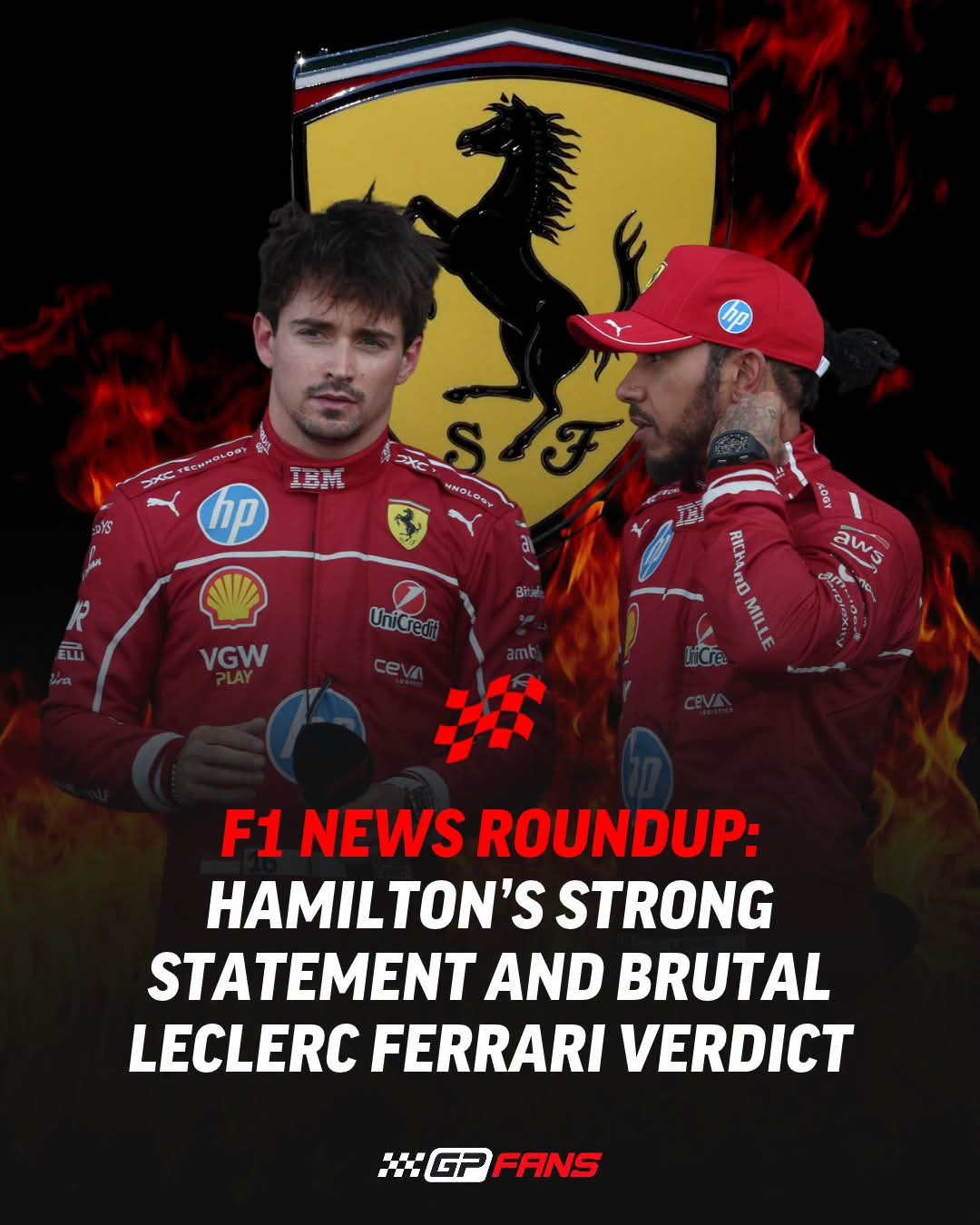
Lewis Hamilton used the United States Grand Prix weekend to deliver a clear political message, while team-mate Charles Leclerc offered one of his most candid assessments yet of Ferrari’s current standing in Formula 1. The two interventions, though very different in nature, underlined the contrasting pressures inside the Scuderia as the 2026 season enters its final phase.
Hamilton called for peace in several conflict zones, while Leclerc admitted Ferrari simply do not possess the same level of performance as their main rivals.
### HAMILTON CALLS FOR PEACE AMID RWANDA GP DISCUSSION
Asked about Formula 1’s decision to award a Grand Prix to Rwanda from the early 2030s, Hamilton expanded his answer into a broader statement on global conflicts. The seven-time world champion used the platform to say “free Congo, free Sudan, free Syria, free Palestine,” framing his comments around the need for peace.
The Rwanda race will mark Formula 1’s return to the African continent for the first time since the 1993 South African Grand Prix. The announcement has already drawn criticism from human-rights organisations, who accuse the country of using sport to improve its international image. Hamilton’s decision to address wider issues of conflict and freedom reflects his long-standing willingness to speak on matters beyond the racetrack.
His comments ensure that the discussion around the new African Grand Prix will continue to carry a political dimension as well as a sporting one.
### LECLERC DELIVERS BLUNT ASSESSMENT OF FERRARI
On the track, Leclerc was equally direct about Ferrari’s limitations. After another weekend in which strong practice form failed to translate into a front-row starting position, the Monegasque driver acknowledged that the team is not operating at the same level as its principal rivals.
Leclerc stated that competitors have “something we don’t,” a concise but damaging admission of the performance gap Ferrari have been unable to close consistently in 2026. The comment aligns with the pattern seen at the Circuit of the Americas, where both Ferrari drivers topped practice sessions only to slip to fourth and fifth in qualifying.
The team’s pace has often looked competitive in lower-pressure sessions, yet the decisive qualifying and race execution required to challenge Mercedes and Red Bull has frequently been missing.
### A MIXED PICTURE FOR THE SCUDERIA
Ferrari’s season has been defined by moments of promise followed by disappointment. Hamilton arrived at the team with the expectation of fighting for victories and championships. While there have been strong individual results, the overall package has not delivered the sustained challenge many anticipated.
Leclerc’s verdict suggests that inside the garage there is a clear-eyed recognition of the current hierarchy. The car can be quick, particularly over a single lap in practice, but it lacks the complete performance and consistency of the leading teams.
### WHAT IT MEANS GOING FORWARD
Hamilton’s willingness to address geopolitical issues ensures he remains one of the most prominent athlete-activists in global sport. Whether his comments influence the wider conversation around the Rwanda Grand Prix remains to be seen, but they add another layer to an already complex subject.
On the sporting side, Leclerc’s honesty raises the pressure on Ferrari to deliver tangible progress in the remaining races and over the winter. Admitting the gap exists is one thing; closing it is another. With only a handful of rounds left in 2026, the team’s ability to extract better results from the current car will shape both the constructors’ standings and the mood heading into next season.
In Austin, Hamilton spoke about peace. Leclerc spoke about performance. Both statements, in their different ways, revealed the realities Ferrari are currently navigating.