The Formula 1 paddock has a sharp sense of humour, and few one-liners have landed quite like the recent quip calling Max Verstappen the Audi team principal in his spare time. Accompanied by a casual thumbs-up emoji, the remark captures something real about the German manufacturer’s aggressive recruitment drive and the lingering shadow of Red Bull’s dominant years.
What started as banter among fans and paddock watchers quickly gained traction because it rests on undeniable personnel overlap. Audi did not simply buy a team and rebadge it. It systematically hired people who spent years delivering results for Verstappen at Red Bull Racing. The joke works because the connections are so tight that, from the outside, it can look as if the four-time world champion still exerts quiet influence over the new works outfit.
HOW AUDI BUILT A RED BULL-SHAPED FOUNDATION
When Audi committed to Formula 1 and took full control of the former Sauber operation for the 2026 season, it faced a classic manufacturer problem: how to accelerate from midfield or lower to genuine contender status under brand-new technical regulations. The solution was talent acquisition with a clear Red Bull flavour.
Jonathan Wheatley, long-time Red Bull sporting director and a key figure during Verstappen’s title-winning campaigns, arrived as team principal. Around him came familiar faces from the Milton Keynes garage. Lee Stevenson, who had served as Verstappen’s chief mechanic during the glory years, moved across and later stepped up into a team manager role. Matt Caller, Verstappen’s long-serving number-one mechanic, also made the switch and was lined up for a senior mechanical position.
These were not random hires. They were people who understood the intensity, the standards, and the operational culture that turned Verstappen into a serial champion. When Wheatley later told Dutch media he would love to see Max drive an Audi one day, the circle felt complete. Friendship with Verstappen, Jos Verstappen and Raymond Vermeulen was openly acknowledged, even while Wheatley stressed the team was not yet ready to make a realistic offer.
By mid-2026 the leadership picture had shifted again. Wheatley departed for personal reasons and Mattia Binotto assumed the dual role of head of the project and team principal. The Red Bull alumni remained, and the “Verstappen in his spare time” meme refused to die. It became shorthand for the idea that Audi’s operational DNA still carried a heavy imprint from the team that dominated the previous regulatory era.
WHY THE JOKE MATTERS BEYOND THE MEMES
Personnel moves of this nature are never just about individual CVs. They transfer knowledge, processes and cultural expectations. Mechanics who have worked under Verstappen’s exacting standards bring a different level of urgency and attention to detail. Engineers and managers who witnessed the systematic excellence of Red Bull’s peak years arrive with a clear benchmark for what “good enough” actually looks like.
For Audi, this matters enormously in a season defined by radical rule changes. The 2026 regulations reset both aerodynamics and power units, giving new manufacturers a theoretical chance to leapfrog established players. Success, however, still depends on execution. Having people who know how a top team operates under pressure can compress the usual learning curve.
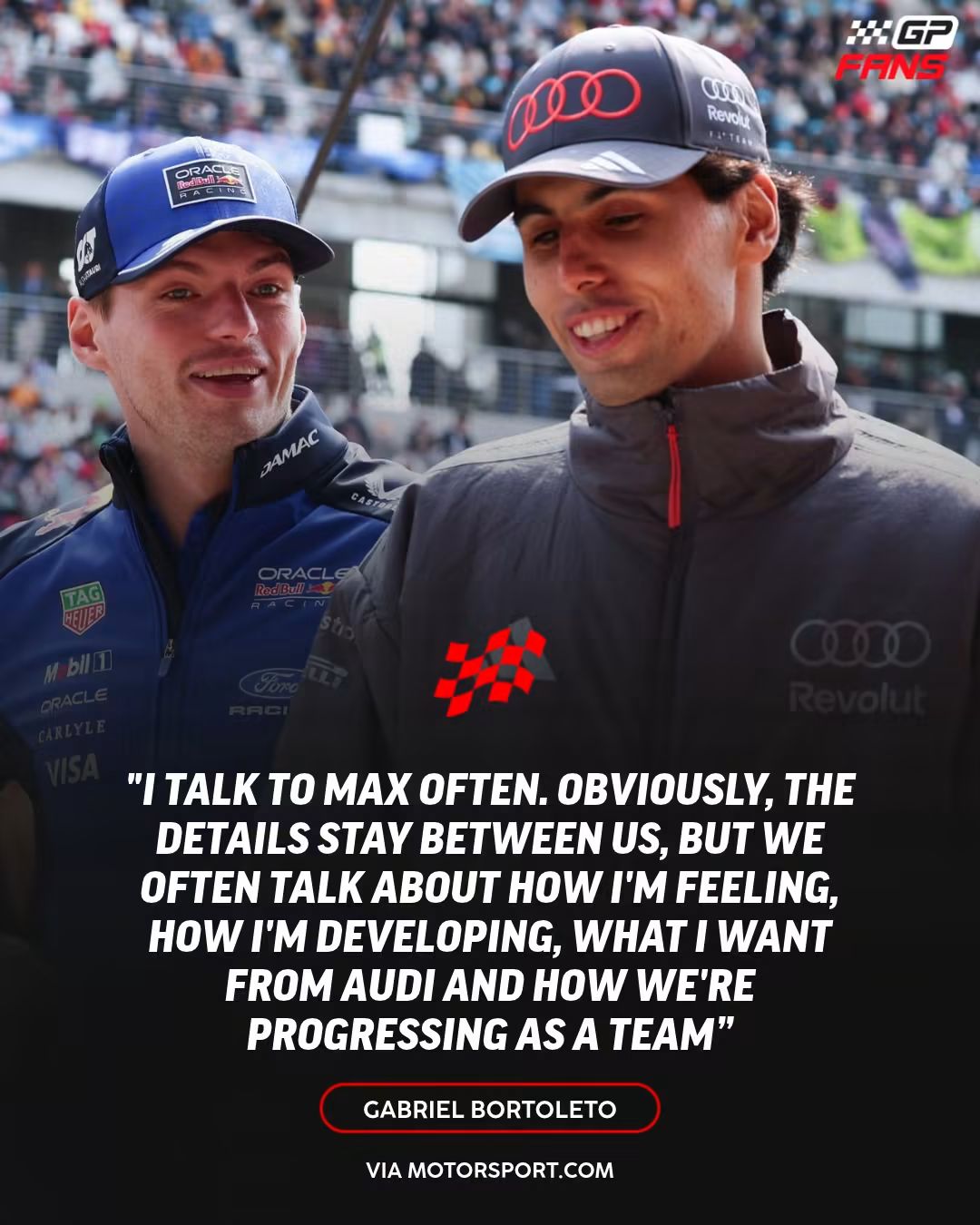
The impact is felt on multiple levels. Red Bull loses institutional knowledge at a time when it is navigating its own post-Horner era and adjusting to the same new rules. Audi gains a ready-made network of professionals who already share a common language and set of expectations. Drivers such as Nico Hülkenberg and Gabriel Bortoleto benefit from a garage and management structure that has recent experience of fighting at the front rather than merely surviving in the midfield.
There is also a longer-term strategic angle. Wheatley’s public desire for Verstappen, even if it was aspirational rather than immediate, signalled ambition. Binotto has since been more cautious, stating the team is not yet in a position to offer a genuine title-challenging platform. That realism is healthy, yet the earlier comments and the staff pipeline keep the possibility alive in the public imagination. Speculation of this kind raises the commercial and sporting profile of the entire project.
THE BROADER INDUSTRY RIPPLE EFFECTS
Formula 1 has always been a sport of musical chairs among technical staff. Manufacturers entering or re-entering the championship routinely raid existing teams. What makes the Audi case notable is the concentration of talent from one specific, highly successful car. It is the Verstappen garage, more than a general Red Bull raid, that fuels the “spare-time team principal” gag.
For the championship itself, the development is healthy. New manufacturer investment and high-profile personnel movement increase competitiveness and media interest. Fans get storylines that stretch beyond pure on-track results. Sponsors see a team that is serious about building proper infrastructure rather than simply hoping the new regulations will deliver magic. Rival teams are forced to guard their own key staff more carefully and to think harder about succession planning.
There is a human dimension too. Many of the individuals involved spent years working at the highest level with Verstappen. Moving to a new project offers fresh challenges and promotion opportunities. At the same time, it creates a sense of continuity for those who thrived in that high-pressure environment. The joke works because it recognises that professional networks in Formula 1 are rarely fully severed.
LOOKING AHEAD: CAN THE PIPELINE DELIVER RESULTS?
Predictions in Formula 1 are dangerous, especially in a regulation reset year. Yet certain patterns are clear. Audi’s stated goal of challenging for championships by 2030 is ambitious but not unrealistic if the organisation continues to recruit and retain high-calibre people. The presence of former Verstappen collaborators raises the internal standards and shortens the time needed to establish effective race-weekend operations.
Whether Max Verstappen ever ends up in an Audi cockpit remains pure speculation. His current Red Bull deal and the team’s ongoing competitiveness make an immediate move unlikely. The more interesting question is cultural. Can Audi absorb the Red Bull operational DNA without simply becoming a pale imitation? Can it blend that experience with its own engineering philosophy and the specific demands of the new power unit?
The “team principal in his spare time” line is funny precisely because it contains a kernel of truth. Verstappen does not need a formal title to leave a lasting mark on a team that employs so many people who once worked directly with him. In the high-stakes, high-mobility world of Formula 1, influence travels with people. Audi’s recruitment strategy has made that influence visible, and the paddock has responded with the only appropriate reaction: a knowing thumbs-up and a sharp one-liner that refuses to go away.
In the end, the joke is less about one driver and more about how modern Formula 1 teams are built. Talent moves, knowledge transfers, and suddenly a brand-new manufacturer looks a little more familiar than anyone expected. That is both a compliment to Verstappen’s era at Red Bull and a warning to every other team on the grid: when the best people leave, they take more than just their toolboxes with them.