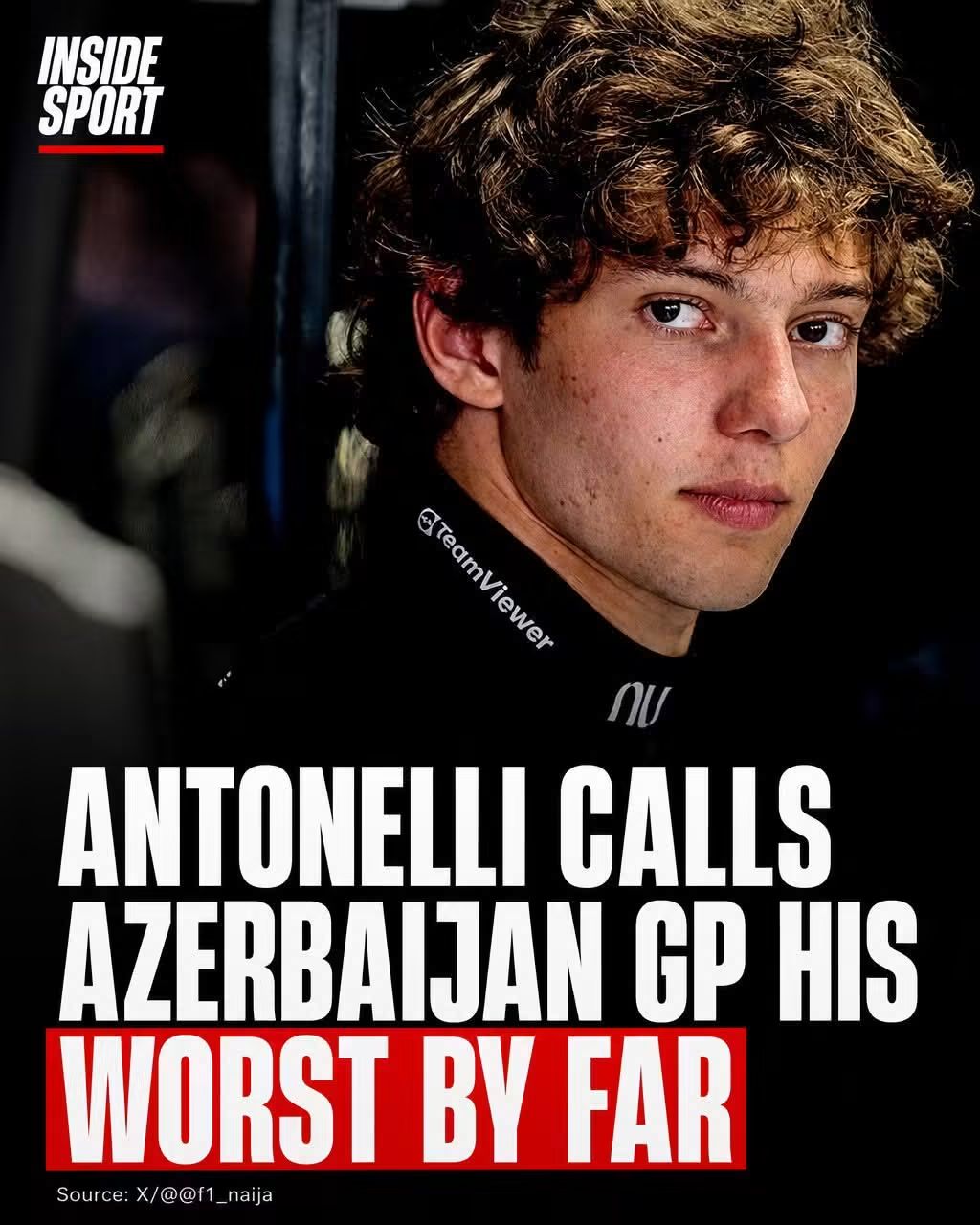
Kimi Antonelli’s 2026 Formula 1 season has been defined by control, consistency, and an almost clinical ability to extract results even when the weekend refuses to cooperate. The Azerbaijan Grand Prix tested every one of those qualities. After a costly Qualifying 1 crash left him starting 16th on the Baku grid, the championship leader fought through floor damage, compromised handling, and the pressure of a shrinking title advantage to finish fifth. He later described the afternoon as the toughest race of his campaign so far, admitting he drove “like my grandmother” in pure damage-limitation mode.
The result still hurt. Teammate George Russell converted pole into a hard-fought victory, closing the gap in the drivers’ standings from 81 points to 66. Yet Antonelli’s measured recovery prevented a far worse outcome. Instead of potentially dropping 25 points or more, he limited the damage to 15. In a season where every point will eventually matter, that difference could prove decisive.
WHAT WENT WRONG IN QUALIFYING AND WHY BAKU PUNISHED THE MISTAKE SO HARSHLY
Baku’s street circuit is unforgiving. Narrow walls, changing grip levels, and the constant threat of contact leave little margin for error. Antonelli had already lost significant practice time to a hydraulic issue earlier in the weekend. When he clipped the inside wall at Turn 1 on his second flying lap in Q1, the front-left suspension was damaged beyond immediate repair. He wanted to limp the car back to the pits. Race engineer Peter Bonnington correctly ordered him to stop.
The earlier lap had been good enough to progress, but the damage ended his session. Starting 16th on a track that rewards clean air and confidence was always going to be an uphill battle. Russell, by contrast, produced one of the strongest poles of the season and controlled the race from the front, holding off a late Max Verstappen charge by just 0.196 seconds.
HOW ANTONELLI TURNED 16TH INTO FIFTH WITHOUT TAKING UNNECESSARY RISKS
The race itself became an exercise in restraint. Antonelli lost a place at the start and spent the early stages working his way forward carefully. A safety-car period later in the race offered opportunities, but contact with Oliver Bearman’s Haas at the restart left the left side of his floor badly damaged. The Mercedes suddenly felt “very sketchy.” Downforce was compromised. The car moved around more than usual. Confidence, already shaken by the Qualifying mistake, took another hit.
Rather than force the issue and risk a retirement that would have handed Russell a full 25-point swing, Antonelli switched into pure management mode. He waited for clear opportunities, protected what he had, and accepted that fourth place was probably beyond reach once the damage appeared. Fifth place and 10 points represented the best realistic outcome under the circumstances.
This approach marked a clear contrast with his sensational recovery from 19th to victory at Monza earlier in the season. That drive was pure attack. Baku required something different: maturity, patience, and the ability to recognise when the risk-reward equation no longer favoured aggression.
HE CHAMPIOWHY THIS RESULT MATTERS FOR TNSHIP AND FOR MERCEDES
Antonelli still leads the championship by a healthy margin. Sixty-six points with several races remaining is a strong position, especially for a driver in only his second full season. Yet the Azerbaijan weekend served as a reminder that even the most consistent campaigns contain moments of vulnerability. Russell’s win re-energised the intra-team battle and reminded the paddock that Mercedes still has two genuine title contenders.
For the team, the result was mixed but ultimately positive. One car on the top step, the other recovering strongly from adversity. The constructors’ championship remains firmly in their hands. More importantly, the weekend demonstrated that Antonelli can absorb pressure without collapsing. Young drivers who suddenly find themselves leading a world championship often struggle with the psychological weight. Antonelli’s response in Baku suggested he is learning how to manage it.
THE BROADER IMPACT ON THE 2026 SEASON AND WHAT COMES NEXT
Formula 1 titles are rarely won by drivers who never make mistakes. They are won by those who minimise the cost of the mistakes they do make. Antonelli’s fifth place kept the damage contained. A retirement or a low-points finish would have opened the door wider for Russell and potentially drawn other contenders closer in the longer term.
Looking ahead, the calendar moves into a dense stretch of races. Confidence will be the key variable. Antonelli openly admitted that his Qualifying error knocked his belief for the rest of the weekend. Rebuilding that belief quickly will be essential. The Mercedes W17 has shown strong race pace throughout the season. If the Italian can return to his usual Qualifying form, the points advantage should start expanding again.
Russell, meanwhile, will take genuine encouragement from Baku. Winning from pole while his teammate struggled proved he can capitalise when opportunities appear. The internal rivalry at Mercedes is healthy rather than destructive, at least for now. Both drivers understand that the bigger picture remains the constructors’ title and the long-term strength of the team.
A UNIQUE INSIGHT INTO ANTONELLI’S GROWING MATURITY
What stood out most was not the recovery itself but the language Antonelli used afterward. Calling the drive “like my grandmother” and openly describing the car as sketchy showed self-awareness rather than frustration. Many young drivers in the same situation would have talked about what might have been or blamed external factors. Antonelli focused on the practical reality: the car was damaged, risks were not worth taking, and fifth was an acceptable result under the circumstances.
That mindset is championship material. It suggests he understands that title fights are marathons measured in accumulated points rather than individual weekends of glory. The Azerbaijan Grand Prix will not be remembered as one of his best performances. It may, however, be remembered as one of the most important learning experiences of his career.
In the end, Kimi Antonelli left Baku with fewer points than he wanted and a tougher fight ahead than he preferred. He also left with a valuable reminder that even the strongest seasons contain difficult days, and that how a driver responds to those days often determines who eventually lifts the trophy.