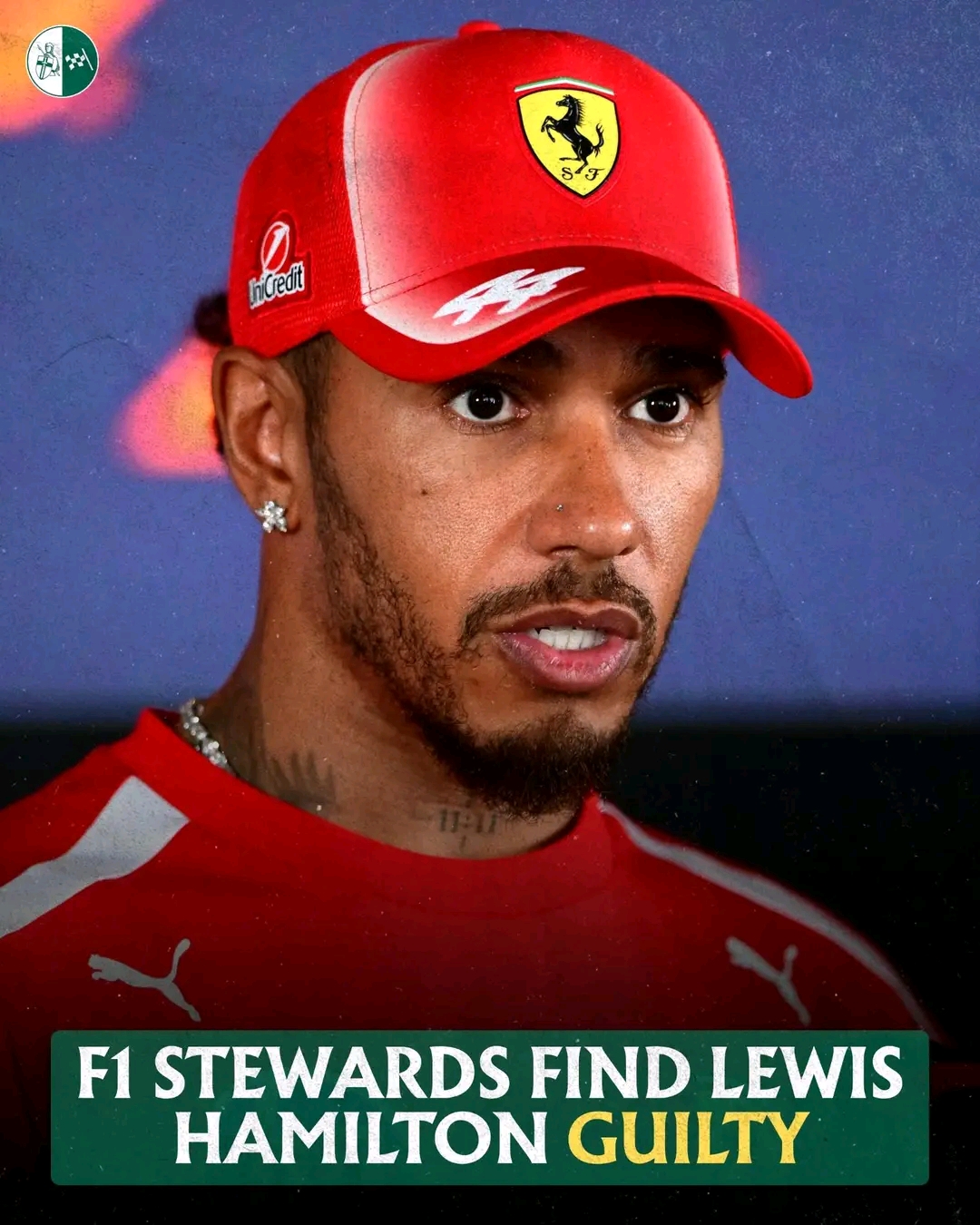
Lewis Hamilton did not hold back after a high-speed scare in second practice at the Azerbaijan Grand Prix. The Ferrari driver was handed a driving reprimand for impeding Racing Bulls’ Liam Lawson, yet the seven-time world champion made it clear where he believes the real responsibility lies: with the FIA and the 2026 power unit regulations that created the dangerous speed gap in the first place.
The incident unfolded on the high-speed approach to Turns 18 and 19, the fast right-handers that feed onto Baku’s long main straight. Hamilton was on an out-lap with little hybrid energy left. Lawson was on a flying lap with full deployment. What looked like a safe four-second gap evaporated in an instant. Lawson was forced to lift and brake hard at around 300 km/h, later calling the situation “so f***ing dangerous” over the radio.
Stewards reviewed video, telemetry, radio and team evidence. They concluded Hamilton had not stayed far enough left between Turns 16 and 18 and had remained on the racing line into Turn 19, unnecessarily impeding the faster car. Because the impeding was judged severe but without intent, and because both drivers highlighted the extreme speed differential caused by energy management, Hamilton received a reprimand rather than a grid penalty. It was his second driving reprimand of the 2026 season.
WHY HAMILTON SAYS THE FIA IS TO BLAME
Hamilton’s post-session comments cut straight to the structural problem. Under the 2026 regulations, cars can experience massive differences in available hybrid power depending on their energy state. On an out-lap or cool-down lap, drivers often have little or no battery deployment left. A car on a push lap can close the gap dramatically in the final sector of Baku.
“I was four seconds ahead basically and I went into the last corner pushing,” Hamilton explained. “I could see him. I thought the gap was enough. I got into full throttle. And then literally, as we got into [Turn] 18, it’s like the car just died, and he swamped up the gap massively. That could happen to anyone.”
He was blunt about the source of the problem: “That’s not the drivers’ fault – that’s what the FIA did with their decisions at the beginning of the year and we’re trying to manage as best we can, as drivers, on track in finding the right gap and not getting in the way of people.”
Hamilton also confirmed he planned to raise the issue in the drivers’ briefing, calling for clearer traffic-management guidance and potentially allowing full power through the critical final corners so that gaps remain predictable.
THE BIGGER PICTURE FOR 2026
This was not an isolated radio complaint. It exposed a genuine safety and sporting issue created by the new generation of power units. The 2026 rules deliberately increased the role of hybrid energy and introduced tighter energy management windows. The result is that the performance difference between a car with energy and one without can be enormous, especially on circuits with long straights and high-speed corners like Baku, Jeddah or Monza.
For drivers, the practical consequence is that traditional “leave a gap” calculations no longer work reliably. A four-second buffer that would have been safe in previous seasons can disappear in a few hundred metres when one car still has full deployment and the other does not. That forces drivers into split-second decisions at high speed while also trying to complete their own programmes. The risk of near-misses or worse rises accordingly.
Teams are equally affected. Race engineers must now factor energy state into every traffic call, adding complexity to already packed practice and qualifying sessions. A single misjudged gap can cost a driver a grid penalty or, in a race, positions and points. With the championship battle tight and every point valuable, these incidents carry real competitive weight.
IMPACT ON HAMILTON, FERRARI AND THE CHAMPIONSHIP
Hamilton already sits high in the drivers’ standings and has been one of the most consistent performers of the new era. Accumulating reprimands matters. Five driving reprimands in a season trigger an automatic ten-place grid drop. Two so far is manageable, but the margin for further traffic issues is thinner than it looks.
For Ferrari the episode is a reminder that the 2026 package still has operational rough edges. Energy deployment strategies that work well in isolation can create chaos in traffic. The team will almost certainly push for clearer Race Director notes and more consistent application of the rules across the remaining races.
Lawson’s frustration was understandable. Drivers on flying laps have every right to expect a clear track when they have done their job of managing gaps earlier in the lap. Yet both men essentially agreed in the stewards’ hearing that the underlying speed differential, not deliberate blocking, was the root cause. That rare alignment between the impeding and impeded driver strengthens Hamilton’s case that the regulations themselves need adjustment.
WHAT NEEDS TO CHANGE
The FIA has already shown willingness to tweak procedures mid-season when safety issues arise. Clearer quantitative guidance on minimum gaps required when energy states differ would help. Allowing full deployment through specific high-risk corners, as Hamilton suggested, is another practical option. Longer term, the governing body may need to examine whether the current energy management rules create unnecessary risk on street circuits with limited run-off.
Drivers have repeatedly said they do not want to impede anyone. Their job is to extract the maximum from the car while staying out of the way. When the rules make that task significantly harder than in previous generations, the governing body has a responsibility to respond.
Hamilton’s reprimand stands, and rightly so under the letter of the current regulations. But his broader point is harder to dismiss. When a four-second gap vanishes because one car still has hybrid power and the other does not, the fault does not lie solely with the driver who found himself in the wrong place at the wrong moment. It lies with the framework that made that moment almost inevitable.
Formula 1 has always evolved through on-track incidents that force the rule-makers to confront unintended consequences. The near-miss in Baku may prove to be one of those moments. Whether the FIA moves quickly enough to prevent a repeat will determine how many more reprimands, and how many more angry radio messages, the rest of the 2026 season produces.