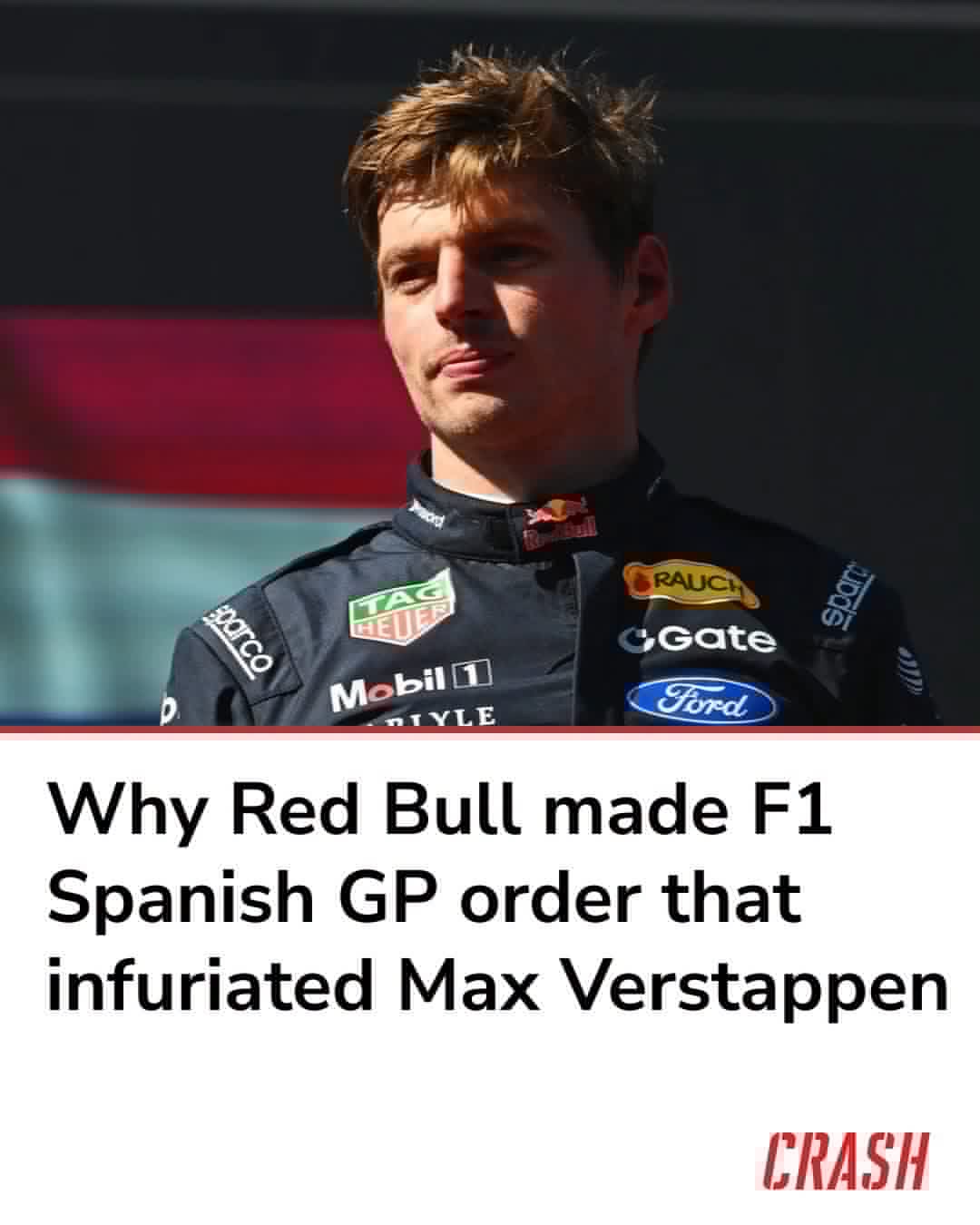
Red Bull team principal Laurent Mekies has revealed the clear strategic thinking behind the decision to order Max Verstappen to hand positions back to Lewis Hamilton and Kimi Antonelli during the Spanish Grand Prix. The call sparked a furious radio protest from the four-time world champion, but the team remains convinced it was the correct approach.
Verstappen ultimately recovered to finish second, yet the early instruction left him seething in the car.
THE FIRST-LAP INCIDENT THAT FORCED RED BULL’S HAND
At the start of the race in Madrid, Verstappen became involved in a tight battle with Hamilton into Turn 1. The Red Bull driver took to the runoff and emerged ahead. He later passed championship leader Antonelli as well after the Mercedes ran wide.
Race engineer Gianpiero Lambiase soon delivered the message: “We think we should give the position back to Hamilton, that means letting Antonelli through as well.” Verstappen’s response was typically blunt as he argued that staying on track would have resulted in a collision.
Despite his protests, Verstappen complied and dropped to fourth.
MEKIES EXPLAINS THE PENALTY RISK CALCULATION
Speaking after the race, Mekies made the team’s reasoning straightforward. Red Bull believed that failing to give the positions back would have resulted in a five- or ten-second time penalty from the stewards.
“We would have simply been penalised either five seconds or ten seconds at their discretion,” Mekies said. “And of course, if you can imagine race scenarios with a Safety Car or other circumstances, it can cost you a lot more than a position or two.”
The team preferred to absorb the immediate loss of places and allow Verstappen to fight back on merit rather than carry the threat of a stewards’ penalty that could have proven far more damaging later in the race.
“BETTER TO TAKE THE PAIN AT THAT MOMENT”
Mekies acknowledged that the instruction was never going to be popular with his driver. “We weren’t expecting a thank you email from Max in the car,” he admitted. The priority was clear decision-making under pressure and protecting the longer-term result.
In the end, the strategy worked as well as it could have. Verstappen quickly re-passed Hamilton once the Ferrari began suffering brake problems and went on to secure second place behind Antonelli. Mekies described that result as “the absolute best we could have achieved today.”
VERSTAPPEN’S POST-RACE PERSPECTIVE
Once the adrenaline had settled, Verstappen maintained that he had taken avoiding action to prevent contact. “I would have had damage at the start if I would have stayed on track, so then the win was also not on,” he explained. He remains convinced that remaining on the racing line would have ended his race in the opening corners.
The stewards ultimately took no further action once Verstappen followed the team order.
THE FINE LINE BETWEEN RACING INSTINCT AND TEAM DISCIPLINE
The episode highlighted the constant tension in modern Formula 1 between a driver’s racing instinct and a team’s responsibility to manage risk. Verstappen’s natural reaction was to keep the positions he felt he had earned through avoiding a crash. Red Bull’s calculation prioritised the avoidance of a near-certain penalty that could have cost more than the places surrendered.
In a season where every point matters, that pragmatic approach delivered a podium. Whether it satisfied the driver in the heat of the moment was another matter entirely.
WHAT THE DECISION SAYS ABOUT RED BULL’S RACE MANAGEMENT
Mekies’ explanation reinforces Red Bull’s reputation for decisive, penalty-aware race management. Rather than gamble on the stewards taking a lenient view, the team chose certainty. The fact that Verstappen was still able to recover to second suggests the call did not fatally damage his afternoon.
For Verstappen, the frustration was real and vocal. For Red Bull, the outcome justified the instruction. In Madrid, the team order that infuriated their star driver ultimately helped secure a strong result — even if it came with a memorable radio soundtrack.