Formula 1’s newest venue, Madrid’s Madring circuit, has already developed a reputation for being unforgiving before hosting its first official Grand Prix. Organisers brought in Formula 3 cars for a two-day test on August 24–25 to give the track some early running, but the experiment quickly turned chaotic. Three F3 chassis were damaged, numerous other components were destroyed and the session was interrupted by an extraordinary 19 red flags. Williams boss James Vowles described it as a circuit that “kills cars,” while tyre marks and evidence of crashes remain visible around the barriers.
The Madring has been designed to be far more demanding than a conventional street circuit. Combining public roads with purpose-built sections, the layout features elevation changes, fast corners, heavy braking zones and significant banking. Its standout feature is La Monumental, a huge 550-metre, 270-degree corner that lasts roughly six seconds and features a 24 percent incline. Charles Leclerc believes it could become one of the season’s signature corners, but he also expects drivers to be operating close to the limit, particularly during qualifying.
The rest of the lap offers little room for mistakes. Drivers begin with a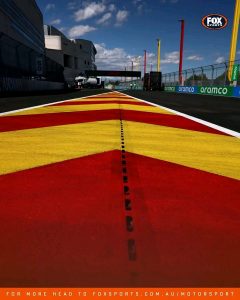 technical chicane before reaching a long right-hander and one of the circuit’s major straights, followed by another high-speed chicane where speeds could reach around 340km/h. The track then climbs before entering a blind section and eventually reaches La Monumental. A downhill braking zone and several fast sweeps lead back toward slower 90-degree corners and the main straight. With limited run-off in several areas, even small mistakes could bring out red flags or safety cars, making qualifying particularly difficult.
Racing could be just as unpredictable. The 2026 power units should have enough opportunities to recharge, meaning drivers are unlikely to face major energy shortages, but overtaking may remain difficult because of the barriers and street-style layout. Long straights and heavy braking zones should create some opportunities, while La Monumental could allow drivers to use different racing lines. Tyre degradation could become another major factor, with temperatures expected to reach the low 30s Celsius. However, the unusually long pit lane means an additional stop could cost roughly 25 seconds, forcing teams to carefully balance tyre performance against track position.
Picking a clear favourite is also difficult because the circuit combines so many different characteristics. Mercedes may lose some of its usual advantage from power-sensitive tracks, while McLaren could excel through sections resembling Zandvoort and Budapest but struggle in slower corners. Ferrari’s high-downforce characteristics should make it competitive, although recent form makes them difficult to trust, while Red Bull’s performance has varied dramatically from circuit to circuit. Madrid is also reclaiming Spain’s F1 spotlight after a long history of Grand Prix venues including Jarama, Montjuïc, Jerez and Barcelona-Catalunya. With the Madring set to host the Spanish GP for the next decade, its brutal F3 debut has created enormous expectations — and Formula 1 is about to discover whether those fears were justified.