F1 SET TO CUT GRAND PRIX DISTANCES IN 2027
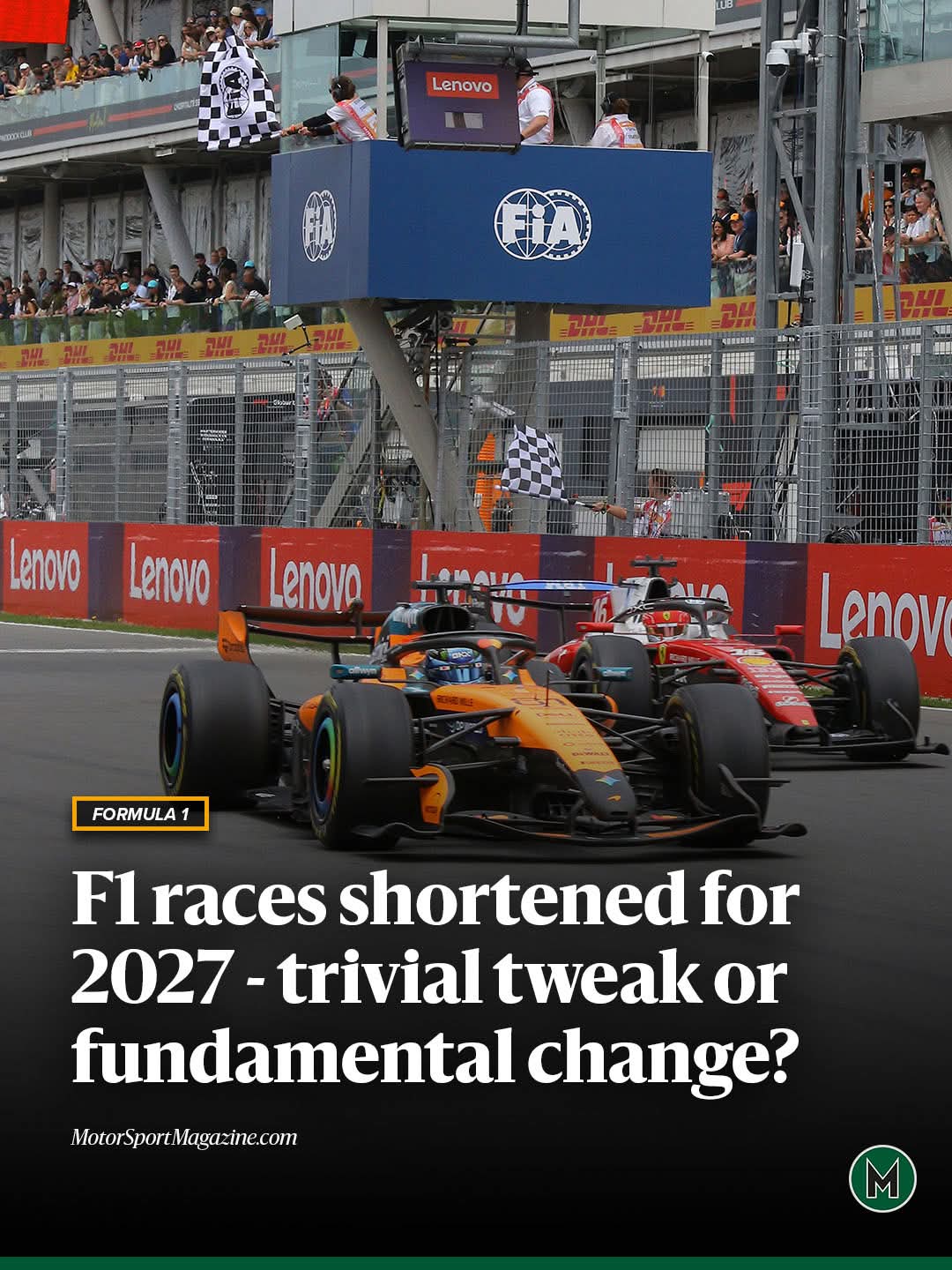
Formula 1 is preparing for another significant change to its racing format in 2027, with Grand Prix distances expected to fall from the traditional 305 kilometres to approximately 290km.
The adjustment could remove roughly two or three laps from most races, meaning events such as the Hungarian and Miami Grands Prix will technically become shorter. On its own, that sounds like a minor alteration that casual viewers may barely notice.
But the reason behind the change tells a much bigger story. Teams have reportedly agreed to the reduction because Formula 1 is increasing the amount of fuel available to the internal-combustion engine as part of a broader attempt to correct the energy-management problems exposed by the 2026 power-unit regulations.
THE REAL REASON BEHIND THE SHORTER RACES
The 2026 regulations were designed around a much larger contribution from electrical power, with the original concept targeting an almost equal split between the combustion engine and the MGU-K.
Instead, drivers and teams have increasingly had to manage battery deployment during races, sometimes sacrificing outright performance simply to ensure they have enough electrical energy available.
For 2027, the balance will move toward the combustion engine. ICE output is scheduled to rise from 400kW to 420kW, while MGU-K output falls from 350kW to 300kW. The fuel-flow increase means the cars would require additional fuel to complete the existing 305km distance.
Rather than redesigning fuel tanks and potentially forcing teams to modify already-developed chassis, Formula 1 has chosen the simpler solution: make the races shorter.
That makes the three-lap reduction look like an engineering compromise rather than a deliberate attempt to fundamentally change the spectacle.
WHY THE 2026 ENGINE FORMULA IS UNDER PRESSURE
The bigger concern is what the change says about the original 2026 concept.
The new regulations were supposed to create a closer relationship between combustion and electrical power while producing more efficient and technologically advanced engines. Instead, energy management quickly became one of the most discussed weaknesses of the formula.
Drivers including Max Verstappen and Fernando Alonso have raised concerns about how much energy conservation can influence actual racing.
That is why the move toward a 58:42 ICE-to-electric split in 2027, followed by an expected 60:40 balance in 2028, is much more significant than the reduction in race distance.
Formula 1 is effectively moving away from one of the defining ideas behind its latest engine revolution.
The MGU-K will remain extremely important, but its peak output will be reduced while the combustion engine receives more responsibility for producing performance.
F1 HAS USED FUEL RULES TO CONTROL ENGINES BEFORE
There is a long history behind this approach.
During the turbocharged era of the 1980s, the FIA repeatedly used fuel restrictions and boost limits to control increasingly powerful engines. Rather than simply telling manufacturers to build weaker engines, regulators changed how much fuel and boost those engines could use.
Manufacturers responded by becoming more efficient and extracting greater performance from every unit of fuel.
That historical precedent is important because it shows that fuel regulations have rarely been just about fuel. They have often been one of Formula 1’s most effective ways of indirectly controlling engine performance.
The 2027 situation is almost the reverse. Instead of reducing fuel to control excessive power, F1 is increasing fuel flow because the original electrical-heavy formula has created operational problems.
THE BIGGEST CHANGE MAY BE WHAT FANS DON’T NOTICE
From a spectator’s perspective, the 305km-to-290km change may barely register.
A race finishing two or three laps earlier will not automatically produce different winners, radically alter tyre strategy or transform the championship. Teams will simply adapt their calculations to the new distance.
The more important issue is the philosophy behind the decision.
Formula 1 has decided that changing the race distance is less disruptive than forcing teams to redesign fuel systems and chassis around the revised engine requirements. That makes financial and engineering sense, particularly under a cost-conscious modern F1 environment.
It also means the shorter races should not be viewed in isolation.
They are part of a wider correction to the 2026 power-unit formula.
2027 COULD BECOME A DEFINING YEAR FOR F1
The upcoming changes could ultimately prove beneficial if they reduce the amount of energy management that interferes with racing.
More combustion-engine power should make the cars less dependent on carefully rationing electrical energy, while the reduced race distance could compensate for the additional fuel required by the revised formula.
The FIA and Formula 1 still need final approval through the relevant governing bodies, but the direction of travel is clear.
What initially looks like a simple decision to remove a few laps is actually another chapter in Formula 1’s attempt to make the 2026 engine regulations work better.
The real test will come when the 2027 cars hit the track. If drivers can race more aggressively without constantly worrying about battery deployment, the shorter Grands Prix may quickly become irrelevant.
If energy management remains a major limitation, however, the 2027 changes could become evidence that Formula 1 still has not completely solved the problems created by its ambitious new power-unit era.