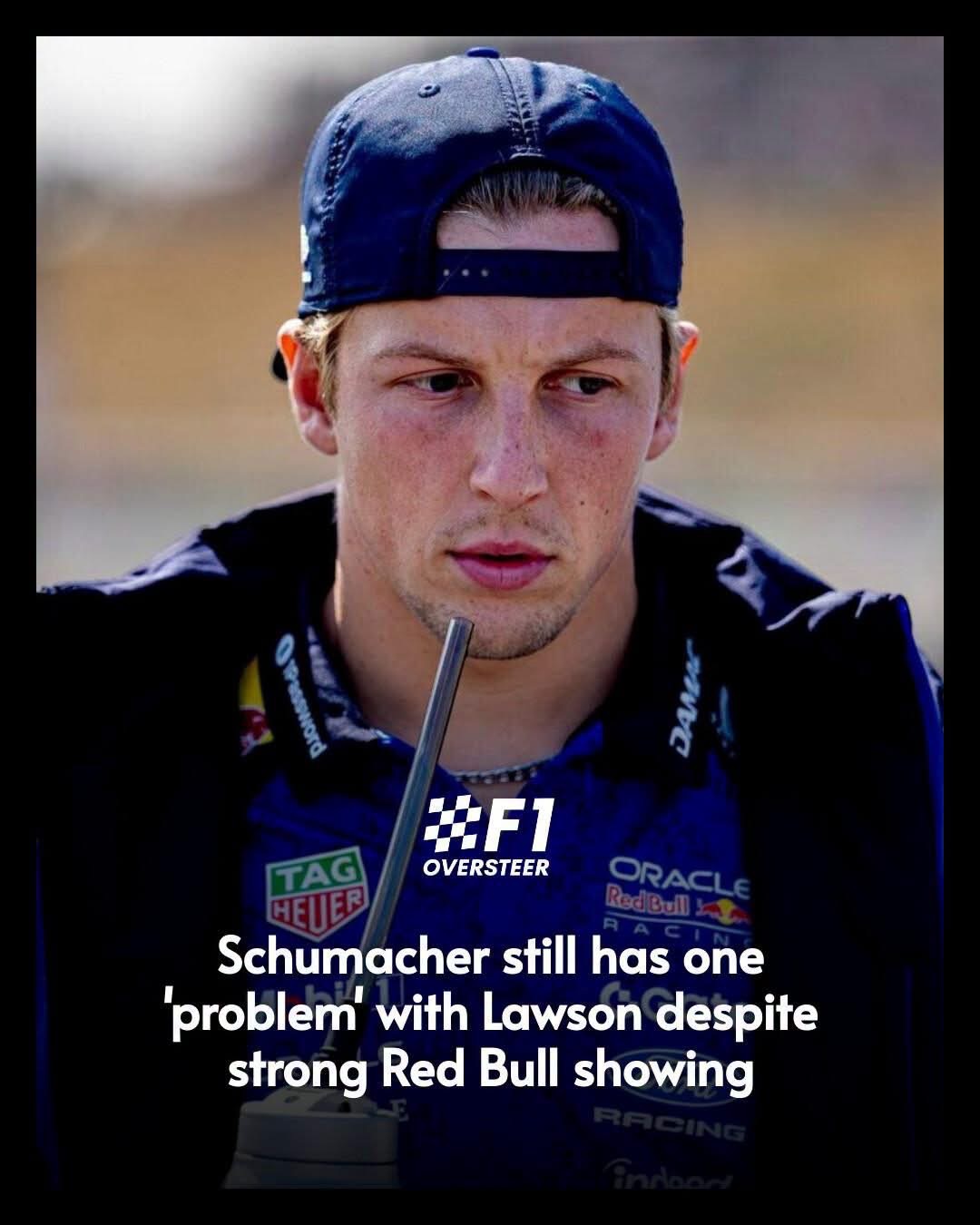
Liam Lawson may have strengthened his case for a permanent Red Bull Racing seat with an impressive performance at the Dutch Grand Prix, but Ralf Schumacher remains unconvinced that the New Zealander possesses everything required to become a genuine successor to Max Verstappen.
Lawson’s unexpected return to Red Bull at Zandvoort represented a remarkable second chance. The 24-year-old had been dropped after only two races for the senior team in 2025, but was recalled after Isack Hadjar suffered a wrist fracture while training. With limited preparation, Lawson immediately found himself under enormous pressure.
LAWSON ANSWERED HIS CRITICS AT ZANDVOORT
Instead of struggling at the back, Lawson produced arguably the strongest argument possible for another opportunity.
He qualified eighth and finished seventh, collecting Red Bull’s only points of the afternoon after Verstappen’s race ended early. Even more impressively, Lawson was immediately involved in a tense opening-lap battle with his four-time world champion teammate before Verstappen’s costly incident at Turn 14.
The performance demonstrated that Lawson could handle the pressure of driving the senior Red Bull team.
But according to Schumacher, one strong weekend isn’t enough to establish whether Lawson can consistently operate at the level required of a championship contender.
RALF SCHUMACHER STILL HAS ONE MAJOR QUESTION
Schumacher’s concern is less about Lawson’s speed and more about his ability to demonstrate that speed consistently.
That distinction is crucial.
Formula 1 has seen plenty of drivers produce spectacular performances when given an unexpected opportunity, only to struggle when the pressure and expectations become permanent.
Lawson now needs to show that Zandvoort wasn’t simply a one-off performance created by circumstances, strategy or the characteristics of the Red Bull.
If he can continue delivering competitive results whenever he gets another opportunity, the argument against him becomes increasingly difficult to sustain.
THE VERSTAPPEN SUCCESSION QUESTION HAS CHANGED
Verstappen’s new long-term Red Bull commitment has removed the immediate pressure of finding his replacement, but it has also created an interesting situation for Red Bull’s driver programme.
The team knows that eventually it will have to identify the driver capable of carrying the organisation into its next era.
Lawson has now placed himself firmly in that conversation.
However, he faces competition from Red Bull’s younger prospects, including Nikola Tsolov, while other drivers within the wider Red Bull system could also emerge.
That means Lawson cannot afford to rely on reputation alone.
LAWSON’S BIGGEST ADVANTAGE MAY BE EXPERIENCE
One thing Lawson now possesses that some of Red Bull’s younger prospects do not is experience of Formula 1 pressure.
He has already experienced the emotional extremes of being promoted to Red Bull, dropped from the team and then recalled when circumstances demanded it.
That experience could make him better equipped for another opportunity.
His Dutch Grand Prix performance also showed that he hasn’t allowed the disappointment of his previous demotion to destroy his confidence.
Instead, Lawson returned and immediately looked comfortable in a highly competitive environment.
RED BULL NOW HAS A DIFFICULT DECISION TO MAKE
The irony is that Lawson’s temporary opportunity may have created a genuine selection problem for Red Bull.
Had he struggled, the team could have moved forward without much debate.
Instead, he delivered seventh place and demonstrated that he can adapt quickly to the demands of the senior team.
Schumacher’s doubts therefore give Lawson another target to chase.
The New Zealander doesn’t necessarily need to convince every critic with one race. What he needs is a run of performances that makes the evidence impossible to ignore.
Zandvoort proved Liam Lawson deserves to remain in the conversation. Now he must prove Ralf Schumacher wrong by showing that his Red Bull performance was not an isolated flash of potential—but the beginning of something much bigger.