Formula 1 has never been short of controversy, but few stories capture the sport’s attention like a public war of words involving reigning champion Max Verstappen. In a sport where every interview, social media post, and television appearance is dissected by millions of fans, even a single sentence can ignite global debate.
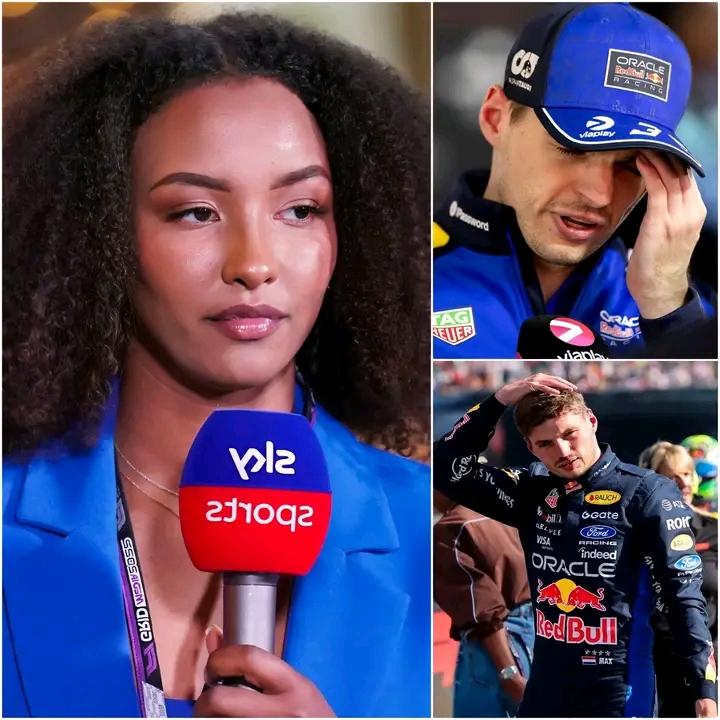
Recent headlines have claimed that a well-known female Formula 1 commentator declared, “He doesn’t deserve my respect,” while discussing Verstappen during a live broadcast. According to the viral story, the studio fell silent before Verstappen allegedly delivered a ruthless ten-word response that immediately sent shockwaves across the motorsport world.
While the dramatic narrative has spread rapidly across social media, there is little publicly verified evidence supporting many of the sensational claims. Nevertheless, the story highlights an increasingly important issue in modern Formula 1: the growing tension between drivers, broadcasters, and the relentless media spotlight that follows every championship battle.
WHY MAX VERSTAPPEN REMAINS ONE OF FORMULA 1’S MOST POLARIZING FIGURES
Whether fans admire him or criticize him, Verstappen has become one of the defining personalities of the current Formula 1 era. His aggressive racing style, uncompromising attitude, and relentless desire to win have earned him multiple world championships while simultaneously dividing opinion across the motorsport community.
Supporters praise his fearless overtaking, supreme confidence, and ability to perform under immense pressure. Critics, meanwhile, often question his driving tactics, radio messages, and willingness to push rivals to the limit.
That combination makes Verstappen a constant topic of discussion—not only after races but throughout the entire Formula 1 calendar.
THE POWER OF TELEVISION COMMENTARY IN MODERN FORMULA 1
Formula 1 commentators play a significant role in shaping public opinion. Their analysis reaches millions of viewers during every Grand Prix weekend, meaning their praise or criticism can quickly become headline news.
Strong opinions are nothing new in motorsport broadcasting. Former drivers, journalists, and analysts regularly debate controversial incidents involving penalties, racing etiquette, team strategy, and championship decisions.
However, personal criticism often generates far stronger reactions than technical analysis. When discussions move beyond on-track performance and become personal, fans frequently respond with intense emotion across social media platforms.
That is precisely why stories involving broadcasters and leading drivers spread so rapidly online.
SOCIAL MEDIA HAS CHANGED THE RULES OF THE GAME
Twenty years ago, disagreements between drivers and television personalities would usually remain confined to newspapers or post-race interviews.
Today, a single quote can circulate worldwide within minutes.
Platforms such as X, Instagram, TikTok, Facebook, and YouTube have transformed Formula 1 into a 24-hour news cycle where clips, headlines, and opinions travel faster than ever before.
This environment often rewards dramatic storytelling, making it increasingly important for fans to separate verified reporting from viral speculation.
WHY VERSTAPPEN RARELY SHIES AWAY FROM CONFRONTATION
One reason Verstappen continues to dominate headlines is his willingness to speak openly.
Unlike some athletes who prefer carefully scripted media appearances, Verstappen has built a reputation for answering difficult questions directly—even if his comments create controversy.
Over the years, he has challenged journalists, criticized race officials, questioned FIA decisions, and defended his own driving style without hesitation.
That straightforward approach has earned him respect from many supporters who appreciate authenticity, even when they disagree with his opinions.
WHAT THIS COULD MEAN FOR THE CHAMPIONSHIP
While off-track controversies rarely decide championships on their own, they can influence the atmosphere surrounding a team.
Media scrutiny increases pressure on drivers, engineers, and team management, particularly during tightly contested title battles.
Successful teams generally attempt to minimize distractions, allowing their drivers to focus entirely on extracting maximum performance during race weekends.
If public disputes continue to dominate headlines, they risk overshadowing the technical development and strategic battles that ultimately determine championship success.
THE GROWING RELATIONSHIP BETWEEN FORMULA 1 AND MEDIA DRAMA
Formula 1’s popularity has exploded in recent years, bringing millions of new fans into the sport.
With larger audiences comes greater demand for dramatic narratives beyond the racing itself.
Driver rivalries, contract rumors, internal team politics, and media disputes now generate almost as much attention as qualifying sessions and Grand Prix results.
While these storylines undoubtedly increase engagement, they also place greater responsibility on broadcasters, journalists, and content creators to distinguish confirmed facts from speculation.
WHAT HAPPENS NEXT?
If the reported exchange is ever fully confirmed, it will likely become another memorable chapter in Verstappen’s already eventful Formula 1 career.
However, unless both parties publicly verify the comments and the alleged ten-word response, fans should treat sensational headlines with caution.
Regardless of this specific incident, one thing remains certain: Max Verstappen will continue to attract intense attention wherever he races. His performances, personality, and refusal to shy away from controversy ensure that he remains one of Formula 1’s biggest talking points.
As the championship battle continues, the real focus will ultimately return to the racetrack—where victories, consistency, and outright speed matter far more than any television debate.