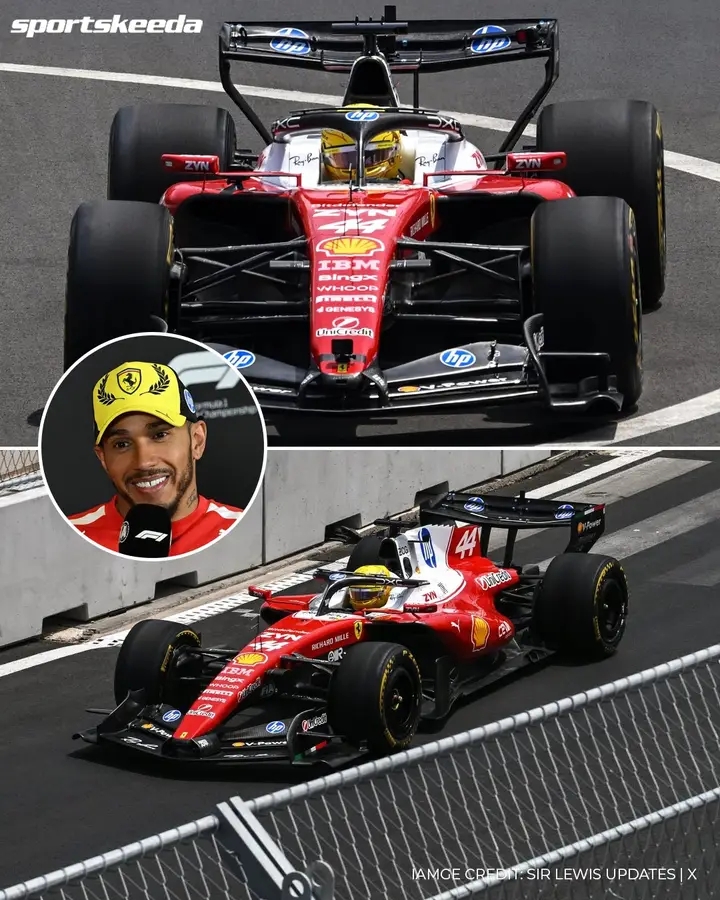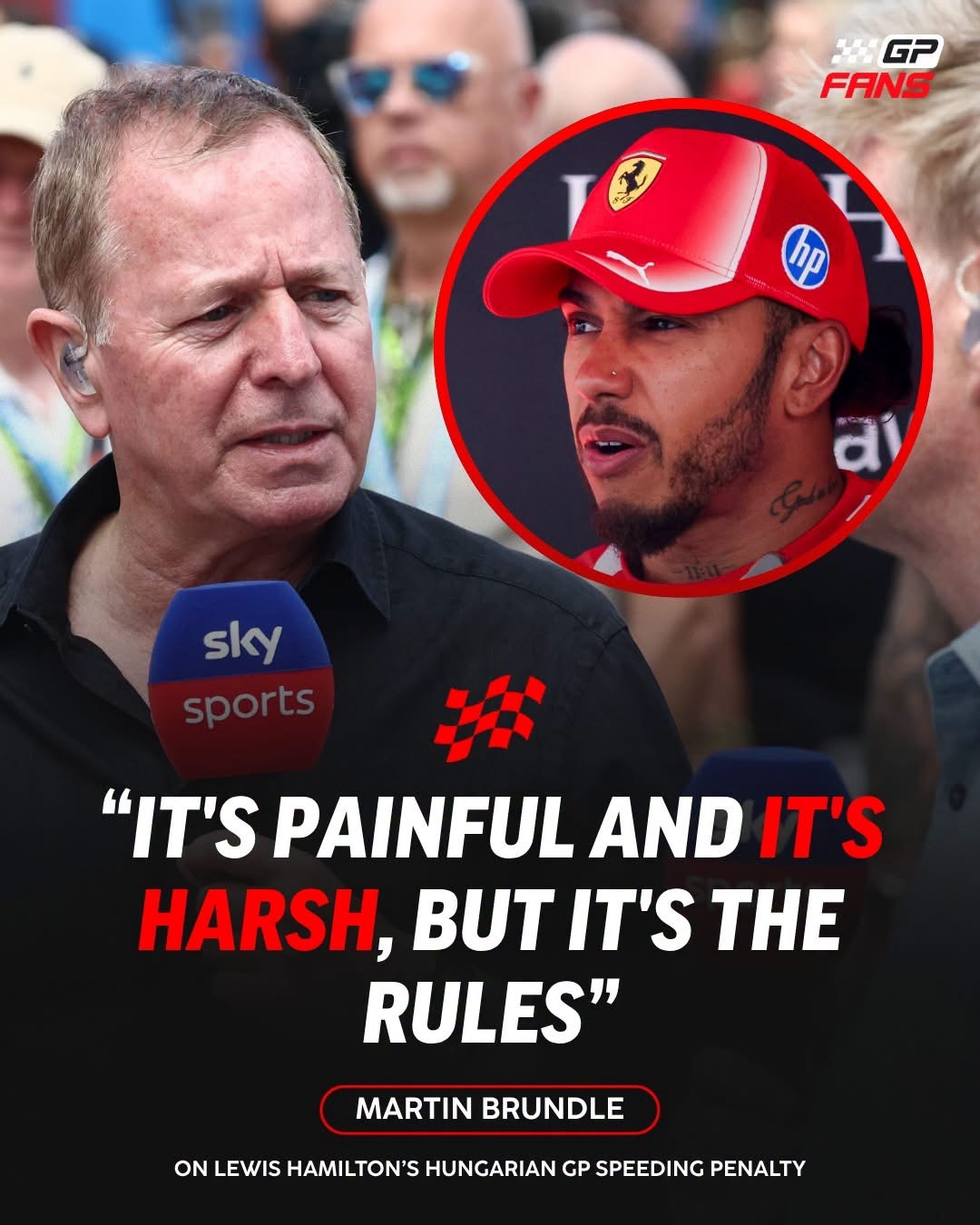
Lewis Hamilton’s difficult weekend at the 2026 Hungarian Grand Prix ended with another costly twist after a five-second penalty dropped the Ferrari driver from fourth to fifth place, dealing another blow to his Formula 1 title challenge. While the FIA applied the regulations exactly as written, Sky Sports F1 commentator and former Grand Prix driver Martin Brundle believes the punishment felt particularly severe given how small the infringement actually was.
The incident has sparked renewed debate across the Formula 1 community about the balance between strict rule enforcement and sporting fairness. Although Hamilton exceeded the pit lane speed limit by just 0.1 km/h, the consequences proved significant, costing him valuable championship points at a crucial stage of the season.
A PROMISING RACE ENDED IN FRUSTRATION FOR HAMILTON
Hamilton entered the Hungarian Grand Prix already facing adversity after serving a three-place grid penalty from qualifying. Despite the setback, the seven-time world champion delivered one of his strongest recovery drives of the season.
Using Ferrari’s impressive race pace, Hamilton steadily climbed through the field and found himself running in second place after Oscar Piastri retired with a gearbox failure. At that point, Ferrari looked set to secure a valuable podium finish.
The team’s strategy then changed the complexion of the race.
When a Virtual Safety Car was deployed late in the Grand Prix, Ferrari elected to pit Hamilton for fresh soft tyres, hoping the reduced speed around the circuit would minimize the time lost in the pit lane and provide a tyre advantage for the closing laps.
Instead, the strategy failed to deliver the expected reward. Hamilton lost track position, became involved in a close battle after rejoining the race, and then received a five-second penalty for exceeding the pit lane speed limit during his stop.
The sanction ultimately dropped him behind both teammate Charles Leclerc and Mercedes rookie Kimi Antonelli in the final classification.
WHY JUST 0.1 KM/H MADE SUCH A BIG DIFFERENCE
According to the FIA’s official findings, Hamilton exceeded the pit lane speed limit by only 0.1 km/h.
On paper, the margin appears almost insignificant. However, Formula 1 regulations leave very little room for interpretation when it comes to pit lane speeding.
The speed limit exists primarily for safety rather than performance. With mechanics, engineers, photographers, and officials working just metres away from moving cars, maintaining strict control inside the pit lane is considered essential.
Because of those safety concerns, the FIA applies the regulations consistently regardless of how small the excess speed may be.
While many fans sympathized with Hamilton, the governing body had little flexibility once the violation was confirmed.
MARTIN BRUNDLE EXPLAINS WHY THE PENALTY FELT SO SEVERE
Martin Brundle acknowledged that the FIA followed the regulations correctly but admitted the punishment still felt harsh considering how narrow the infringement was.
Drawing comparisons to other technical regulations in Formula 1, Brundle explained that every rule requires a clear threshold. Whether measuring car weight, track limits, or pit lane speed, officials cannot introduce subjective margins without creating further controversy.
His point highlights one of Formula 1’s biggest challenges.
If officials allowed drivers to exceed the limit by 0.1 km/h without punishment, questions would immediately arise over whether 0.2 km/h or 0.3 km/h should also be accepted. Establishing exceptions could quickly undermine the consistency teams and drivers rely upon.
Brundle’s assessment captured the dilemma perfectly: the outcome felt painful for Hamilton, but the rule itself remains necessary.
FERRARI’S WEEKEND WAS FILLED WITH MISSED OPPORTUNITIES
The penalty represented only one part of Ferrari’s disappointment in Budapest.
Hamilton had already questioned the team’s decision to pit him during the Virtual Safety Car, suggesting after the race that he would have preferred to remain on track and defend his position rather than surrender valuable track position.
Combined with the speeding penalty, Ferrari transformed what could have been a podium finish into fifth place.
Meanwhile, Charles Leclerc also endured a frustrating afternoon after slipping backwards despite starting near the front of the grid, leaving Ferrari without a podium at a circuit where many expected the Scuderia to challenge for victory.
The Hungarian Grand Prix ultimately exposed how quickly strategic decisions and tiny operational mistakes can overshadow competitive race pace.
THE TITLE RACE IS BECOMING MORE DIFFICULT
Every point carries increasing importance as the championship reaches its midpoint.
Hamilton remains Ferrari’s highest-placed driver in the Drivers’ Championship, but the Hungarian Grand Prix allowed Mercedes championship leader Kimi Antonelli to extend his advantage once again.
Losing points because of penalties rather than outright pace can be especially frustrating for teams fighting for championships. Unlike performance deficits, operational mistakes are often preventable.
Ferrari’s engineers and strategists will undoubtedly analyze every aspect of the Hungarian weekend during the summer break, searching for improvements that can eliminate similar errors in the remaining races.
WHY CONSISTENCY MATTERS MORE THAN FLEXIBILITY
The debate surrounding Hamilton’s penalty reflects a broader discussion that Formula 1 faces every season.
Fans naturally prefer outcomes decided by racing rather than technical infringements, especially when violations appear minimal. However, consistency remains one of the foundations of motorsport officiating.
Clear regulations ensure every team competes under identical standards, regardless of the driver, constructor, or championship position involved.
Had Hamilton avoided a penalty for exceeding the limit, rival teams would likely have questioned why the rules were not applied equally.
While the punishment felt severe given the tiny margin, consistency helps preserve confidence in the sport’s officiating.
LOOKING AHEAD TO THE SECOND HALF OF THE SEASON
Despite another frustrating weekend, Hamilton’s performance in Hungary offered encouraging signs.
His pace throughout the race demonstrated that Ferrari possesses a car capable of challenging at the front, particularly during long race stints. The disappointment stemmed not from a lack of speed but from a combination of strategy, execution, and costly mistakes.
For Ferrari, that should provide optimism.
Improving operational precision is generally easier than finding significant lap time through car development. If the Scuderia can eliminate unforced errors while maintaining its current level of competitiveness, Hamilton should remain firmly in contention for victories during the remainder of the season.
As Martin Brundle pointed out, Hamilton’s penalty may have been harsh, but Formula 1 has always been a sport decided by the finest margins. In Budapest, just 0.1 km/h proved to be the difference between limiting the damage in the championship and watching another valuable haul of points slip away.