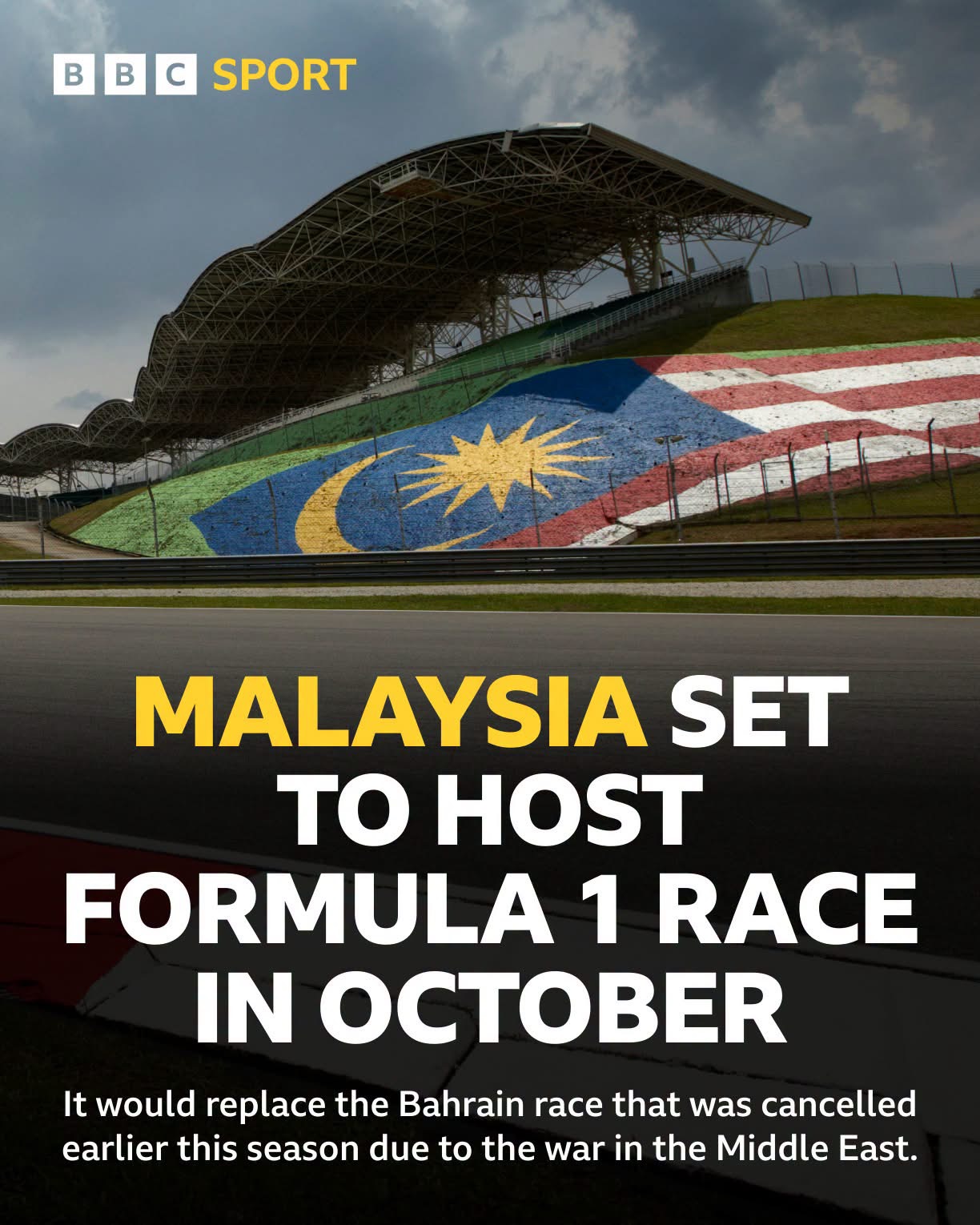
Formula 1 is on the verge of making one of its most surprising calendar decisions in recent years, with Malaysia’s iconic Sepang International Circuit expected to return as the host of the postponed Bahrain Grand Prix. If officially approved, the race will mark Sepang’s first appearance on the F1 calendar since 2017, giving fans a nostalgic return to one of the sport’s most popular venues while helping Formula 1 navigate the scheduling challenges created by ongoing conflict in the Middle East.
The proposed race, scheduled for October 2-4, would not replace Bahrain permanently but instead serve as the Bahrain Grand Prix under a temporary relocation agreement. The move reflects Formula 1’s determination to maintain a full championship calendar despite geopolitical uncertainty, while also offering a unique opportunity for Malaysia to showcase its readiness to return to the pinnacle of motorsport.
SEPANG POISED FOR ITS FIRST F1 WEEKEND IN NINE YEARS
According to reports from the Hungarian Grand Prix paddock, Formula 1 has finalized plans for Sepang to host the relocated Bahrain Grand Prix, with an official announcement expected in the coming days once the FIA completes its approval process.
The event would slot into the calendar immediately after the Azerbaijan Grand Prix and one week before the Singapore Grand Prix, creating an intense stretch of three consecutive race weekends across Asia.
For longtime Formula 1 supporters, Sepang holds a special place in the sport’s history. Known for its long straights, technical corners and unpredictable tropical weather, the Malaysian circuit consistently produced dramatic races and strategic battles before leaving the calendar after the 2017 season.
The last Formula 1 race held there was won by Max Verstappen, who claimed only the second Grand Prix victory of his career, ahead of Lewis Hamilton.
MIDDLE EAST CONFLICT FORCES F1 TO ADAPT
The calendar reshuffle stems from the postponement of both the Bahrain and Saudi Arabian Grands Prix earlier this season following escalating conflict involving Iran, the United States and Israel.
Formula 1 initially hoped Bahrain could still host its race later in the year if conditions improved. However, with logistical deadlines approaching and uncertainty continuing across the region, organizers opted to relocate the event rather than risk losing another championship round entirely.
The decision highlights the growing challenge of managing a truly global sporting calendar in an unpredictable geopolitical environment.
Rather than reducing the number of races, Formula 1 has prioritized finding suitable alternative venues capable of hosting events on relatively short notice while maintaining the championship’s commercial commitments.
WHY FORMULA 1 NEEDS TO KEEP THE CALENDAR FULL
The return of Malaysia is about much more than giving fans another race.
Formula 1 originally planned a 24-race calendar for the 2026 season. If multiple Middle Eastern races are cancelled without replacement, the championship could shrink dramatically.
That carries significant financial consequences.
Broadcast agreements, commercial partnerships and sponsorship contracts are often structured around a minimum number of races. Falling below certain thresholds could force Formula 1 to refund portions of television rights fees while teams could also face complications with sponsor obligations.
For that reason, maintaining at least 21 races has become an important business objective alongside the sporting challenge of crowning a world champion.
Malaysia’s availability offers an ideal solution because the circuit already meets Formula 1 standards and requires minimal preparation compared to venues that have not hosted the championship in years.
QATAR AND ABU DHABI ALSO FACE UNCERTAINTY
Although Bahrain now appears close to securing a temporary replacement, questions remain over the final two races scheduled in Qatar and Abu Dhabi.
Formula 1 officials are expected to make decisions regarding those events later this year, depending on developments in the Middle East.
Should further changes become necessary, Italy’s Imola circuit is widely viewed as the leading candidate to step in once again after successfully hosting Formula 1 between 2020 and 2025.
Portugal’s Portimão and Turkey’s Istanbul Park have also been discussed as contingency options, but both circuits face infrastructure and scheduling challenges that make them less practical for a short-notice return.
The situation means the closing weeks of the championship remain far from certain, adding another layer of unpredictability to an already fascinating season.
SEPANG’S RETURN COULD REIGNITE MALAYSIA’S F1 FUTURE
Even if the October event is officially classified as the Bahrain Grand Prix, its success could have implications that extend well beyond this season.
Malaysia left the Formula 1 calendar primarily because of declining attendance and rising hosting costs. However, the sport has changed dramatically since then.
The global popularity generated by Netflix’s Drive to Survive, combined with Formula 1’s expanding fan base across Asia, has transformed the commercial landscape. Interest among younger audiences is significantly higher than it was when Sepang last hosted a race.
A successful return could strengthen Malaysia’s case for securing a permanent place on future calendars, especially as Formula 1 continues evaluating long-term expansion across the Asian market.
For drivers, teams and fans alike, Sepang’s combination of high-speed corners, overtaking opportunities and unpredictable weather remains one of the sport’s most respected venues.
If confirmed, the Malaysian Grand Prix’s return will not simply fill a vacant spot on the schedule—it could become one of the defining stories of the 2026 Formula 1 season while opening the door for one of motorsport’s most beloved circuits to reclaim its place among the world’s greatest racing destinations.