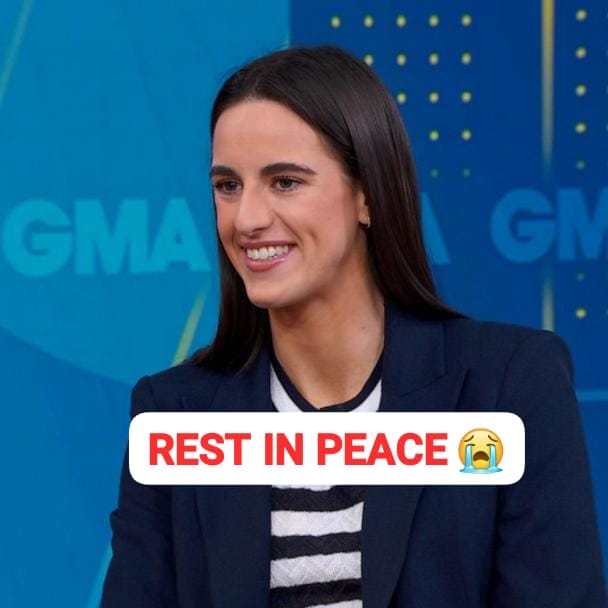
CAITLIN CLARK WAS KILLED AT A FRIEND’S HOUSE, BUT NO CREDIBLE SOURCE OR OFFICIAL STATEMENT HAS CONFIRMED THE CLAIM THAT … SOCIAL MEDIA RUMOR CLAIMING CAITLIN CLARK WAS KILLED CIRCULATES ONLINE WITHOUT CREDIBLE CONFIRMATION
A shocking claim involving Indiana Fever star Caitlin Clark has circulated on social media, with posts alleging that the WNBA player was killed at a friend’s house earlier today. However, no credible news organization or official source has confirmed the claim.
The allegation has attracted significant attention online, with users sharing and reposting the claim across social-media platforms. The wording of some posts has made the allegation appear like a breaking-news development, but there is currently no reliable evidence supporting the reported incident.
Clark is one of the most recognizable players in women’s basketball, meaning unverified claims involving her can spread rapidly. Her large social-media following and high profile within the WNBA have contributed to the intense reaction whenever rumors about her personal life or career emerge online.
At the center of the current situation is the claim that Clark was killed while at a friend’s house. Despite the seriousness of the allegation, no official statement has been identified confirming that such an incident occurred. There has also been no verified announcement from Clark, the Indiana Fever, the WNBA, or other authoritative sources confirming the reported death.
The absence of confirmation is particularly important when dealing with reports involving a public figure’s death. Such claims require reliable verification before they can responsibly be reported as fact. Social-media posts, screenshots and anonymous accounts alone do not establish that an event has actually occurred.
The rumor has nevertheless generated concern among fans, many of whom have searched for additional information after encountering the posts. Some users have questioned the origin of the claim and whether the information came from a legitimate news organization or an official source.
As the allegation continues to circulate, readers are being encouraged to distinguish between an unverified social-media claim and confirmed news. A post receiving thousands of views or shares does not necessarily mean that its contents have been independently verified.
Clark’s status as a major WNBA star has made her the subject of extensive media coverage throughout her professional career. Her performances, injuries, games and off-court activities regularly attract attention from fans and sports outlets. That level of attention can also make high-profile athletes targets of false or misleading online reports.
False celebrity death rumors are not new. Public figures across sports and entertainment have previously been the subject of similar claims, with misleading posts sometimes spreading widely before reliable information becomes available. In many cases, the original source of a rumor can be difficult to identify once the claim has been repeatedly reposted.
For that reason, responsible reporting requires waiting for confirmation from reliable sources before describing an alleged death as a fact. In Clark’s case, the claim that she was killed at a friend’s house should therefore be treated as an unverified allegation rather than confirmed news.
Fans should also be cautious about sharing the claim further. Reposting an unverified death report can increase its reach and potentially cause unnecessary distress for the person involved, their family, teammates, friends and supporters.
At this stage, the central fact remains that no credible source or official statement has confirmed the allegation. Until reliable authorities or established news organizations provide verified information, the claim should not be presented as evidence that Clark has died.
The incident serves as another reminder of how quickly information can spread online. In an environment where breaking-news posts can be created and shared within seconds, verification remains essential.
For now, the alleged killing of Caitlin Clark remains an unconfirmed social-media rumor, not an established news event. Any genuine development would need to be supported by credible reporting or an official statement before it could responsibly be reported as fact.