The Hungarian Grand Prix weekend erupted in controversy after Lewis Hamilton received a three-place grid penalty for impeding Oscar Piastri during qualifying, dramatically reshuffling the starting order and adding fresh tension to Formula 1’s increasingly fierce competitive landscape. While Lando Norris celebrated a long-awaited pole position for McLaren, Hamilton’s mistake became one of the defining talking points of the weekend, leaving Piastri visibly frustrated and Ferrari scrambling to accept responsibility.
QUALIFYING DRAMA CHANGES THE FRONT OF THE GRID
The closing moments of qualifying at the Hungaroring delivered high drama. Hamilton appeared to have secured second place behind Norris after another impressive Ferrari performance, but celebrations were short-lived.
As Oscar Piastri began his final flying lap, Hamilton remained on the racing line approaching Turn 1. The Australian was forced to alter his approach, exceeded track limits while trying to avoid the Ferrari, and ultimately abandoned what was expected to be his fastest lap of the session.
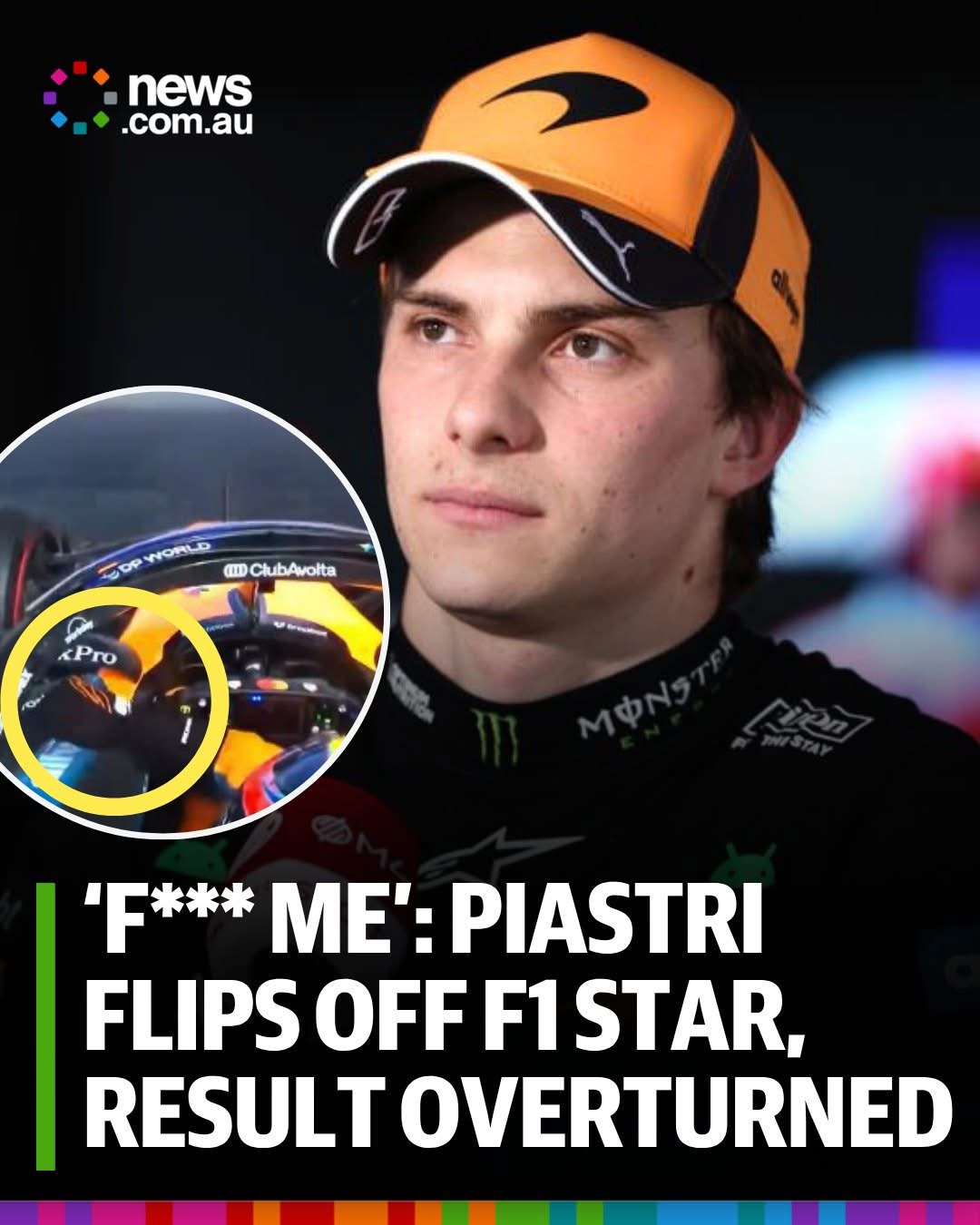
Piastri’s frustration was immediately evident. Television cameras captured him giving Hamilton a sarcastic thumbs-up as he drove past, while team radio revealed an emotional reaction after realizing his qualifying opportunity had been ruined.
Following an investigation by FIA stewards, Hamilton was handed the standard three-place grid penalty for unnecessary impeding during qualifying, dropping him from second to fifth on the starting grid.
FERRARI ACCEPTS RESPONSIBILITY FOR THE INCIDENT
Hamilton made it clear after qualifying that he had no intention of blocking Piastri deliberately.
The seven-time world champion explained that he had just completed his own qualifying lap and only received a warning from Ferrari about the approaching McLaren when it was already too late to move safely out of the way. According to Hamilton, he never saw Piastri in his mirrors before the Australian arrived at Turn 1.
Ferrari team principal Fred Vasseur also accepted blame, admitting the team informed Hamilton far too late about Piastri’s approach. Rather than placing responsibility solely on the driver, Ferrari acknowledged that its communication breakdown contributed significantly to the incident.
That admission likely helped explain why Hamilton immediately raised a hand in apology after realizing he had interfered with Piastri’s lap.
WHO BENEFITS FROM THE PENALTY?
Hamilton’s penalty completely altered the complexion of Sunday’s starting grid.
Charles Leclerc inherited second position, Mercedes title leader Andrea Kimi Antonelli moved into third, and Piastri advanced to fourth despite his compromised qualifying session. Hamilton now faces the difficult task of fighting back from fifth, reducing Ferrari’s chances of challenging Norris into Turn 1.
For McLaren, the decision represents a significant opportunity. Norris starts from pole with clean air ahead, while Piastri remains close enough to support his teammate strategically during the opening laps.
In a championship where every point carries enormous value, starting several positions higher could ultimately influence both the Drivers’ and Constructors’ Championships.
THE INCIDENT HIGHLIGHTS THE FINE MARGINS OF MODERN FORMULA 1
Qualifying incidents like this underline how unforgiving Formula 1 has become. With cars separated by mere hundredths of a second, even a brief obstruction can destroy an entire lap and potentially change the outcome of a race weekend.
The FIA has consistently enforced strict impeding rules in qualifying because every driver deserves an uninterrupted opportunity to set a competitive lap. Hamilton’s penalty aligns with previous decisions involving similar incidents, reinforcing the governing body’s commitment to consistency regardless of a driver’s reputation or achievements.
Although Ferrari accepted responsibility, the result serves as another reminder that flawless communication between engineers and drivers remains just as important as outright speed.
WHAT THIS MEANS FOR THE HUNGARIAN GRAND PRIX
The revised grid creates several fascinating storylines heading into Sunday’s race.
Norris now has an excellent opportunity to convert pole position into a crucial victory, while Leclerc, Antonelli, and Piastri all move into stronger strategic positions. Hamilton, meanwhile, must recover from fifth if he hopes to keep his championship ambitions alive.
Beyond Hungary, the incident also adds another chapter to the growing rivalry between Formula 1’s established stars and its emerging generation. Piastri’s visible frustration reflected the high stakes involved, while Hamilton’s acceptance of the penalty demonstrated how even the sport’s most experienced drivers remain vulnerable to costly mistakes.
As the season enters its decisive phase, every qualifying session, every grid position, and every FIA ruling could prove pivotal in determining who ultimately lifts Formula 1’s biggest trophies.