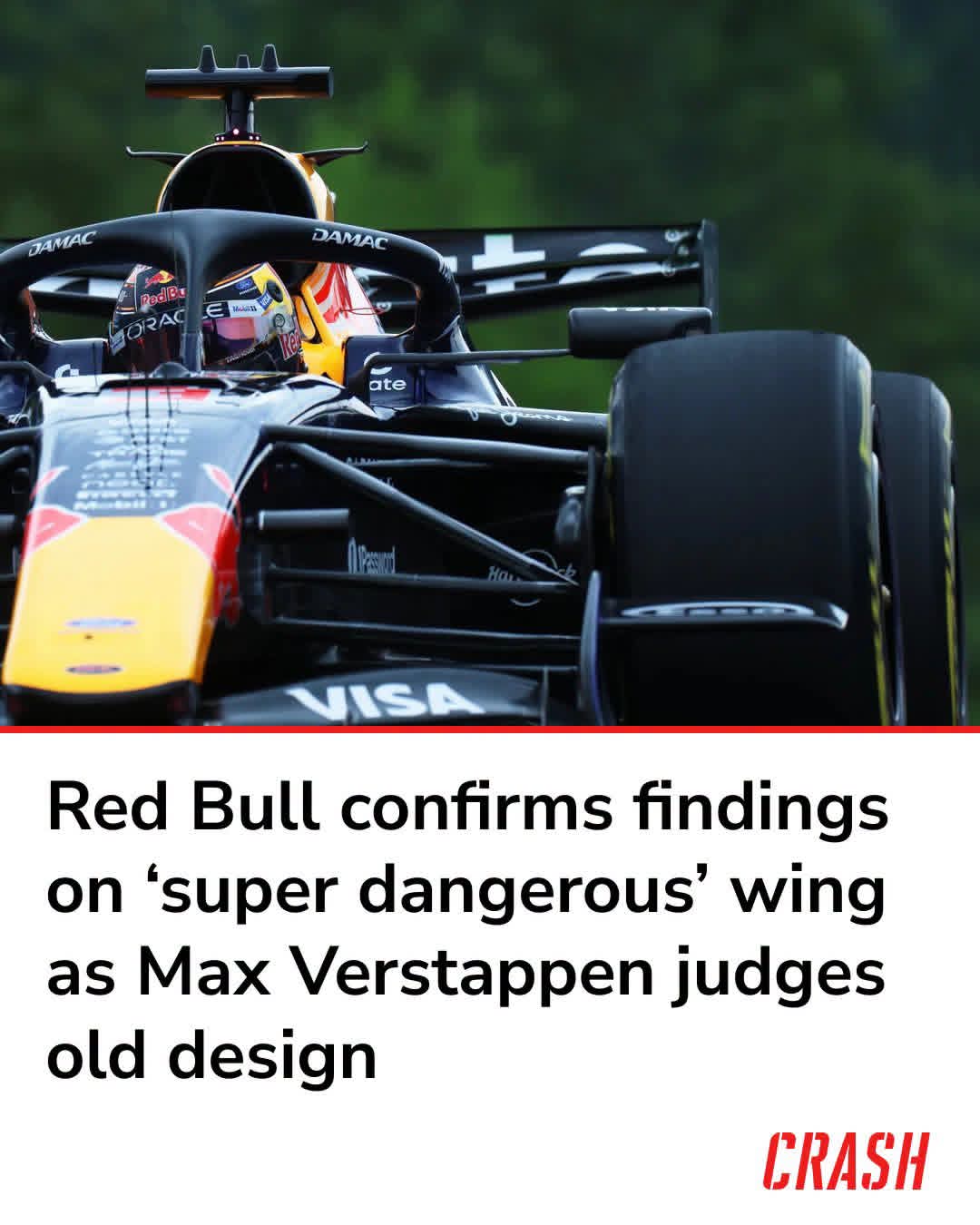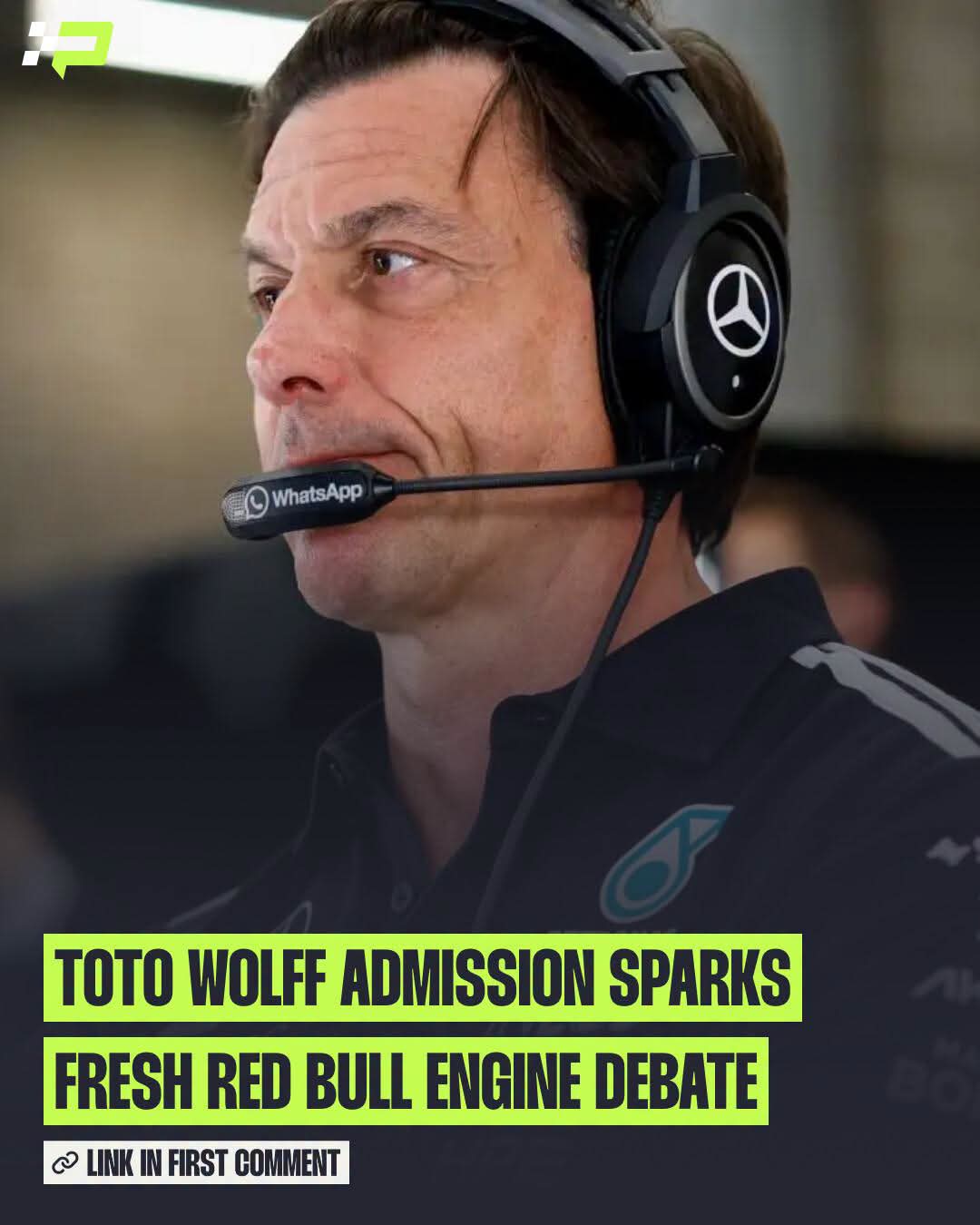
Mercedes team principal Toto Wolff has reignited one of Formula 1’s biggest technical controversies after boldly declaring that Mercedes currently possesses the most powerful power unit on the 2026 grid. His remarks, made following the Belgian Grand Prix, have immediately fueled fresh debate over Red Bull’s engine program, the FIA’s controversial development rules, and whether the governing body may have incorrectly assessed the competitive balance between manufacturers.
The timing of Wolff’s comments could hardly be more explosive. Red Bull has already questioned the FIA’s evaluation that classified its internal combustion engine (ICE) as the strongest in Formula 1, a decision that prevented the team from receiving additional development opportunities under the sport’s new engine regulations. Now, Wolff’s public confidence in Mercedes’ power advantage has many wondering whether Red Bull has legitimate grounds to reopen the discussion.
WOLFF’S CONFIDENT ADMISSION HAS TURNED HEADS ACROSS THE PADDOCK
Mercedes endured a frustrating Belgian Grand Prix despite Andrea Kimi Antonelli securing victory and extending his lead in the Drivers’ Championship. George Russell retired after an opening-lap collision with Lewis Hamilton, while Mercedes also battled unexplained deployment issues affecting its power units.
Yet amid the disappointment, Wolff delivered one of the weekend’s most striking statements.
According to the Mercedes boss, his team still operates the most powerful power unit in Formula 1 despite the reliability setbacks that have interrupted an otherwise highly competitive campaign.
Wolff insisted Mercedes possesses both a race-winning chassis and the strongest overall power package, adding that solving reliability concerns is far easier than trying to recover outright performance.
Those comments immediately shifted attention away from Mercedes’ Belgian struggles and toward the ongoing political battle surrounding Formula 1’s new engine regulations.
WHY RED BULL MAY HAVE EVERY REASON TO QUESTION THE FIA
The controversy centers on Formula 1’s Additional Development and Upgrade Opportunities (ADUO) system introduced alongside the 2026 engine regulations.
The concept allows manufacturers judged to be behind in engine performance to receive additional opportunities to improve their power units during the season. However, the FIA evaluates only the internal combustion engine component—not the complete hybrid power unit.
Earlier this season, Red Bull was informed that its ICE ranked as the strongest among all manufacturers. That designation prevented the Milton Keynes-based team from accessing extra development allowances.
Mercedes, meanwhile, qualified for additional upgrade opportunities despite Wolff now publicly describing his team’s power unit as the benchmark.
While these two facts are not necessarily contradictory—the hybrid electrical systems account for roughly half of total power output—they have created a perception problem that Red Bull cannot ignore.
THE DIFFERENCE BETWEEN ICE PERFORMANCE AND TOTAL POWER OUTPUT
One important technical detail has become central to this debate.
Formula 1’s current power units rely on a near-equal combination of electrical deployment and traditional internal combustion power. The FIA’s ADUO evaluation focuses exclusively on the combustion engine rather than the complete package drivers actually race with.
That distinction explains why Mercedes can legitimately claim superiority in total power delivery while Red Bull still holds the advantage in pure combustion performance.
Sky Sports analyst Bernie Collins quickly highlighted this nuance, suggesting Mercedes’ strength likely comes from superior battery deployment and energy recovery rather than raw engine horsepower alone.
If true, Mercedes has found a competitive edge within the hybrid system rather than exploiting a loophole in the FIA’s assessment.
KARUN CHANDHOK BELIEVES RED BULL SHOULD BE ASKING QUESTIONS
Former Formula 1 driver Karun Chandhok believes Wolff’s comments should immediately attract Red Bull’s attention.
According to Chandhok, there are only two realistic possibilities.
Either Red Bull genuinely possesses the strongest internal combustion engine while Mercedes has built a superior overall hybrid package—or Red Bull lost an important political battle during the FIA’s technical assessment process.
In either scenario, Chandhok argued Red Bull should seek further clarification from Formula 1’s governing body regarding how manufacturers are evaluated under the current development framework.
His comments reflect growing concern that the complexity of the 2026 regulations has made performance comparisons increasingly difficult even for experienced observers.
MERCEDES’ BIGGEST ENEMY REMAINS RELIABILITY
Despite Wolff’s confidence in Mercedes’ outright performance, reliability continues to prevent the Silver Arrows from fully capitalizing on their speed advantage.
Throughout the season, both Russell and Antonelli have suffered costly technical failures.
Russell has repeatedly pointed to mysterious deployment losses and battery problems that have compromised multiple race weekends, while Antonelli also endured reliability setbacks earlier in the year despite maintaining his championship lead.
Mercedes believes many more points should already separate them from Ferrari in the Constructors’ Championship.
Instead, Ferrari has steadily reduced the gap to just 73 points after another strong weekend in Belgium.
Every mechanical issue now carries enormous significance with more than half the championship still remaining.
THE ENGINE DEBATE COULD SHAPE FORMULA 1’S FUTURE
Beyond the immediate title fight, Wolff’s remarks highlight just how politically sensitive Formula 1’s new power unit era has become.
Manufacturers have invested billions into the hybrid regulations, making every competitive advantage—and every development restriction—immensely valuable.
If Red Bull successfully argues that the FIA’s evaluation process fails to reflect real-world performance, pressure could mount for adjustments to the ADUO framework before future seasons.
For Mercedes, the focus remains simpler.
The team believes it already has championship-winning machinery. Eliminating reliability failures could allow Antonelli to strengthen his grip on the Drivers’ Championship while helping Mercedes defend its Constructors’ lead against Ferrari and McLaren.
As the championship heads toward the Hungarian Grand Prix before the summer break, Formula 1’s fiercest battle may no longer be limited to the racetrack. It is increasingly becoming a technical and political contest between manufacturers determined to maximize every advantage under one of the sport’s most complex rule books.