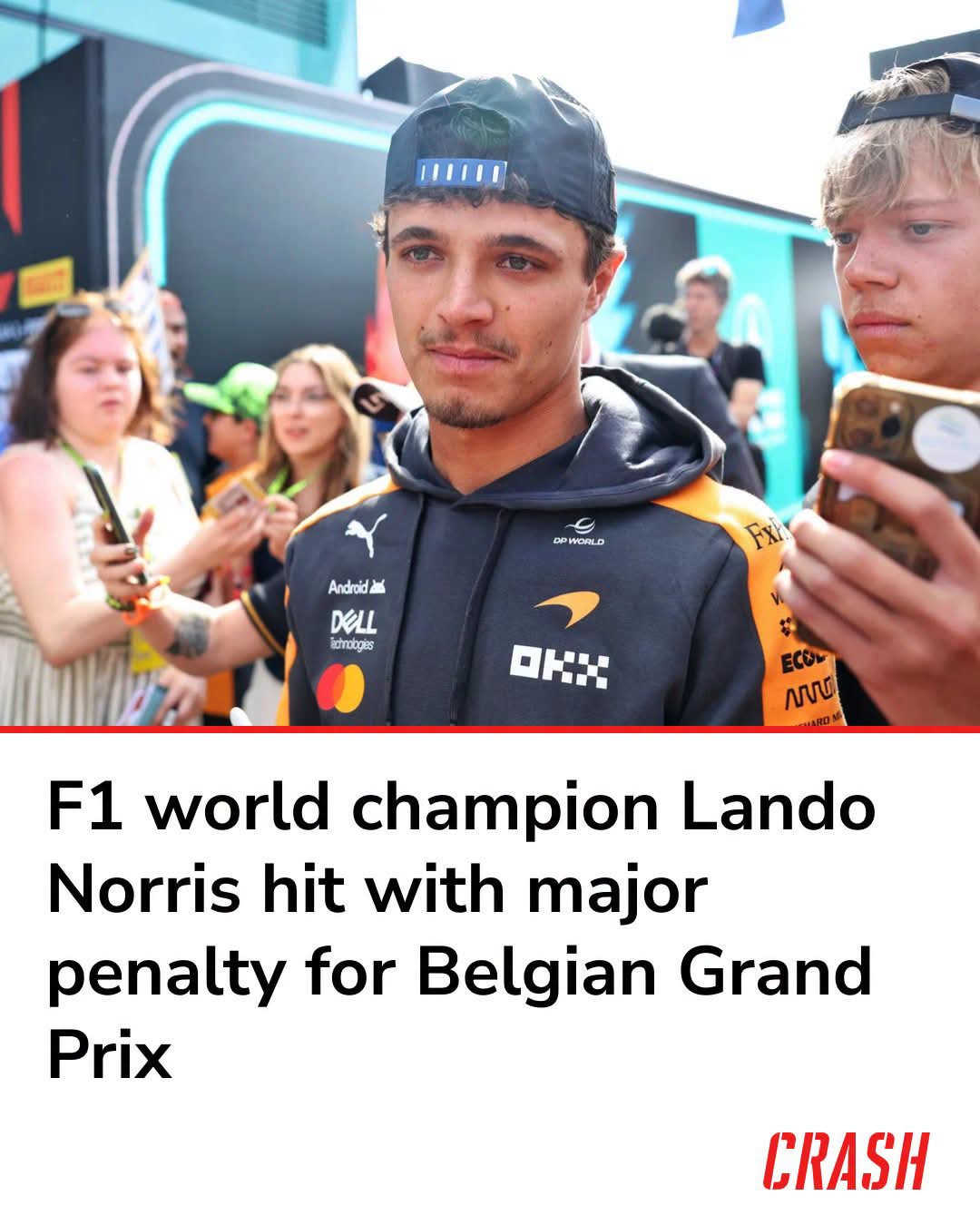
McLaren’s difficult 2026 Formula 1 campaign has taken another significant blow after reigning world champion Lando Norris was officially handed a 10-place grid penalty for this weekend’s Belgian Grand Prix. While the penalty is undoubtedly a setback for one of Formula 1’s biggest stars, the decision reveals a much bigger story unfolding behind the scenes—a calculated gamble that McLaren hopes will prevent even greater damage during the remainder of the championship.
With Mercedes-powered rivals continuing to improve and Ferrari steadily closing the gap, the Woking-based outfit has decided that sacrificing one race may ultimately protect Norris’ title ambitions over the final half of the season.
WHY LANDO NORRIS HAS BEEN GIVEN A 10-PLACE GRID PENALTY
The penalty stems from McLaren fitting Norris’ car with a fourth Power Electronics unit, exceeding the FIA’s seasonal allocation of three components.
Under Formula 1 regulations, introducing an additional Power Electronics component automatically triggers a 10-place grid penalty. Rather than waiting until a complete failure occurred, McLaren elected to install Mercedes’ updated and more reliable specification ahead of the Belgian Grand Prix.
The decision follows a frustrating chain of reliability problems that have haunted Norris throughout the season. A terminal issue prevented him from even starting the Chinese Grand Prix, another component developed problems during practice in Japan, and a repaired unit later failed again during practice in Monaco. Those repeated setbacks effectively forced McLaren into using its final penalty-free allocation much earlier than planned.
MCLAREN’S DECISION IS A LONG-TERM STRATEGIC GAMBLE
Although losing ten grid positions is never ideal, McLaren believes Spa-Francorchamps presents the best possible venue to absorb such a penalty.
Belgium remains one of Formula 1’s most overtaking-friendly circuits, thanks to its long straights, multiple DRS opportunities, and varied racing lines. Starting further down the grid at Spa is generally less damaging than serving the same penalty at tighter circuits such as Hungary or Zandvoort, where overtaking opportunities are considerably more limited.
The team confirmed that Mercedes has introduced several reliability improvements to its latest Power Electronics package, prompting McLaren to accept the immediate sporting cost in exchange for greater confidence over the remaining races.
If everything goes according to plan, this upgraded component should remain in Norris’ car for the rest of the season, reducing the likelihood of additional reliability-related penalties.
RELIABILITY HAS BECOME MCLAREN’S BIGGEST ENEMY
Winning championships requires more than outright speed—it demands consistency.
McLaren learned that lesson the hard way this year as repeated technical failures prevented Norris from maximizing several race weekends. Every retirement, every compromised practice session, and every unexpected component replacement has chipped away at both his Drivers’ Championship hopes and McLaren’s Constructors’ campaign.
The reigning world champions entered 2026 expecting to defend both titles after dominating the previous season. Instead, mechanical setbacks have become almost as damaging as any lack of outright pace.
The Belgian penalty highlights how modern Formula 1 increasingly rewards durability as much as performance. A slightly slower but dependable package often delivers better championship results than an extremely fast car that cannot consistently reach the finish line.
THE CHAMPIONSHIP PICTURE CONTINUES TO GET MORE DIFFICULT
McLaren now faces an enormous uphill battle in both championships.
The team currently sits third in the Constructors’ standings, trailing Mercedes by more than 150 points. Norris, meanwhile, occupies fifth place in the Drivers’ Championship and remains over 80 points behind championship leader Andrea Kimi Antonelli.
Those numbers underline just how costly every lost opportunity has become.
Even if Norris manages an impressive recovery drive through the field at Spa, every point now carries extra significance. Mercedes continues to demonstrate remarkable consistency, Ferrari has steadily improved throughout the season, and several midfield teams have narrowed the competitive gap, making every Grand Prix increasingly unpredictable.
The Belgian weekend therefore represents more than simply overcoming a grid penalty—it may determine whether McLaren can realistically remain part of the championship conversation heading into the second half of the year.
SPA COULD STILL OFFER NORRIS AN OPPORTUNITY
Despite the setback, all hope is far from lost.
Spa-Francorchamps has historically produced some of Formula 1’s greatest comeback drives. Its combination of long straights, heavy braking zones, and changing weather conditions frequently allows faster cars to carve through the field.
Should rain arrive—as it often does in the Ardennes—the race could become even more unpredictable. Norris has repeatedly demonstrated his ability to thrive in mixed conditions, and McLaren’s improved reliability package may provide exactly the confidence needed to push aggressively throughout the weekend.
A strong recovery into the top five would significantly soften the blow of the penalty while giving the team valuable momentum ahead of upcoming races.
WHY THIS DECISION COULD DEFINE MCLAREN’S SEASON
McLaren’s willingness to sacrifice immediate results reflects a broader shift in Formula 1 strategy.
Rather than reacting to failures after they occur, top teams increasingly make proactive decisions designed to minimize long-term damage. Accepting a single grid penalty now could ultimately prevent multiple retirements later in the year.
However, that strategy also carries risk.
If another reliability issue emerges despite the new component, McLaren could find itself forced into even more engine-related penalties before the season concludes—a scenario that would almost certainly eliminate Norris from championship contention.
For now, the team believes it has made the smartest possible choice. Whether that decision proves successful will become clear over the next several Grands Prix.
ALL EYES NOW TURN TO BELGIUM
The Belgian Grand Prix has suddenly become one of the most intriguing weekends of McLaren’s season.
Instead of simply chasing victory, Norris now faces the challenge of recovering from deep in the grid while showcasing the true pace of McLaren’s updated package. His ability to fight back through the field will not only influence his championship position but also provide the first real indication of whether McLaren’s reliability gamble was worth making.
If the upgraded Power Electronics delivers the durability McLaren expects, this weekend’s painful penalty could eventually be remembered as the turning point that stabilized the team’s campaign. If not, the reigning world champions may look back on Spa as another costly chapter in what has become an increasingly frustrating title defense.