Formula 1 has found itself at the center of another heated debate after the FIA’s handling of the closing laps of the 2026 British Grand Prix left fans, analysts, and former drivers questioning one of the race’s biggest decisions. What initially looked set to become a thrilling one-lap sprint to the finish instead ended behind the Safety Car, preserving George Russell’s second-place finish and igniting widespread discussion across the motorsport world.
While no evidence has emerged suggesting any deliberate favoritism, the sequence of events has fueled frustration among sections of the Formula 1 community who believe the FIA’s late-race decision deserves greater explanation.
THE SAFETY CAR DECISION CHANGED THE ENTIRE FINISH
The British Grand Prix delivered drama from start to finish.
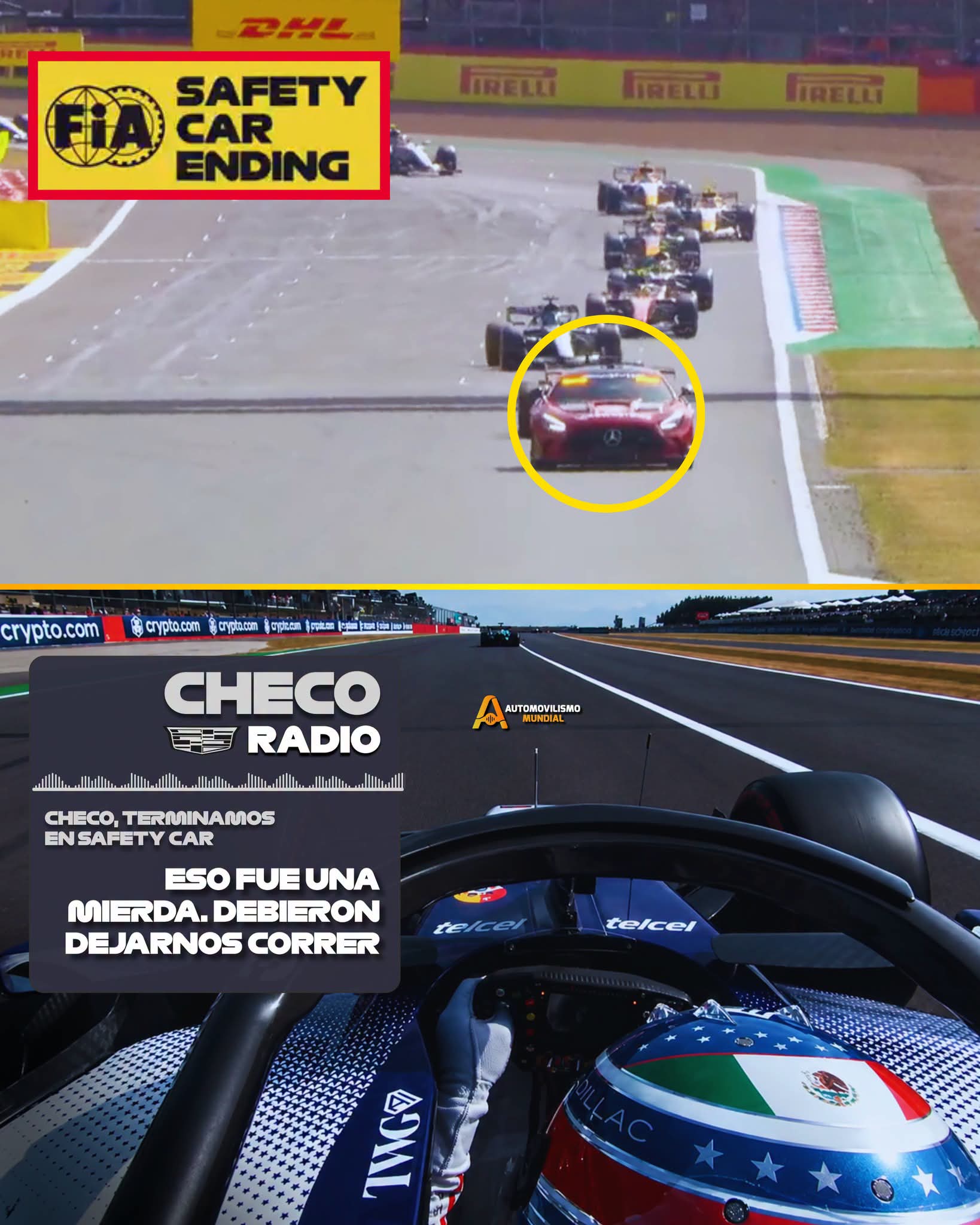
After Max Verstappen spun off late in the race, the Safety Car was deployed, forcing teams to make critical strategic decisions within seconds. Ferrari immediately brought Charles Leclerc and Lewis Hamilton into the pits for fresh tires, anticipating that racing would resume for one final lap.
Initially, it appeared exactly that would happen.
Race control prepared to withdraw the Safety Car, raising expectations of a dramatic dash to the checkered flag. However, before the restart could take place, officials reversed course and kept the Safety Car on track until the race ended.
That single decision effectively froze the running order.
WHY GEORGE RUSSELL BENEFITED
Among the biggest beneficiaries of the neutralized finish was Mercedes driver George Russell.
Unlike several rivals, Russell had remained on older tires during the late Safety Car period. Had the race restarted, he would likely have faced immediate pressure from drivers behind who were equipped with significantly fresher rubber.
Lewis Hamilton, Lando Norris, and others had positioned themselves for exactly that scenario.
Instead, the race concluded without another green-flag lap, allowing Russell to comfortably secure second place behind Ferrari’s Charles Leclerc.
Although Russell simply benefited from circumstances outside his control, the outcome immediately became one of the race’s defining talking points.
FANS WANTED ANSWERS, NOT SPECULATION
Much of the backlash has centered not on Russell himself but on the FIA’s decision-making process.
Many observers questioned why race control appeared willing to restart the race before ultimately abandoning that plan moments later.
Formula 1 fans have become increasingly vocal about the importance of transparency, particularly in races where championship points and podium finishes are heavily influenced by race control decisions.
Without a detailed public explanation, speculation naturally filled the gap.
For many supporters, greater communication from the FIA would help reduce unnecessary controversy surrounding such high-profile moments.
ANOTHER CONTROVERSIAL WEEKEND FOR THE FIA
The Safety Car debate did not occur in isolation.
Throughout the British Grand Prix weekend, numerous decisions by race officials had already generated discussion among teams and fans.
From qualifying incidents to race penalties and steward investigations, Silverstone proved to be one of the busiest weekends of the season for Formula 1’s governing body.
When multiple contentious decisions occur within a single event, confidence in officiating inevitably comes under increased scrutiny—even when each individual ruling may have legitimate justification.
That broader context explains why the Safety Car decision generated such an emotional response.
MODERN FORMULA 1 CONTINUES TO DIVIDE OPINION
The controversy also reflects larger conversations about Formula 1’s current direction.
Some longtime fans argue that modern races rely too heavily on technology, battery deployment strategies, tire management, and race control interventions rather than pure wheel-to-wheel competition.
Others counter that today’s Formula 1 remains more competitive than ever, with strategic complexity forming an essential part of modern racing.
The Silverstone finale reignited that debate.
Many supporters believed the race deserved one final green-flag lap to settle positions on track rather than behind the Safety Car.
RACE CONTROL DECISIONS ARE NEVER EASY
Despite the criticism, it is important to recognize the difficult position race officials often face.
Safety remains Formula 1’s highest priority, particularly following incidents involving stranded cars, debris, or marshals working near the circuit.
Race control must balance sporting spectacle with driver safety, often making split-second decisions using information unavailable to viewers watching at home.
That does not automatically mean every decision will satisfy fans, teams, or drivers.
However, it highlights why these situations are rarely as straightforward as they appear from television broadcasts alone.
THE CHAMPIONSHIP IMPLICATIONS ARE SIGNIFICANT
The decision also carried important championship consequences.
Russell’s second-place finish provided Mercedes with valuable Constructors’ Championship points while denying pursuing drivers the opportunity to fight for higher positions.
Lewis Hamilton remained third after Ferrari’s late strategy, while Lando Norris finished fourth.
Had racing resumed for one final lap, the finishing order could have changed dramatically.
That possibility is precisely why the debate continues to dominate discussions following the race.
FORMULA 1 NEEDS GREATER TRANSPARENCY
Perhaps the biggest lesson from Silverstone is not whether the FIA made the correct decision, but how those decisions are communicated.
Formula 1 has grown into a global sport followed by hundreds of millions of passionate fans. With every controversial ruling dissected instantly across social media, clear explanations have become increasingly important.
Providing detailed reasoning behind critical race control decisions would help reduce speculation while strengthening confidence in officiating.
Transparency may not eliminate disagreement, but it would certainly improve understanding.
THE DEBATE IS FAR FROM OVER
The British Grand Prix will likely be remembered not only for Charles Leclerc’s victory but also for the dramatic Safety Car finish that prevented one final battle on track.
George Russell rightfully accepted the result presented to him, while rivals were left wondering what might have happened under racing conditions.
Whether the FIA acted appropriately or missed an opportunity to deliver a thrilling conclusion remains a matter of opinion.
What is certain is that Formula 1 once again finds itself facing questions about consistency, communication, and the delicate balance between sporting entertainment and operational safety.
As the championship moves forward, fans will be watching closely—not just for the racing itself, but for how the FIA handles the next critical moment that could shape the outcome of another Grand Prix.