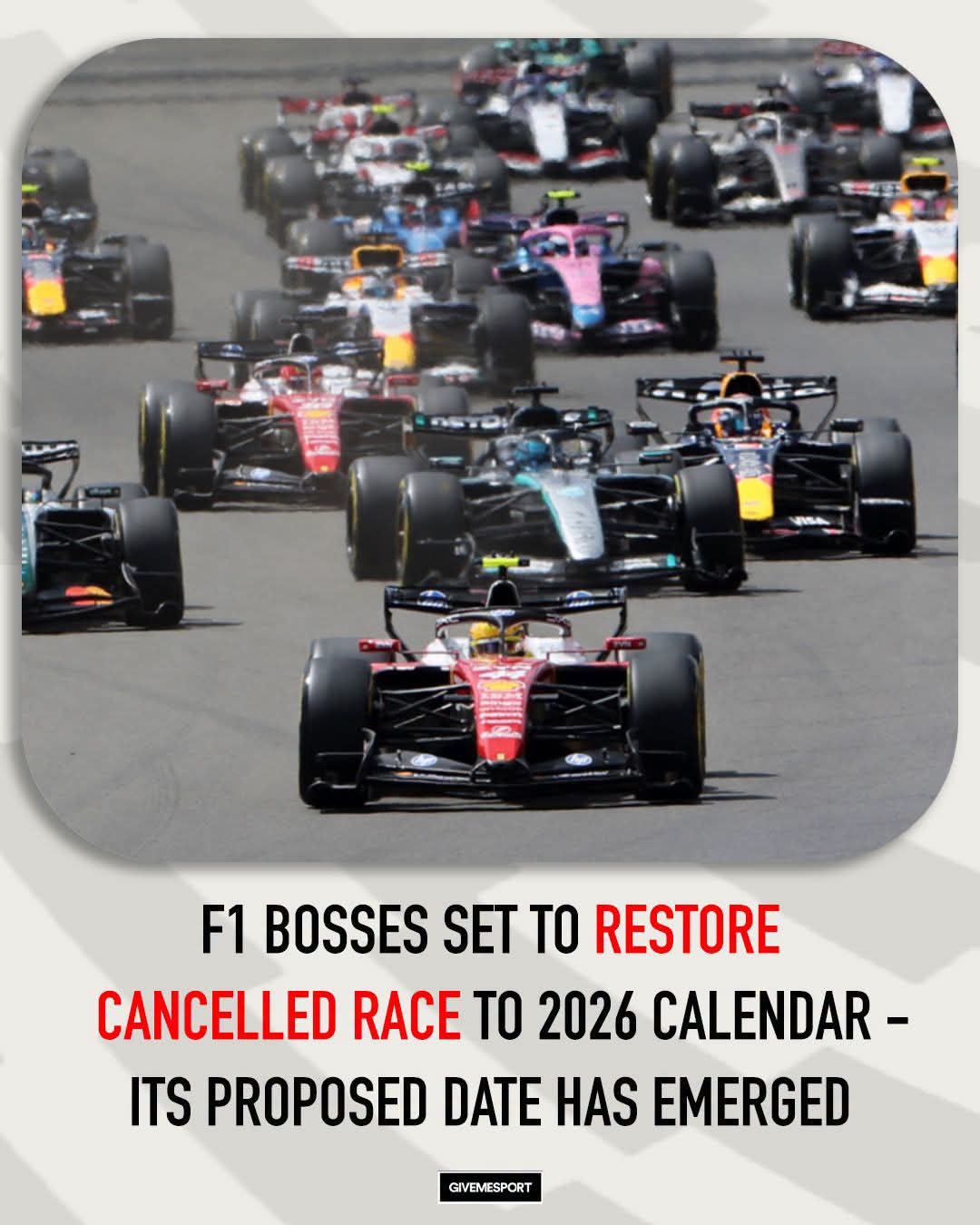
Formula 1 could soon reverse one of the biggest disruptions to its 2026 season. After months of uncertainty surrounding the cancellation of the Bahrain and Saudi Arabian Grands Prix, Formula 1 President Stefano Domenicali has confirmed that the championship is actively working to restore one of those events before the season concludes.
While no final decision has been announced, Bahrain has emerged as the leading candidate for a dramatic return, with reports suggesting an October race weekend could be added to the calendar. If approved, the move would preserve the championship’s global schedule while sending a powerful message about Formula 1’s confidence in the region’s improving stability.
WHY THE BAHRAIN AND SAUDI ARABIAN GRAND PRIX WERE CANCELLED
The Bahrain and Saudi Arabian races were originally scheduled for April but were removed from the calendar following escalating tensions linked to the conflict involving the United States and Iran.
With security concerns affecting parts of the Middle East, Formula 1 chose caution over uncertainty. Rather than risking teams, drivers, and thousands of staff members, the championship temporarily suspended both events while monitoring developments in the region.
At the time, it remained unclear whether the races had been permanently cancelled or simply postponed. Many believed they would not return during the 2026 campaign, especially with Qatar and Abu Dhabi already scheduled later in the year.
DOMENICALI CONFIRMS FORMULA 1 IS WORKING ON A SOLUTION
Speaking ahead of the British Grand Prix weekend, Domenicali revealed that Formula 1 remains committed to finding room for at least one of the cancelled races if conditions continue improving.
According to the F1 chief, any announcement must come before the championship’s summer break following the Hungarian Grand Prix later this month.
His comments suggest Formula 1 officials are now evaluating both logistical and sporting considerations before making a final decision. If the required safety, operational, and commercial conditions are satisfied, the championship appears ready to move forward.
The timeline is significant because altering a Formula 1 calendar involves extensive coordination with teams, circuit operators, broadcasters, freight partners, sponsors, and governing bodies.
BAHRAIN APPEARS TO BE THE MOST LIKELY CHOICE
Although both Bahrain and Saudi Arabia were initially under consideration, Bahrain now appears to have the strongest chance of returning.
Current reports indicate Formula 1 is targeting the weekend of October 2–4, creating a new race between the Azerbaijan and Singapore Grands Prix.
That scheduling would minimize travel disruption while maintaining the championship’s overall competitive rhythm.
Bahrain has long served as one of Formula 1’s most important venues. Beyond hosting memorable races, the circuit frequently stages winter testing, making it one of the paddock’s most familiar destinations. Its infrastructure, organizational experience, and relationship with Formula 1 make it a logical candidate for a late-season addition.
WHAT A RESCHEDULED RACE WOULD MEAN FOR THE CHAMPIONSHIP
The 2026 title battle has become increasingly competitive, with Mercedes leading both championships while Ferrari and McLaren continue applying pressure.
Adding another Grand Prix would introduce fresh strategic challenges during the closing stages of the season.
Teams would need to adjust development schedules, manage engine allocations, and prepare for additional travel during one of the busiest stretches of the calendar. Drivers would face another opportunity to earn valuable championship points, potentially influencing both the Drivers’ and Constructors’ standings.
For smaller teams fighting over prize money and championship positions, one extra race could significantly affect their final financial rewards.
FORMULA 1 CONTINUES TO EXPAND ITS GLOBAL PRESENCE
Domenicali emphasized that Formula 1’s responsibility extends beyond simply organizing races. Successfully returning to Bahrain would demonstrate the championship’s ability to adapt while continuing its global expansion.
The Middle East has become one of Formula 1’s fastest-growing regions, hosting multiple Grands Prix and attracting substantial investment from governments, sponsors, and international partners.
Maintaining that presence remains strategically important as Formula 1 continues expanding its worldwide audience through television, digital platforms, and live events.
At the same time, the championship continues closely monitoring the situation surrounding the Qatar and Abu Dhabi Grands Prix, both of which remain scheduled for the final weeks of the season.
WHY SAFETY REMAINS THE HIGHEST PRIORITY
Despite the optimism surrounding Bahrain’s possible return, Formula 1 has repeatedly stressed that no race will proceed unless organizers are fully satisfied with regional security.
The championship has consistently demonstrated its willingness to alter schedules when necessary, placing the safety of drivers, teams, officials, and spectators above commercial considerations.
That cautious approach has become increasingly important as Formula 1 expands into new markets while navigating complex international situations.
WHAT HAPPENS NEXT?
The next few weeks will likely determine whether Bahrain officially rejoins the 2026 Formula 1 calendar.
If approval is granted before the summer break, teams will immediately begin preparing for an expanded schedule that could reshape the closing months of the championship.
Should Bahrain return, it would not only restore one of Formula 1’s most recognizable races but also provide another crucial chapter in what is already shaping up to be one of the most competitive seasons in recent memory.
For fans, teams, and the sport itself, the prospect of recovering a lost Grand Prix represents more than just an extra weekend of racing—it reflects Formula 1’s determination to preserve its global calendar while remaining flexible in the face of extraordinary circumstances.