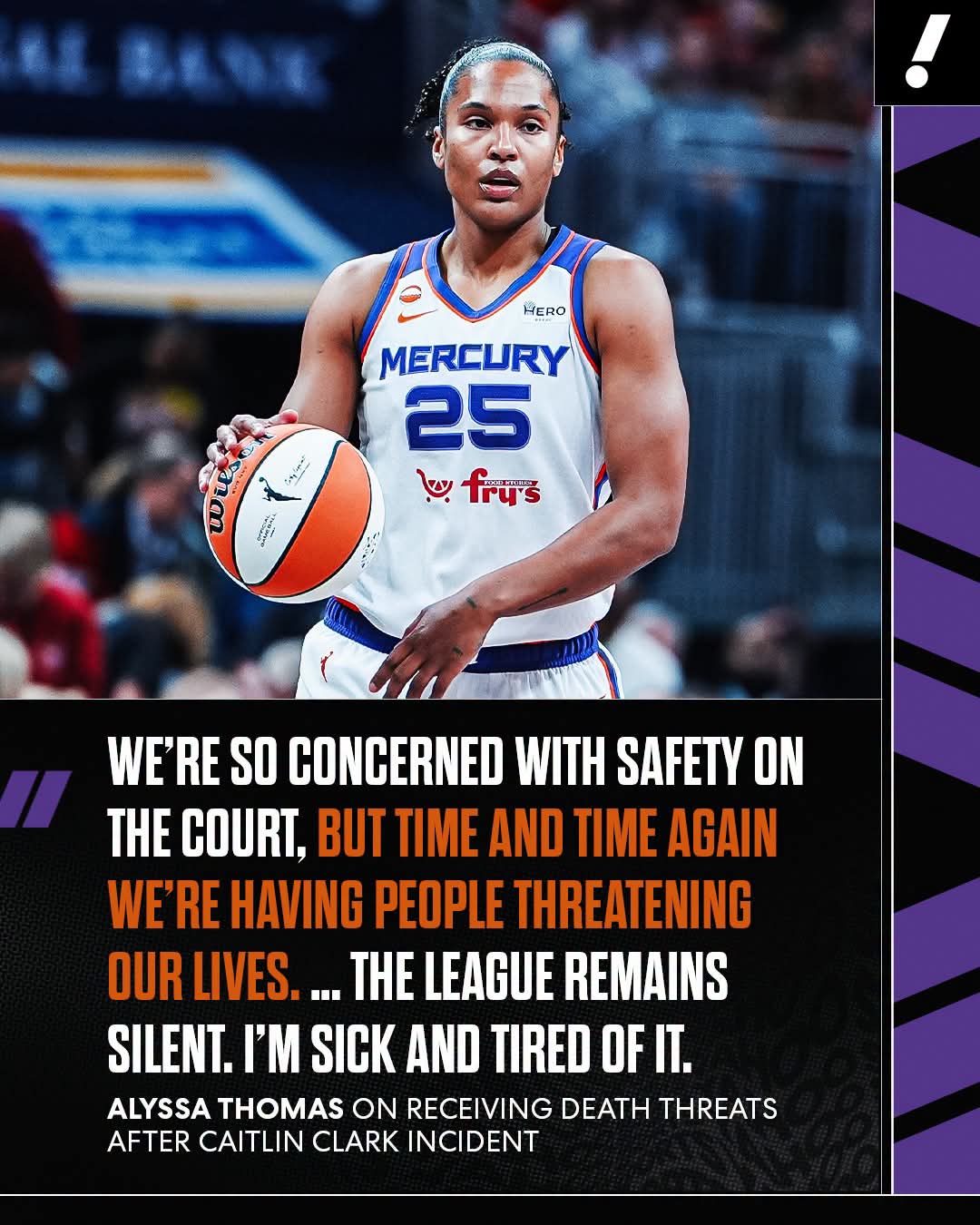
The debate surrounding Caitlin Clark and the WNBA has intensified once again after the league’s players’ union declined to comment on one of the most controversial incidents of the season. What began as a physical altercation during the Indiana Fever’s dramatic matchup against the Phoenix Mercury has now evolved into a league-wide discussion about player safety, officiating standards, and the responsibilities of the organizations representing WNBA athletes.
The incident, involving Phoenix Mercury veteran Alyssa Thomas and Fever superstar Caitlin Clark, has continued to dominate headlines days after the game. While the WNBA ultimately handed Thomas a one-game suspension and a $1,000 fine, fresh questions surrounding the union’s silence have added another layer to an already heated debate.
THE INCIDENT THAT CONTINUES TO DIVIDE THE WNBA
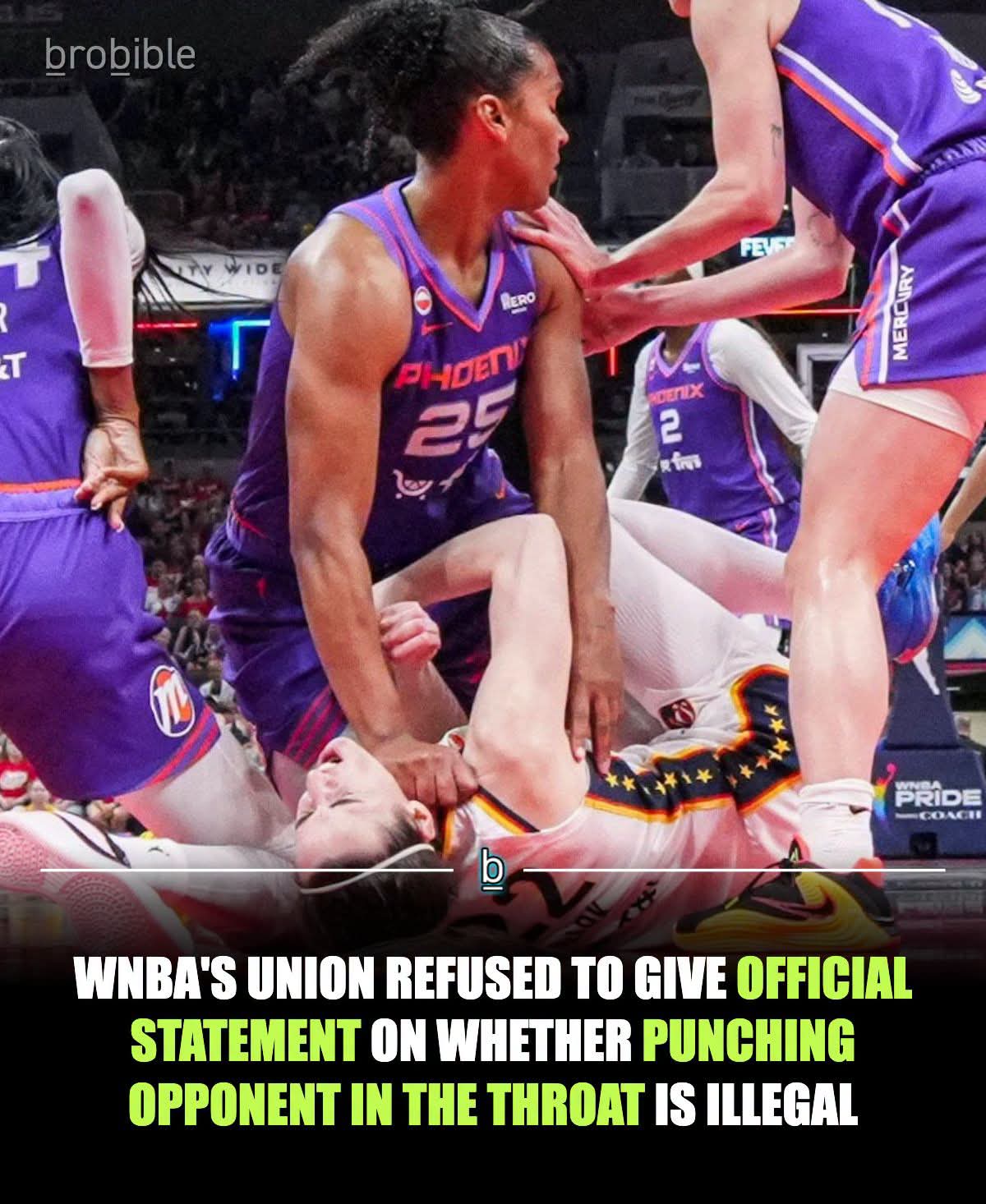
The controversy stems from the June 24 contest between the Indiana Fever and Phoenix Mercury. During the game, Thomas made forceful contact with Clark in a collision near the basket, with video appearing to show her fist making contact with Clark’s throat area.
Officials did not issue a Flagrant Foul during live action, allowing play to continue. However, after reviewing the footage, the WNBA upgraded the play to a Flagrant Foul 2, describing it as a non-basketball act involving reckless contact to Clark’s throat. The league subsequently suspended Thomas for one game and imposed a financial penalty.
While many observers welcomed the postgame disciplinary action, others questioned why such dangerous contact was missed during the game itself.
PLAYERS’ UNION CHOOSES NOT TO COMMENT
The latest development has shifted attention toward the Women’s National Basketball Players Association (WNBPA).
Veteran sports journalist Christine Brennan revealed that she sought clarification from WNBPA Executive Director Terri Jackson regarding whether striking an opponent in the throat should clearly be considered punishable under league standards.
According to Brennan, the union, through its spokesperson, respectfully declined to comment instead of offering an official position.
That decision has fueled widespread discussion among fans, media members, and former athletes. Many believe the union missed an opportunity to reinforce its commitment to player safety regardless of which player was involved, while others argue the organization may have intentionally avoided commenting on an active disciplinary matter.
WHY PLAYER SAFETY REMAINS THE BIGGER ISSUE
Beyond the debate over Clark herself, the incident has reignited concerns about consistency in WNBA officiating.
Clark has become one of the league’s most physically targeted players since entering the WNBA, largely due to the attention and defensive pressure that naturally accompany one of basketball’s biggest stars. While physical defense has always been part of professional basketball, critics argue that dangerous contact must be distinguished from legitimate toughness.
The league’s decision to upgrade the foul after the game demonstrates that officials believed the contact exceeded acceptable basketball play. However, many observers believe that relying on postgame reviews rather than in-game enforcement creates unnecessary risks for players.
CAITLIN CLARK’S IMPACT CONTINUES TO MAGNIFY EVERY INCIDENT
Clark’s popularity has transformed virtually every major on-court incident into a national sports story.
Her arrival has brought unprecedented television ratings, attendance figures, sponsorship opportunities, and media coverage to the WNBA. As a result, controversial plays involving Clark receive attention far beyond the league’s traditional audience.
That heightened spotlight creates additional pressure on league officials, players, and executives. Every disciplinary decision is examined closely, and every public statement—or lack thereof—quickly becomes part of the broader conversation.
The attention is not necessarily unique to Clark as an athlete, but rather reflects the enormous influence she has had on the visibility of women’s basketball.
THE LEAGUE MUST FIND A CONSISTENT STANDARD
One of the biggest challenges facing the WNBA is establishing confidence that dangerous plays will be handled consistently regardless of the players involved.
The league has shown a willingness to use postgame reviews to correct officiating mistakes, but repeated reliance on retroactive discipline may not satisfy players, coaches, or fans who want immediate accountability during games.
Clearer standards regarding excessive physical contact would help reduce confusion while reinforcing that aggressive basketball and unnecessary dangerous play are not the same thing.
WHAT HAPPENS NEXT
Although the suspension has already been served, discussion surrounding the incident is unlikely to disappear soon.
The WNBA continues to experience record growth, and with that growth comes increased scrutiny over officiating, discipline, player protection, and league governance. Future incidents involving star players will almost certainly receive similar levels of attention.
For Clark, the Fever, and the WNBA, the focus will now return to basketball. But the questions raised by this episode—about consistency, accountability, and protecting players—are likely to remain part of the conversation throughout the remainder of the season.
As the league continues its rapid expansion, how it balances physical competition with player safety may prove just as important as the games themselves in shaping the WNBA’s future.