George Russell’s sensational pole position for the Austrian Grand Prix has become one of the most debated qualifying performances of the 2026 Formula 1 season. While the Mercedes driver delivered a stunning final lap to beat Ferrari’s Charles Leclerc by more than two-tenths of a second, the circumstances surrounding that lap have sparked intense discussion throughout the paddock.
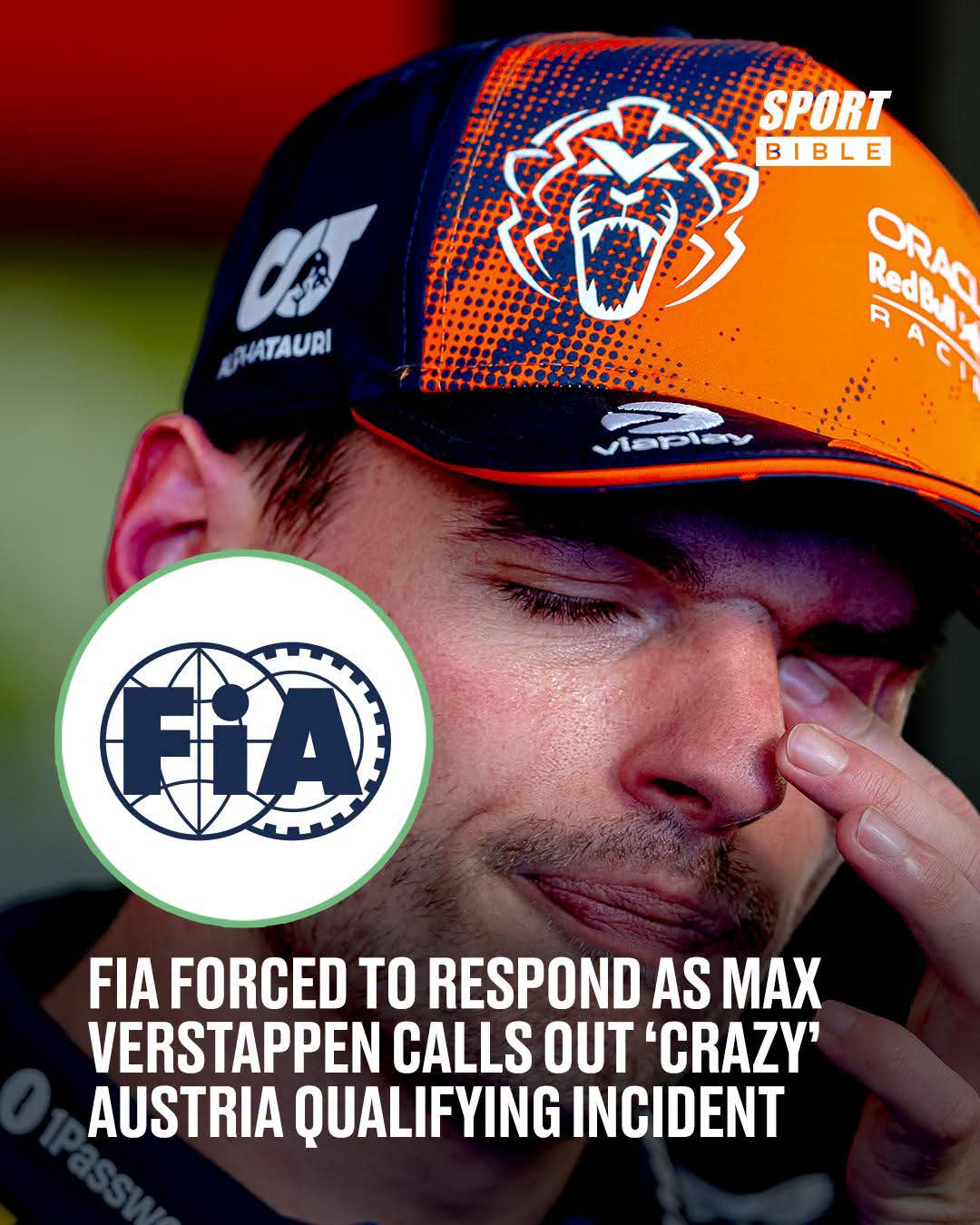
The controversy erupted after Max Verstappen crashed heavily at Turn 9 during his final qualifying attempt, triggering yellow flags in the closing moments of Q3. Russell drove through the affected sector before crossing the line to secure pole position, leading many to question whether his lap should have been deleted. However, after reviewing the incident, the FIA ruled that Russell had complied with the regulations, allowing him to retain pole. That decision has not stopped rivals, fans, and even Verstappen himself from questioning how the situation was handled.
VERSTAPPEN’S CRASH CREATED INSTANT CHAOS
The decisive moment came when Verstappen lost control of his Red Bull through the high-speed Turn 9, spinning into the barriers and ending his qualifying session. His accident immediately forced race control to react as marshals rushed to assess the scene.
Initially, only a single yellow flag was displayed. Both George Russell and Mercedes teammate Andrea Kimi Antonelli reached the incident during this period, but their reactions were completely different. Antonelli believed he had encountered double yellow flags and immediately abandoned his lap, while Russell lifted off the throttle before continuing to the finish line.
Seconds later, the yellow flag was upgraded to a double yellow, but by then both Mercedes drivers had already passed the accident scene.
FIA EXPLAINS WHY RUSSELL KEPT POLE POSITION
Following qualifying, Russell’s lap was briefly examined by the FIA for a possible yellow flag infringement. Telemetry, onboard footage, and timing data were reviewed before officials concluded that the Mercedes driver had reduced his speed sufficiently under the single yellow flag.
Under Formula 1 regulations, drivers encountering a single yellow flag must clearly reduce speed and remain prepared to change direction. They are not automatically required to abandon the lap.
A double yellow carries much stricter obligations. Drivers must significantly reduce speed, prepare to stop if necessary, and cannot continue setting competitive lap times through that marshal sector.
The FIA determined that Russell complied with the requirements for a single yellow, meaning no further action was necessary and his pole position remained valid.
VERSTAPPEN QUESTIONS THE FIA’S DECISION
Once released from the medical centre following his crash, Verstappen expressed surprise after learning that only a single yellow had initially been shown.
The reigning world champion described the situation as “crazy,” questioning why stronger warnings were not deployed immediately after such a heavy impact at one of the circuit’s fastest corners.
His concerns were echoed by championship leader Andrea Kimi Antonelli, who later argued that accidents in high-speed sections should trigger automatic double yellow flags to maximize driver safety.
Their comments have shifted much of the debate away from Russell’s actions and toward the FIA’s procedures for deploying caution signals during qualifying.
FIA DEFENDS ITS SAFETY PROTOCOL
Despite the criticism, the FIA insists that race control followed the correct process throughout the incident.
According to officials, a single yellow is deployed immediately after an accident while race control evaluates the severity of the situation. Only after confirming the level of danger to marshals, drivers, or the racing surface does race control decide whether to escalate to double yellow flags or suspend the session entirely.
The governing body explained that this assessment naturally takes several seconds, which is exactly what occurred after Verstappen’s accident.
Although some believe a double yellow should have appeared instantly due to the speed of the corner, the FIA maintains that its existing protocol was followed correctly.
MERCEDES STANDS FIRMLY BEHIND RUSSELL
Mercedes team principal Toto Wolff was quick to defend Russell after qualifying, insisting the British driver handled the situation perfectly.
Telemetry showed Russell made a substantial lift before entering Turn 9, sacrificing valuable lap time while still maintaining enough momentum to produce one of the best laps of the season.
Wolff also explained that Antonelli mistakenly believed he had encountered double yellow flags, causing the young Italian to unnecessarily abandon a lap that could have secured a front-row start.
For Mercedes, Russell’s awareness and experience ultimately proved decisive in one of the most dramatic qualifying sessions of the year.
WHY THIS INCIDENT COULD CHANGE FUTURE FIA PROCEDURES
Although the FIA has closed the investigation into Russell’s pole lap, the debate surrounding yellow flag procedures is unlikely to disappear.
Several drivers have already suggested that high-speed accidents deserve an automatic double yellow response, removing any ambiguity for competitors arriving seconds later. Such a change would prioritize safety but could also significantly alter qualifying outcomes by forcing more drivers to abort their laps.
With Formula 1 continuing to push the limits of speed, consistency in race control decisions becomes increasingly important.
WHAT THIS MEANS FOR THE CHAMPIONSHIP
Russell’s pole position could have major championship implications.
Starting from the front gives him an ideal opportunity to reduce the 50-point gap to teammate Andrea Kimi Antonelli, who begins only fourth after his qualifying misunderstanding. Ferrari, meanwhile, has both Charles Leclerc and Lewis Hamilton directly behind Russell, placing enormous pressure on Mercedes heading into the opening lap.
Verstappen, recovering from fifth after his crash, remains another major threat if he can slice through the field early.
While the FIA may consider the case closed, the discussions surrounding qualifying in Austria are almost certain to continue long after Sunday’s race ends. Whether this controversy leads to future rule adjustments could become one of the defining talking points of the 2026 Formula 1 season.