Formula 1 thrives on speed, strategy, rivalries, and controversy. Sometimes the biggest talking points emerge not from what happens on the circuit, but from the reactions that follow after the checkered flag falls.
That is exactly what happened after Lewis Hamilton’s latest victory sparked widespread discussion throughout the Formula 1 world. Social media platforms quickly became flooded with opinions, speculation, and debate regarding how the seven-time world champion secured the win and whether circumstances played a larger role than pure performance.
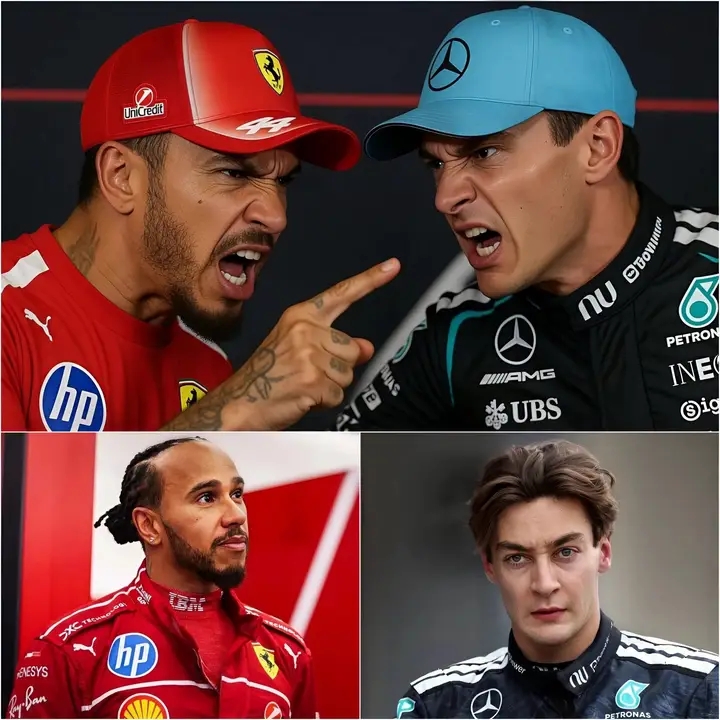
Adding fuel to the conversation were claims circulating online suggesting that George Russell had downplayed Hamilton’s achievement by implying that luck was a major factor behind the result. Whether those comments were accurately represented or amplified by online narratives, the controversy highlighted a much larger issue in Formula 1: how success is judged in an era dominated by instant reactions and viral headlines.
THE NEVER-ENDING DEBATE ABOUT LUCK IN FORMULA 1
Few words trigger Formula 1 fans more than the word “luck.”
Whenever a driver wins under unusual circumstances, discussions immediately begin. Was it superior racecraft? Brilliant strategy? Exceptional tire management? Or was it simply being in the right place at the right time?
The reality is that Formula 1 victories are rarely determined by a single factor.
A modern Grand Prix is influenced by countless variables, including:
- Tire degradation
- Pit-stop execution
- Safety car timing
- Weather changes
- Strategy calls
- Reliability
- Driver decision-making
- Team communication
Even the smallest detail can change the outcome of a race.
This is why many experienced analysts argue that “luck” alone never wins races. Opportunities may appear unexpectedly, but elite drivers consistently place themselves in positions to capitalize on them.
Hamilton’s career provides perhaps the strongest example of this principle.
WHY LEWIS HAMILTON CONTINUES TO DIVIDE OPINION
Love him or dislike him, Lewis Hamilton remains one of Formula 1’s most influential figures.
Throughout his career, Hamilton has experienced both praise and criticism whenever he achieves success. Supporters point to his record-breaking achievements, consistency, and ability to deliver under pressure. Critics often argue that dominant machinery or favorable circumstances have helped him along the way.
Yet one statistic remains difficult to ignore: drivers do not accidentally accumulate multiple world championships, hundreds of podiums, and victories across different regulation eras.
What has made Hamilton special throughout his career is his ability to maximize opportunities.
When weather changes suddenly, he adapts.
When tire strategy becomes critical, he often extends stints better than rivals.
When pressure increases late in a race, he frequently delivers his strongest laps.
Those qualities cannot be explained by luck alone.
GEORGE RUSSELL’S POSITION IN THE DEBATE
George Russell occupies an interesting position within today’s Formula 1 landscape.
The Mercedes driver is widely regarded as one of the fastest and most technically complete drivers on the grid. Since arriving in Formula 1, Russell has consistently demonstrated qualifying speed, race pace, and leadership qualities that suggest he can become a future world champion.
Naturally, comparisons between Russell and Hamilton attract enormous attention.
The two drivers shared a garage at Mercedes and spent several seasons measuring themselves against one another. Any perceived disagreement, criticism, or contrasting opinion between them immediately becomes headline material.
This dynamic creates a situation where even relatively minor comments can be magnified by social media users seeking drama or rivalry narratives.
That appears to be exactly what happened following Hamilton’s latest triumph.
SOCIAL MEDIA’S GROWING INFLUENCE ON F1 NARRATIVES
Modern Formula 1 is no longer driven solely by television broadcasts and post-race interviews.
Fans now consume content through:
- X (formerly Twitter)
- TikTok
- YouTube
- Podcasts
- Fan forums
- Independent motorsport creators
Information spreads faster than ever before.
Unfortunately, misinformation spreads just as quickly.
A single unverified quote can travel across the globe within minutes, generating millions of views before official clarification arrives.
This creates challenges for teams, drivers, and journalists alike. By the time facts emerge, many fans have already formed opinions based on incomplete information.
The Hamilton-Russell discussion serves as another reminder of why verified sources remain crucial in modern sports reporting.
WHY GREAT DRIVERS OFTEN APPEAR “LUCKY”
There is an old saying in motorsport:
“The harder you work, the luckier you get.”
The phrase perfectly describes many of Formula 1’s greatest champions.
Consider how often elite drivers seem to benefit from fortunate circumstances:
- They are positioned correctly when a safety car appears.
- They preserve tires better than rivals.
- They avoid incidents that eliminate competitors.
- They make the correct strategic choice under pressure.
At first glance, these moments look fortunate.
However, closer analysis usually reveals preparation, awareness, and experience.
Hamilton has built an entire career around consistently being in the right place when opportunities arise.
That is not coincidence.
It is a skill.
WHAT THIS MEANS FOR THE 2026 CHAMPIONSHIP BATTLE
While social media discussions generate headlines, the bigger story remains the championship itself.
Every victory matters enormously in a title fight.
Momentum can shift quickly over the course of a season, particularly under modern Formula 1 regulations where performance gaps between leading teams are often measured in tenths of a second.
Hamilton’s victory provides:
- Valuable championship points
- Increased team confidence
- Strategic momentum
- Psychological pressure on rivals
For competitors such as Russell and other leading contenders, every Hamilton success serves as a reminder that experience remains a powerful weapon.
Veteran drivers understand how to manage long championship campaigns, navigate pressure, and maximize scoring opportunities.
Those factors could become decisive as the season progresses.
WHY TEAMWORK REMAINS THE REAL STORY
One of the most overlooked aspects of Formula 1 success is the role played by hundreds of individuals behind the scenes.
A race-winning performance requires contributions from:
- Engineers
- Mechanics
- Strategists
- Data analysts
- Aerodynamicists
- Operations staff
Hamilton himself has repeatedly emphasized that victories are collective achievements.
Even the greatest driver cannot win without a competitive car, flawless pit stops, and effective strategy calls.
That reality often gets lost amid debates about individual performances.
Formula 1 remains the ultimate team sport disguised as an individual competition.
THE BIGGER LESSON FOR F1 FANS
The controversy surrounding Hamilton’s victory reveals something important about today’s Formula 1 environment.
Fans are more engaged than ever.
They analyze every radio message, every strategy decision, every interview, and every social media post. That passion helps make Formula 1 one of the fastest-growing sports in the world.
However, the speed of modern information also demands caution.
Before accepting viral claims or sensational headlines, fans should seek confirmation through official interviews, accredited journalists, and team communications.
Doing so provides a clearer understanding of what actually happened rather than what social media algorithms want people to believe happened.
FINAL THOUGHTS
Whether discussions focus on luck, strategy, driver skill, or team execution, Lewis Hamilton’s latest victory once again demonstrated why Formula 1 remains endlessly fascinating.
The debate surrounding George Russell and Hamilton may generate clicks and online arguments, but the lasting takeaway is much simpler: winning in Formula 1 is extraordinarily difficult.
Champions succeed because they consistently combine speed, intelligence, preparation, and adaptability. Sometimes circumstances help. Sometimes they do not.
The greatest drivers, however, have a remarkable habit of turning opportunities into victories.
As the championship moves forward, attention will inevitably shift to the next Grand Prix and the next battle on track. Yet the conversation sparked by Hamilton’s win serves as another reminder that in Formula 1, the story never truly ends when the race is over—it often begins there.