The 2026 Formula 1 season has taken another dramatic turn for Ferrari, and the spotlight is now firmly locked on the growing contrast inside the garage. While Lewis Hamilton delivered a statement victory for Ferrari in Barcelona, his teammate Charles Leclerc finds himself trapped in what looks like a spiraling run of misfortune and costly errors.
At the center of the debate is a simple but explosive question: is Ferrari witnessing the rise of a new dominant leader in Hamilton, or is Leclerc simply enduring one of the most unfortunate stretches of his career?
A TALE OF TWO GARAGE SIDES AT FERRARI
Ferrari’s 2026 campaign has rarely been short of headlines, but Barcelona may have marked a turning point in the internal dynamic.
Hamilton’s weekend was close to perfection. From strong qualifying pace to controlled race execution, he delivered the kind of result Ferrari signed him for: calm under pressure, ruthless on track, and flawless when it mattered most.
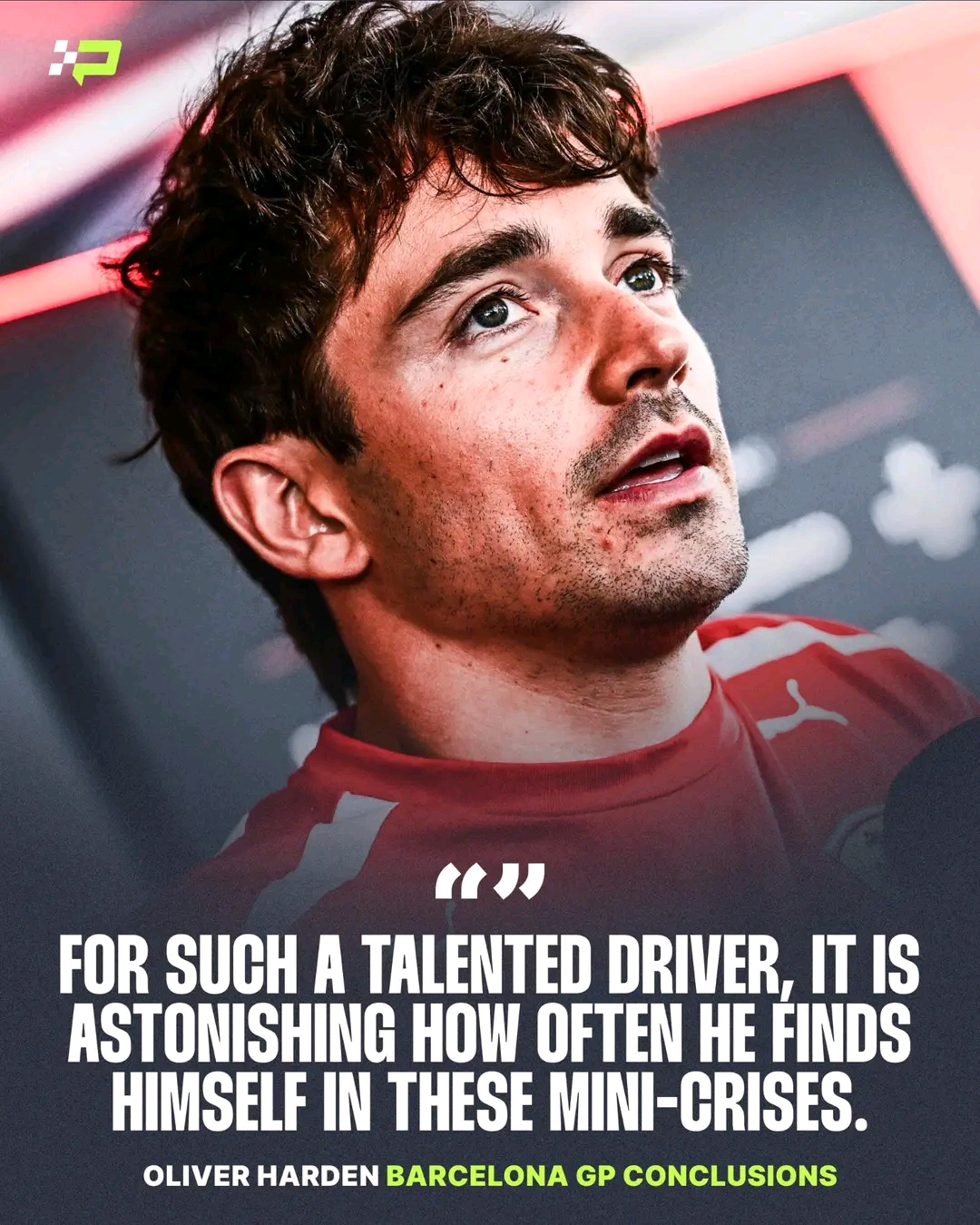
Leclerc’s weekend, however, unfolded in the opposite direction. A costly Q3 crash immediately compromised his race weekend, followed by a late-race mechanical retirement that erased any chance of recovery. The combination of driver error and reliability issues has amplified concerns about consistency at a critical stage of the season.
Within Formula 1, perception matters as much as performance. And right now, the perception is that Ferrari has two drivers heading in completely different directions.
IS HAMILTON REALLY “BREAKING” LECLERC?
The idea that Hamilton is “breaking” Leclerc emotionally is gaining traction among fans, but inside Formula 1 circles, that narrative is far more complex.
Hamilton’s arrival at Ferrari was never just about race wins. It was about reshaping the competitive culture inside the team. His experience, race intelligence, and ability to extract maximum performance under pressure naturally raise the benchmark for any teammate.
But Leclerc’s struggles cannot be reduced to psychology alone.
Several key factors are at play:
Leclerc has long been one of the fastest single-lap drivers on the grid, but his career has been marked by moments of over-pushing in high-stakes qualifying sessions.
Ferrari’s ongoing reliability concerns continue to affect race outcomes, making it difficult to build momentum.
The team’s development direction may be subtly favoring Hamilton’s feedback style, which prioritizes race stability over peak qualifying aggression.
Rather than “breaking,” what we may be seeing is pressure amplification. When a teammate performs flawlessly, every mistake becomes louder.
THE TECHNICAL REALITY BEHIND FERRARI’S INCONSISTENCY
While driver narratives dominate headlines, Ferrari’s underlying technical situation remains critical.
Modern F1 margins are razor-thin, and small setup misjudgments can drastically alter performance across a weekend. In Barcelona, Ferrari showed strong pace potential, but execution gaps proved costly.
Leclerc’s Q3 crash is a symptom of a broader issue Ferrari has battled for years: a car that is quick but sensitive at the limit. When pushed into peak performance windows, it can become unpredictable.
Meanwhile, Hamilton’s driving style appears to be extracting more consistent performance across stints, even if it sacrifices a small amount of ultimate qualifying pace.
This difference is subtle but important. Championships are rarely won on raw speed alone. They are won on repeatability.
INTERNAL PRESSURE AND TEAM DYNAMICS
Inside Scuderia Ferrari, internal competition has always been intense, but the Hamilton-Leclerc pairing has added a new dimension.
Hamilton brings global stature and immediate authority within the garage. Engineers naturally listen closely to a driver with his résumé, especially when feedback translates directly into race wins.
Leclerc, meanwhile, has been Ferrari’s long-term project. He represents continuity, youth, and long-term potential.
When results diverge as sharply as they did in Barcelona, tension can emerge in subtle ways:
Strategy prioritization during races
Development focus in upgrades
Psychological confidence heading into qualifying
None of these elements are openly discussed by teams, but they shape season outcomes significantly.
DOES THIS SIGNAL A LONG-TERM SHIFT AT FERRARI?
One race is never enough to define a season, but patterns matter in Formula 1.
If Hamilton continues to outperform Leclerc in race execution, Ferrari may gradually shift toward a more stability-focused approach. That would not necessarily sideline Leclerc, but it could reshape his role within the team structure.
However, history also shows that Leclerc responds strongly to adversity. In previous seasons, he has bounced back from difficult runs with dominant qualifying performances and emotional race victories.
The key question is whether Ferrari can provide him with a car that allows him to rebuild confidence without forcing him into constant recovery drives.
WHAT COMES NEXT IN AUSTRIA?
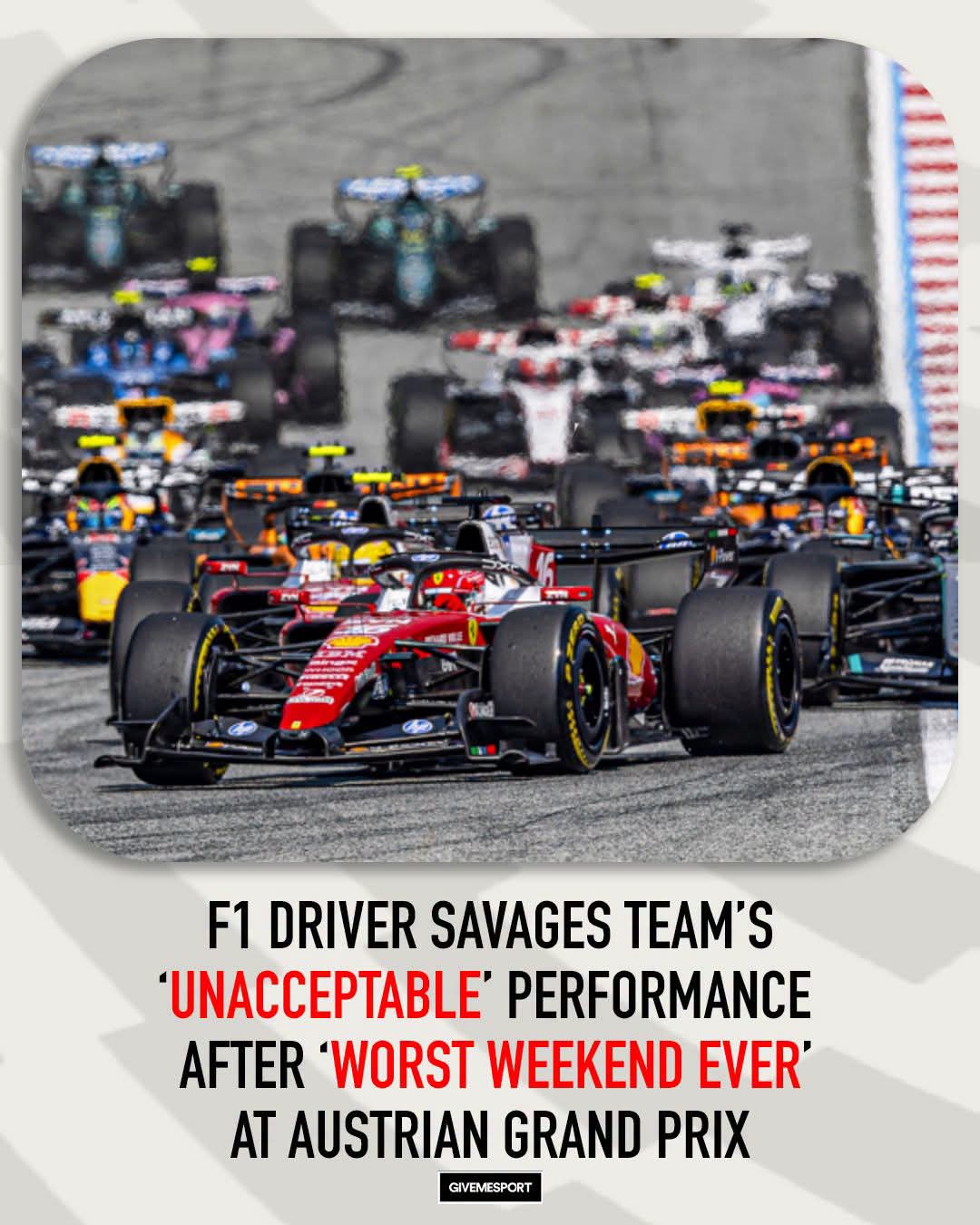
The next race in Austria could be pivotal.
The Red Bull Ring is traditionally a high-speed circuit that rewards strong braking stability and traction out of slow corners. It is also a track where driver confidence plays a major role in qualifying performance.
For Leclerc, Austria represents a reset opportunity. A clean weekend could immediately shift the narrative back toward competitiveness rather than crisis.
For Hamilton, it is a chance to reinforce momentum and continue building authority within the team.
Ferrari, as always, will be watching closely not just for results, but for how each driver responds under pressure.
FINAL VERDICT: CRISIS OR CYCLE?
Calling Leclerc’s situation a “crisis” may be premature, but ignoring the warning signs would be equally misleading.
What Ferrari is experiencing right now is a divergence in momentum. Hamilton is maximizing opportunities with elite-level consistency, while Leclerc is caught between mistakes and misfortune at the worst possible time.
Whether this becomes a season-defining shift or just a temporary imbalance will depend on what happens next.
One thing is clear: in Formula 1, perception can change faster than lap times. And right now, Ferrari’s internal battle is becoming just as compelling as the championship fight itself.