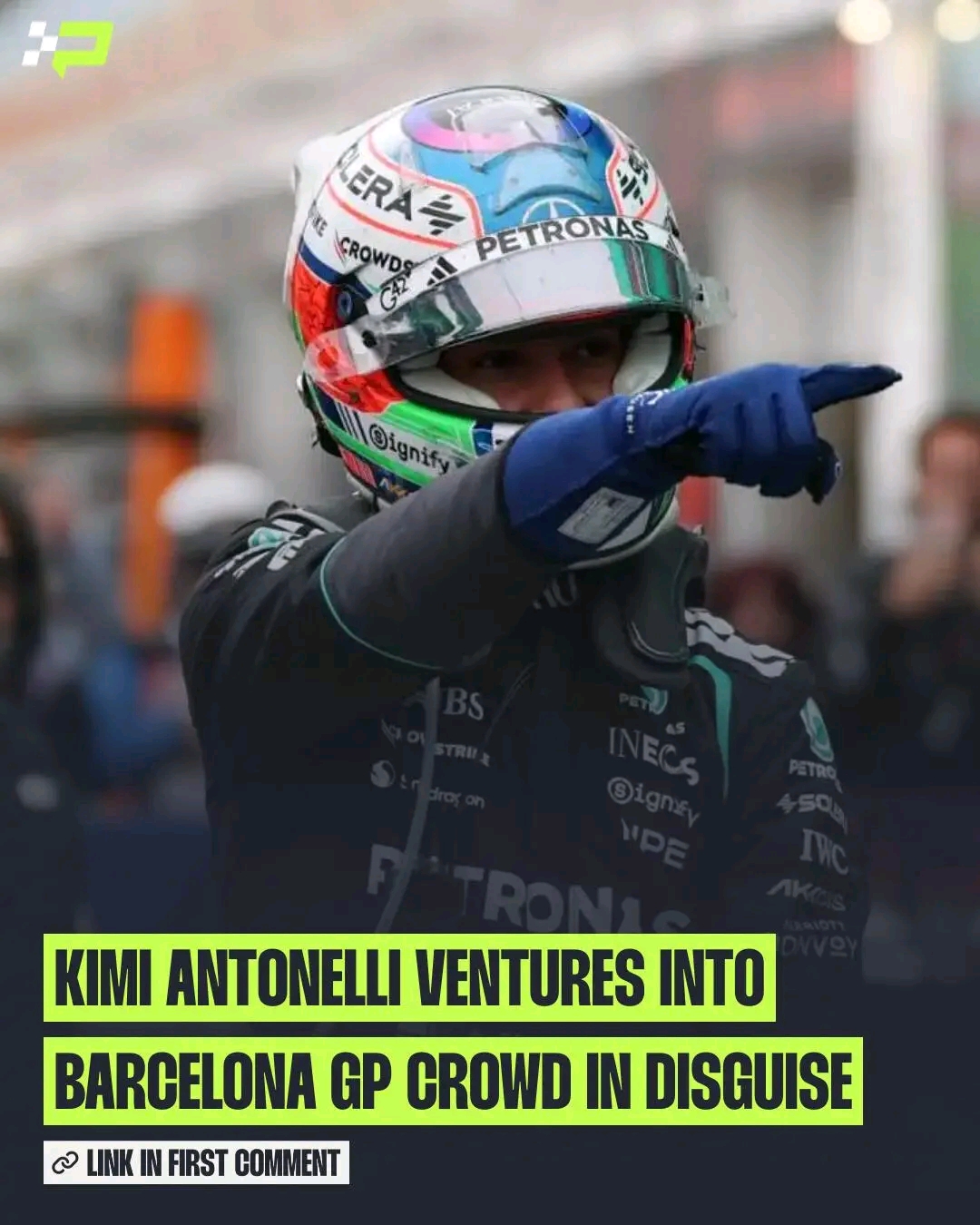
The aftermath of the 2026 Spanish Grand Prix has generated plenty of discussion across the Formula 1 paddock, but few stories have attracted as much attention as Kimi Antonelli’s reported announcement regarding his future development within Mercedes.
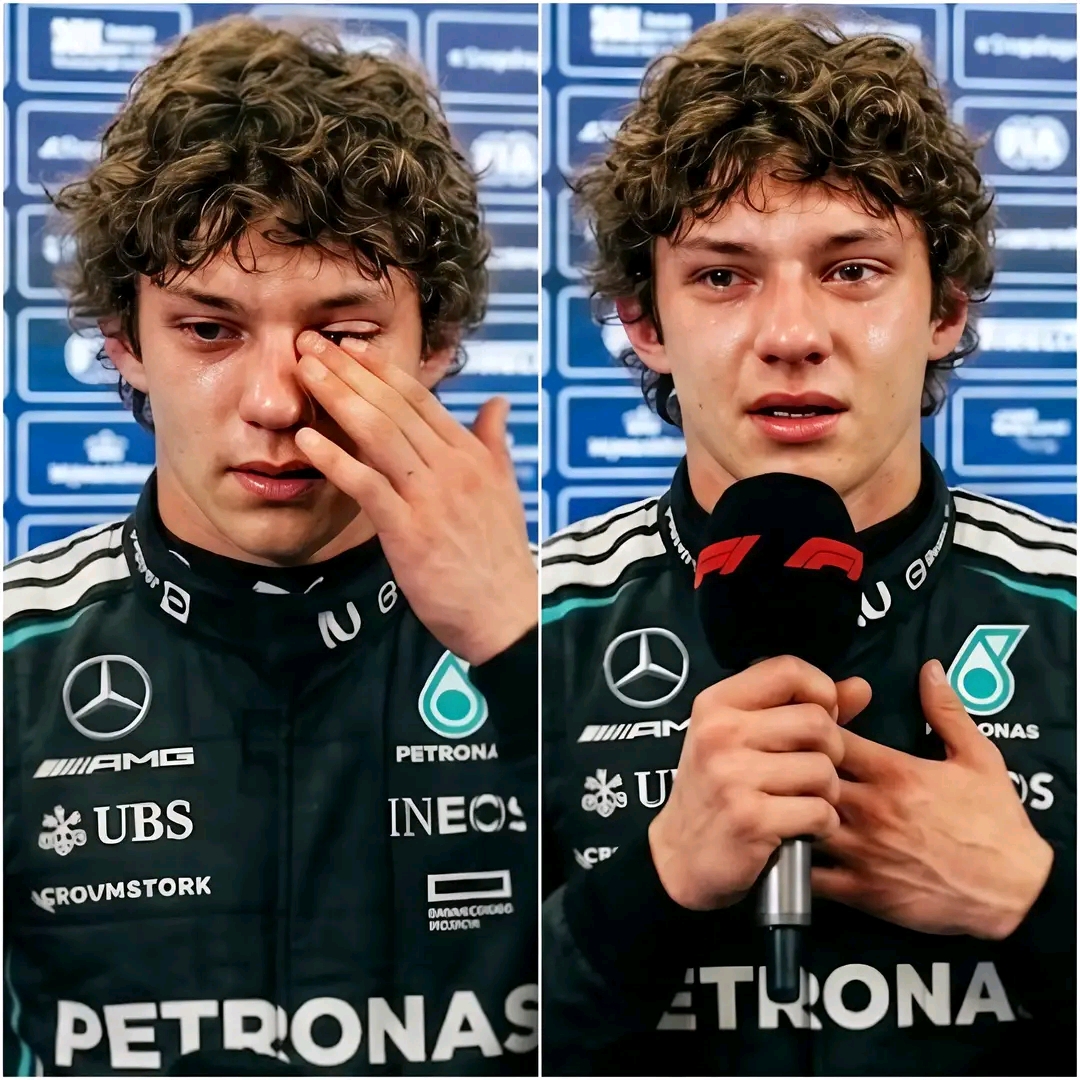
Following a difficult weekend in Barcelona that ended in retirement, the young Italian driver found himself at the center of renewed debate about expectations, pressure, and the challenges facing one of Formula 1’s most highly rated prospects.
While Antonelli’s race result disappointed both fans and Mercedes, reports emerging after the event suggest the team may be taking significant steps to reshape how they manage the teenager’s progression toward becoming a future championship contender.
If true, the development could offer a fascinating glimpse into how modern Formula 1 teams are evolving their approach to nurturing elite young talent.
WHY BARCELONA BECAME A TURNING POINT
At first glance, Barcelona appeared to be another frustrating weekend for Antonelli.
The retirement overshadowed what many insiders believe was a promising underlying performance. As is often the case in Formula 1, the final result failed to tell the complete story.
Modern F1 teams analyze thousands of data points beyond finishing position. Lap consistency, tire management, braking efficiency, corner-entry speed, and race pace all contribute to how a driver’s performance is evaluated internally.
This is why Mercedes may be viewing Barcelona differently from the public.
While fans naturally focus on the retirement, engineers are likely examining whether Antonelli demonstrated the raw pace and technical understanding required for long-term success.
For a team investing heavily in its future, those metrics often matter more than a single race result.
THE GROWING PRESSURE ON FORMULA 1’S YOUNGEST STARS
Formula 1 has changed dramatically over the last decade.
Young drivers now face unprecedented scrutiny from social media, television coverage, and a 24-hour news cycle that analyzes every mistake in real time.
Drivers are expected to perform immediately, even while adapting to the most technically demanding cars in motorsport.
For Antonelli, the pressure has been especially intense.
Many fans and analysts have viewed him as one of the brightest prospects to emerge from the junior ranks in years. With that reputation comes enormous expectations, often before a driver has had enough time to develop naturally.
Reports suggesting that Mercedes may reduce certain media obligations for Antonelli reflect a growing trend throughout elite sports.
Teams increasingly recognize that mental performance is just as important as physical and technical performance.
Protecting a young driver from unnecessary distractions can be every bit as valuable as introducing a new aerodynamic upgrade.
WHAT A REVISED MERCEDES DEVELOPMENT PROGRAM COULD MEAN
One of the most intriguing aspects of the reported announcement is the suggestion that Mercedes could be restructuring Antonelli’s development pathway.
If the team is indeed increasing his involvement in simulator programs, engineering feedback sessions, and technical evaluation processes, it would signal tremendous confidence in his potential.
Modern Formula 1 success is built on collaboration between drivers and engineers.
The most successful drivers are not simply fast behind the wheel. They become deeply involved in car development, setup direction, and performance analysis.
Lewis Hamilton, Max Verstappen, and Fernando Alonso have all earned praise throughout their careers for their technical feedback.
Mercedes may believe that accelerating Antonelli’s involvement in these areas will help prepare him for a future leadership role within the team.
WHY TOTO WOLFF’S ROLE IS CRUCIAL
Mercedes Team Principal Toto Wolff has built a reputation for long-term planning.
Throughout his leadership, the team has often prioritized sustainable success rather than short-term reactions.
If reports are accurate that Wolff personally supported adjustments to Antonelli’s development structure, it would underline the team’s commitment to the young Italian.
Wolff understands better than most how quickly public perception can shift in Formula 1.
A poor weekend can create headlines, but championship-caliber drivers are judged over seasons, not individual races.
By continuing to invest in Antonelli despite setbacks, Mercedes would be sending a clear message that its confidence remains intact.
THE POSSIBLE IMPACT ON GEORGE RUSSELL
Any significant change involving Antonelli naturally raises questions about George Russell’s position within Mercedes.
Russell currently serves as the team’s established race leader and one of the most consistent performers on the grid.
However, Formula 1 teams are always planning several years ahead.
If Antonelli’s technical responsibilities are expanding, it does not necessarily create tension with Russell. Instead, it could strengthen Mercedes by developing two highly capable drivers capable of pushing the team forward.
Historically, championship-winning teams often thrive when both drivers contribute meaningful technical feedback.
A stronger Antonelli could ultimately benefit Russell and Mercedes alike.
WHY THE CHAMPIONSHIP IMPLICATIONS SHOULD NOT BE IGNORED
Although Antonelli is not currently viewed as a favorite for the world championship, developments like these can have long-term consequences.
The next generation of Formula 1 stars is already beginning to emerge.
Teams that successfully develop young talent today may gain a significant advantage when future regulation cycles reshape the competitive order.
Mercedes appears determined to ensure Antonelli remains a central part of that future.
The investment being made now could influence the team’s competitiveness for years to come.
In an era where margins between success and failure are measured in fractions of a second, preparing future leaders has become just as important as designing faster cars.
THE RISK OF RAISING EXPECTATIONS TOO QUICKLY
Of course, there are risks.
Increasing a young driver’s responsibilities can accelerate development, but it can also increase pressure.
Formula 1 history contains numerous examples of talented drivers who struggled after expectations grew faster than experience.
The challenge for Mercedes will be finding the correct balance.
Antonelli must continue learning, making mistakes, and improving without feeling that every race weekend is a defining moment for his career.
That balance will be critical if the team wants to maximize his long-term potential.
WHAT HAPPENS NEXT?
The coming races could provide important clues about Mercedes’ strategy.
Fans will be watching closely to see whether Antonelli’s confidence grows, whether his performances become more consistent, and whether the team begins speaking more openly about his future role.
Results will remain important, but the bigger story may be happening behind the scenes.
Formula 1 is increasingly becoming a sport where data, psychology, engineering, and driver development intersect.
If Mercedes is indeed reshaping how it manages Antonelli’s progression, Barcelona may ultimately be remembered not as the weekend of a disappointing retirement, but as the moment the next phase of his Formula 1 career truly began.
FINAL THOUGHTS
Kimi Antonelli’s reported announcement goes far beyond a simple reaction to a difficult race weekend.
It highlights the challenges facing modern young drivers and the increasingly sophisticated methods teams are using to develop future champions.
Whether Mercedes’ approach proves successful remains to be seen. However, one thing is becoming increasingly clear: the team views Antonelli as more than just a promising prospect.
They appear to see him as a key piece of their future.
And if that belief is justified, Barcelona could eventually be remembered as the beginning of a much larger story.