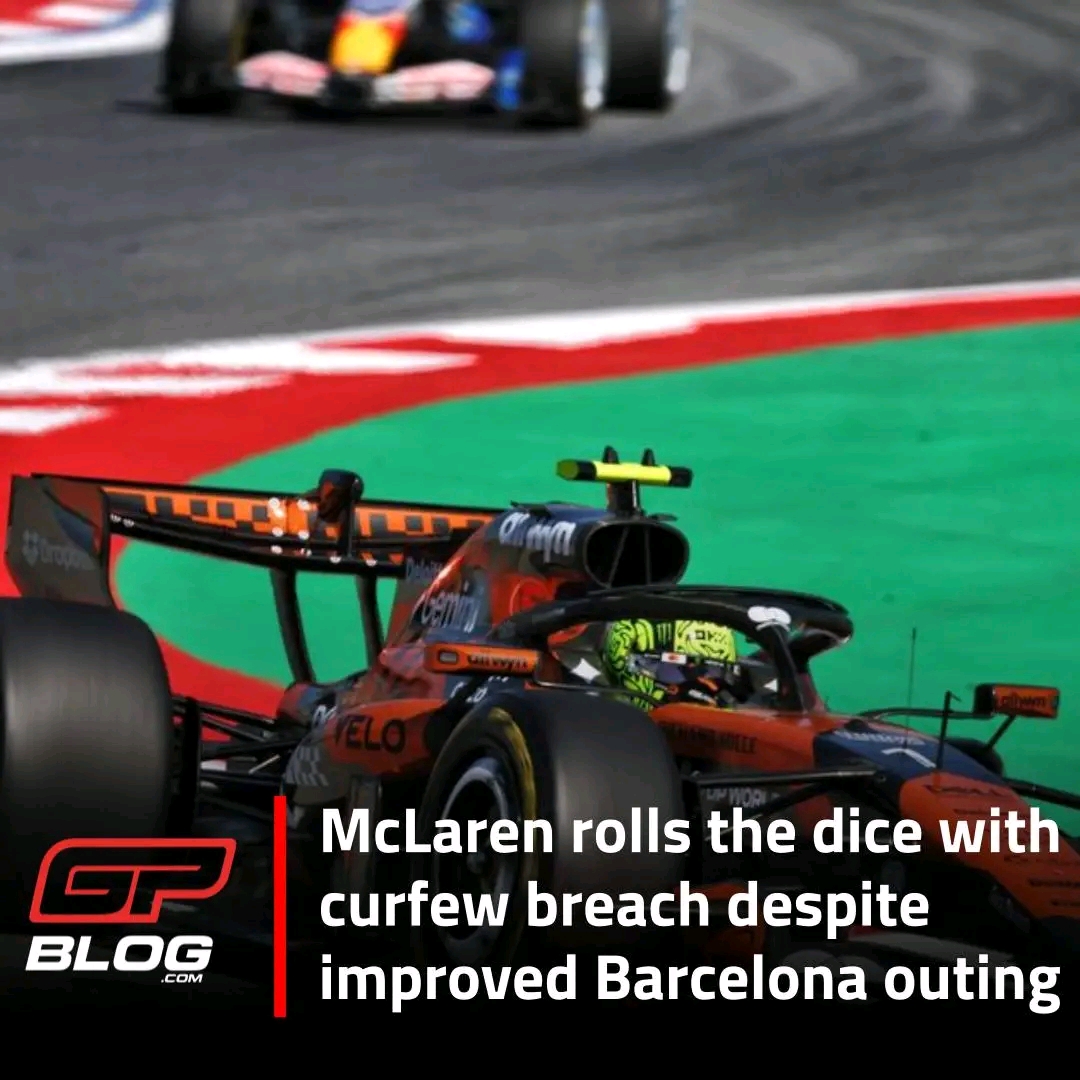
McLaren have made a bold operational decision in Barcelona, confirming they broke the parc fermé curfew rules for what the team described as crucial preparation work. While the move may look like a technical infringement on the surface, it actually highlights how intense the Formula 1 development battle has become at the sharp end of the grid.
With Lando Norris and Oscar Piastri consistently fighting near the front, McLaren are clearly not playing it safe. Instead, they are pushing every available margin to protect performance in a season where small gains can decide championship outcomes.
WHAT MCLAREN DID IN BARCELONA
The parc fermé curfew exists to restrict how much work teams can do on the cars overnight during a race weekend. It is designed to control costs, limit excessive engineering changes, and keep competition fair.
McLaren’s decision to breach the curfew suggests the team needed additional time to:
Fine-tune car setup direction
Adjust aerodynamic balance
Respond to data from practice sessions
Optimize performance for qualifying and race pace
While the exact details remain team-specific, such moves are rarely made lightly. Breaking curfew rules usually means the team believes the potential performance gain outweighs the regulatory penalty.
WHY THIS MOVE MATTERS IN A TITLE FIGHT
McLaren are no longer just chasing podiums. They are operating as a genuine front-running contender, which changes how aggressively they approach every race weekend.
In modern Formula 1, the gap between pole position and third or fourth can often come down to fractions of a tenth of a second. That means teams like McLaren are forced into high-pressure decisions, including working outside normal time limits if they believe it unlocks extra pace.
This Barcelona decision signals three key things:
McLaren trust their car development direction
They are willing to take regulatory risks for performance
They believe small setup gains could define race results
For a team fighting Red Bull, Ferrari, and Mercedes, that level of commitment is often what separates challengers from champions.
IMPACT ON NORRIS AND PIASTRI
For Lando Norris and Oscar Piastri, this kind of behind-the-scenes push can be both a positive and a pressure point.
On one hand, it shows McLaren are fully committed to giving them a competitive package. On the other, it highlights how tight the performance window is at the front of the grid.
Both drivers are known for extracting strong performance from a well-balanced car. If McLaren have unlocked even minor improvements in tire management or corner stability, it could directly translate into:
Better qualifying positions
Stronger race pace consistency
Improved tire degradation control
In a season where strategy battles are often decided by tire life, those gains can be decisive.
THE COMPETITIVE PRESSURE FROM RIVALS
McLaren’s urgency is also a reflection of how intense the current F1 field has become. Red Bull remain the benchmark in many conditions, while Ferrari and Mercedes continue to trade performance swings depending on circuit characteristics.
This kind of environment forces teams into aggressive development cycles. Even when a car is competitive, standing still is not an option.
Barcelona, in particular, is a key reference circuit. It exposes weaknesses in:
High-speed aerodynamic stability
Tire degradation patterns
Mechanical grip balance
If McLaren felt the need for extra setup work here, it suggests they were chasing perfection rather than fixing a fundamental flaw.
PENALTIES AND REGULATORY CONTEXT
While breaching parc fermé curfew rules is not uncommon in Formula 1, it is still regulated to ensure fairness. Teams are typically allowed a limited number of exemptions per season.
The FIA usually imposes procedural penalties or fines depending on the circumstances, but the sporting impact is often minimal unless repeated violations occur.
That said, teams are very aware that repeated infractions can raise scrutiny, especially in a tightly regulated championship fight.
WHAT THIS MEANS FOR THE REST OF THE SEASON
McLaren’s decision in Barcelona is less about one race and more about a broader message: they are pushing flat out for every competitive advantage.
As the season progresses, expect similar high-pressure decisions across the grid, especially in:
Qualifying preparation windows
Late-night setup revisions
Strategic simulation work
If McLaren’s gamble pays off, it could reinforce their status as true title challengers. If not, it becomes another example of how fine the margins are at the top level of Formula 1.
Either way, one thing is clear: the papaya team is no longer just participating in the fight at the front. They are actively shaping it.