For more than a decade, Mercedes represented the gold standard in Formula 1. Race wins, world championships, flawless strategy calls, and relentless execution became synonymous with the Silver Arrows. But Formula 1 moves quickly, and dynasties rarely last forever.
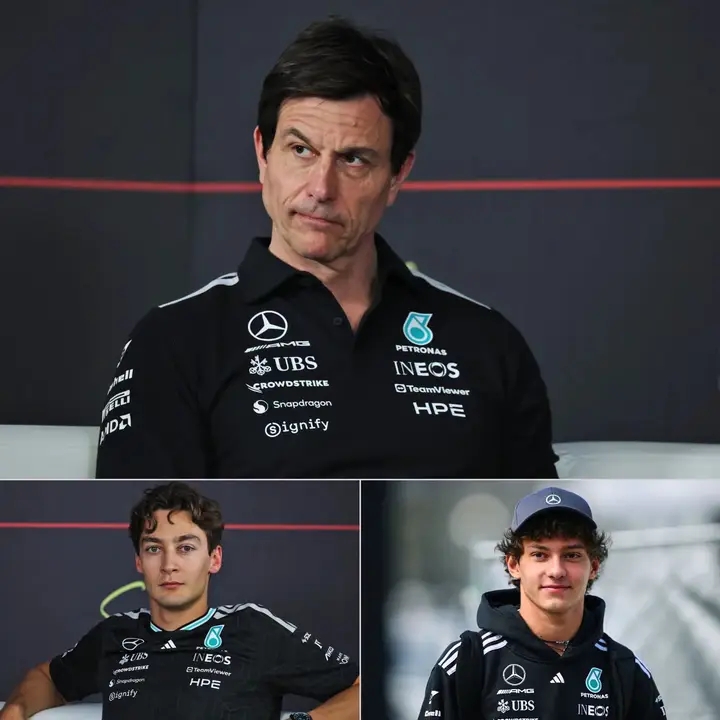
Following another frustrating weekend in Barcelona, Mercedes finds itself facing uncomfortable questions about its future. Reports of growing frustration within the team and comments attributed to team principal Toto Wolff have fueled speculation that significant changes could be coming behind the scenes as the Brackley-based outfit battles to remain relevant in an increasingly competitive championship fight.
Whether those comments were expressed literally or emotionally in the heat of the moment, one thing is clear: patience is running out.
BARCELONA EXPOSED MERCEDES’ BIGGEST WEAKNESS
The Spanish Grand Prix weekend highlighted a recurring problem that has haunted Mercedes throughout the modern ground-effect era. The issue is no longer purely about finding speed.
Instead, Mercedes continues to lose valuable opportunities through operational mistakes.
The team entered Barcelona believing recent developments had improved the performance of its W16 challenger. Practice sessions suggested progress, and there were moments when the car appeared capable of challenging near the front of the field.
However, Formula 1 races are not won through potential.
Strategy execution, tire management, communication, and split-second decision-making often determine whether a team celebrates on Sunday evening or leaves wondering what might have been.
Mercedes once built its reputation on dominating these details. Today, those same areas are becoming sources of frustration.
WHY SELF-INFLICTED ERRORS ARE MORE DAMAGING THAN LACK OF PACE
There is a major difference between being beaten by a faster rival and defeating yourself.
When a team lacks performance, engineers can identify weaknesses and develop upgrades. But when opportunities are repeatedly wasted through strategy miscalculations or operational errors, the solutions become far more complicated.
This is precisely why the current situation is so concerning.
The performance gap separating Mercedes from the leading teams is significantly smaller than it was during the early years of Formula 1’s current regulations. On many weekends, podium finishes are realistic targets.
Yet points continue slipping away.
Every missed pit window, every questionable tire choice, and every delayed strategic response carries enormous consequences in a championship where margins are measured in tenths of a second.
TOTO WOLFF FACES HIS MOST DIFFICULT LEADERSHIP TEST
Throughout Mercedes’ dominant era, Wolff earned widespread praise for his management style.
Unlike many Formula 1 bosses known for public criticism and internal blame games, Wolff built a culture centered around accountability, trust, and collective responsibility.
That philosophy delivered extraordinary results.
Mercedes captured multiple Constructors’ Championships and Drivers’ Championships while maintaining remarkable stability behind the scenes.
However, leadership approaches often evolve when success becomes harder to achieve.
The challenge facing Wolff today is fundamentally different from the one he faced during Mercedes’ championship-winning years. Instead of protecting a dominant team from complacency, he must now guide a struggling giant back toward contention.
That requires difficult decisions.
It may involve restructuring departments, changing personnel responsibilities, or demanding significantly higher standards across every area of the organization.
THE SHADOW OF THE 2026 REGULATION ERA
The timing of Mercedes’ struggles could not be worse.
Formula 1’s new regulatory era has dramatically reshaped the competitive landscape. Cost-cap restrictions prevent teams from simply spending their way out of trouble, while development limitations make every mistake more expensive.
Teams must now maximize every upgrade package and every engineering decision.
For Mercedes, that reality creates additional pressure.
The organization possesses world-class facilities and elite engineering talent, but Formula 1 no longer rewards resources alone. Success increasingly depends on efficiency, adaptability, and precision.
Teams that react fastest to changing conditions gain a significant advantage.
Mercedes has occasionally looked hesitant when rivals have been decisive.
DRIVER MARKET SPECULATION IS ONLY GOING TO GROW
Whenever a major team struggles, attention inevitably turns toward the drivers.
Rumors surrounding the future of Mercedes’ driver lineup have intensified in recent weeks, even though many of the team’s problems appear to extend beyond the cockpit.
Formula 1 history shows that driver changes are often viewed as the quickest path toward improvement. Sometimes they work. Other times they merely distract from deeper organizational issues.
The reality is that modern F1 drivers depend heavily on the quality of information and strategy provided by the team around them.
Even the most talented drivers cannot consistently overcome flawed race execution.
That said, performance pressure remains unavoidable.
Every driver associated with the Mercedes program understands that results matter, and the scrutiny will only intensify as the season progresses.
FERRARI AND RED BULL ARE MAKING LIFE DIFFICULT
One reason Mercedes’ mistakes appear particularly damaging is the strength of its rivals.
Scuderia Ferrari continues to push aggressively toward championship contention, while Oracle Red Bull Racing remains a benchmark in several critical areas.
The margin for error has effectively disappeared.
A strategy mistake that once cost a single position can now cost several. A poorly timed pit stop can transform a podium opportunity into a frustrating midfield finish.
Formula 1 has become more competitive across the grid, and Mercedes is learning firsthand how costly imperfection can be.
THE PSYCHOLOGICAL BATTLE INSIDE THE GARAGE
Technical problems are visible.
Psychological challenges are much harder to measure.
Confidence plays a huge role in Formula 1 performance. Winning teams develop momentum. Personnel trust their instincts. Drivers attack with conviction. Strategists make bold calls without hesitation.
The opposite occurs when results begin slipping away.
Every decision becomes subject to second-guessing. Every error feels magnified. Pressure grows with each disappointing weekend.
Mercedes must avoid falling into that trap.
The team still possesses exceptional talent across engineering, operations, and management. The challenge is ensuring frustration does not evolve into self-doubt.
WHY THE NEXT FEW RACES COULD DEFINE THE ENTIRE SEASON
Barcelona may ultimately be remembered as a turning point.
Not because of a single result, but because it exposed the urgency of Mercedes’ situation.
The upcoming races will reveal whether the team can translate frustration into meaningful progress.
Fans should watch for three key indicators:
- Improved strategic decision-making during races.
- Better consistency across qualifying and race pace.
- Clear evidence that upgrades are producing expected results.
If those areas improve, Mercedes could quickly re-establish itself as a genuine threat at the front.
If they do not, difficult conversations about the future of the project will only grow louder.
WHAT MERCEDES MUST DO TO RECOVER
The solution is unlikely to come from one dramatic change.
Instead, Mercedes needs a comprehensive reset focused on execution.
The team must simplify decision-making processes, improve communication between the garage and pit wall, and ensure that race-day operations match the quality of its engineering resources.
History suggests writing off Mercedes is dangerous.
This is still one of the most successful organizations Formula 1 has ever seen. The infrastructure remains elite, the leadership remains experienced, and the motivation to return to winning ways has never been stronger.
FINAL VERDICT: CRISIS OR OPPORTUNITY?
Every great Formula 1 team eventually faces adversity.
The true measure of greatness is not how long dominance lasts, but how effectively a team responds when that dominance ends.
Mercedes is now at that crossroads.
The frustration surrounding Barcelona reflects a team that knows it should be performing better. It reflects an organization unwilling to accept mediocrity and determined to reclaim its place among Formula 1’s elite.
The coming months could shape the future of Mercedes for years to come. If the Silver Arrows can eliminate operational mistakes and rediscover the ruthless efficiency that once made them unbeatable, this difficult period may ultimately become the foundation of their next championship challenge.
If not, Formula 1’s most successful modern dynasty could face a much longer road back to the front than anyone in Brackley would like to admit.