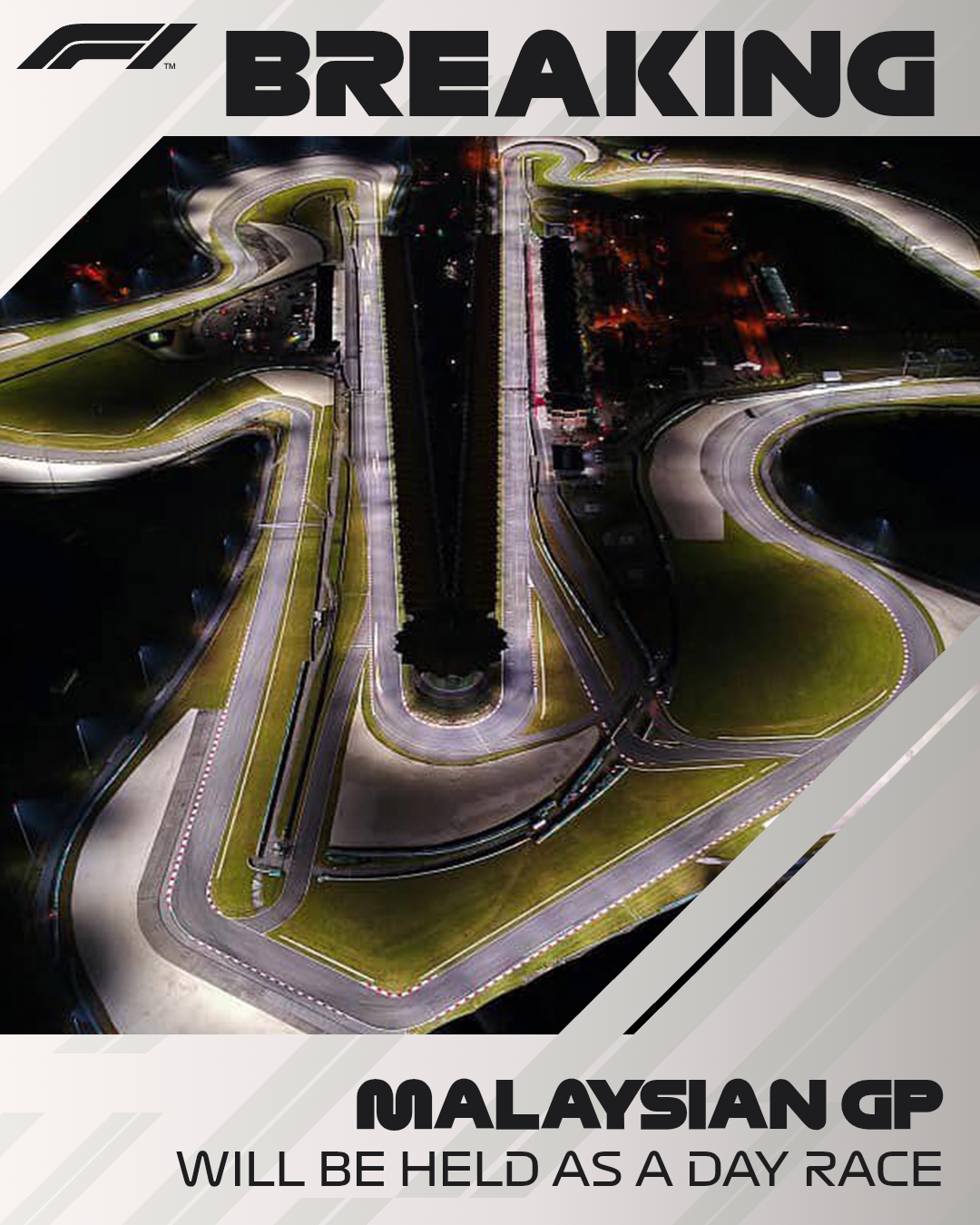
Formula 1’s highly anticipated return to Malaysia has taken another important step after Sepang International Circuit confirmed that the rescheduled Bahrain Grand Prix will be held as a day race, ending weeks of speculation over whether the event would be staged under floodlights.
The announcement provides greater clarity for teams, drivers, broadcasters, and fans as Formula 1 continues to adjust its 2026 calendar following disruptions caused by the ongoing conflict in the Middle East. While the championship has been forced to make several unprecedented scheduling changes this season, organizers have opted to preserve one of Sepang’s most recognizable traditions by racing in daylight.
SEPANG CHOOSES TRADITION OVER A NIGHT RACE
After Formula 1 confirmed Malaysia would host the replacement for the canceled Bahrain Grand Prix on October 4, many expected the race to follow Bahrain and Singapore by taking place at night.
However, Sepang International Circuit has officially confirmed that the event will be run during the day, maintaining the venue’s long-standing Formula 1 identity. Unlike Bahrain, Singapore, Abu Dhabi, Qatar and Saudi Arabia, Sepang does not operate as a permanent night-race facility.
The decision also eliminates the need for temporary floodlighting infrastructure while allowing the circuit to showcase the challenging conditions that made it one of Formula 1’s most respected venues.
WHY DAYTIME RACING AT SEPANG IS A UNIQUE CHALLENGE
Few circuits test Formula 1 drivers as thoroughly as Sepang.
Malaysia’s intense tropical climate regularly produces temperatures exceeding 30°C alongside extreme humidity, creating physically demanding conditions inside the cockpit. Drivers can lose several kilograms of body weight through sweat during a single Grand Prix.
Adding another layer of difficulty are the circuit’s unpredictable afternoon thunderstorms. Rain can arrive with little warning, transforming a dry race into a wet-weather battle within minutes. Throughout its previous years on the Formula 1 calendar, Sepang became famous for producing dramatic strategy calls, safety cars, and rapidly changing track conditions.
Those characteristics are expected to return when Formula 1 races there again.
WHY FORMULA 1 RETURNED TO MALAYSIA
Malaysia’s return to the calendar comes under unusual circumstances.
The original Bahrain Grand Prix was canceled earlier this season due to the ongoing conflict in the Middle East. Rather than permanently removing the event, Formula 1 relocated it to Sepang, which already possesses FIA Grade 1 certification and the infrastructure required to host a modern Grand Prix.
Although the race will be held on Malaysian soil, it will officially retain the Bahrain Grand Prix title, making it one of the most unique events in Formula 1 history.
WHAT THE RETURN MEANS FOR THE CHAMPIONSHIP
Sepang’s return adds another fascinating variable to the 2026 title fight.
Unlike many of the newer circuits on the calendar, Sepang is known for rewarding complete drivers who can manage tire degradation, changing weather, and high-speed cornering over an entire race distance.
Teams will also face a fresh engineering challenge. Although many organizations possess historical data from previous races at Sepang, Formula 1 cars have changed dramatically since the circuit last hosted a Grand Prix in 2017. Engineers will need to quickly adapt setups for the current generation of cars while accounting for Malaysia’s demanding climate.
With every championship point becoming increasingly valuable in the second half of the season, the return to Sepang could play a decisive role in both the Drivers’ and Constructors’ Championships.
A WELCOME RETURN FOR ONE OF F1’S MOST POPULAR VENUES
For many longtime Formula 1 fans, Sepang remains one of the sport’s most beloved circuits.
Its flowing layout, overtaking opportunities, unpredictable weather, and memorable races earned it a reputation as one of the calendar’s finest venues before it left Formula 1 after the 2017 season.
Now, nearly a decade later, the championship is set to race once again in Malaysia. By choosing a traditional daytime event, organizers have ensured fans will experience Sepang in the conditions that made the circuit famous, setting the stage for what could become one of the standout races of the 2026 Formula 1 season.