Ferrari’s 2026 season was supposed to be the start of a new golden era. Pairing seven-time world champion Lewis Hamilton with Charles Leclerc created one of the strongest driver line-ups on the grid. Instead, the partnership has produced repeated flashpoints, lost opportunities, and growing tension that is now costing the team clear race wins. The latest chapter unfolded on the opening lap of the Mexico City Grand Prix, and former Formula 1 driver turned Sky Sports analyst Karun Chandhok has not held back in his assessment.
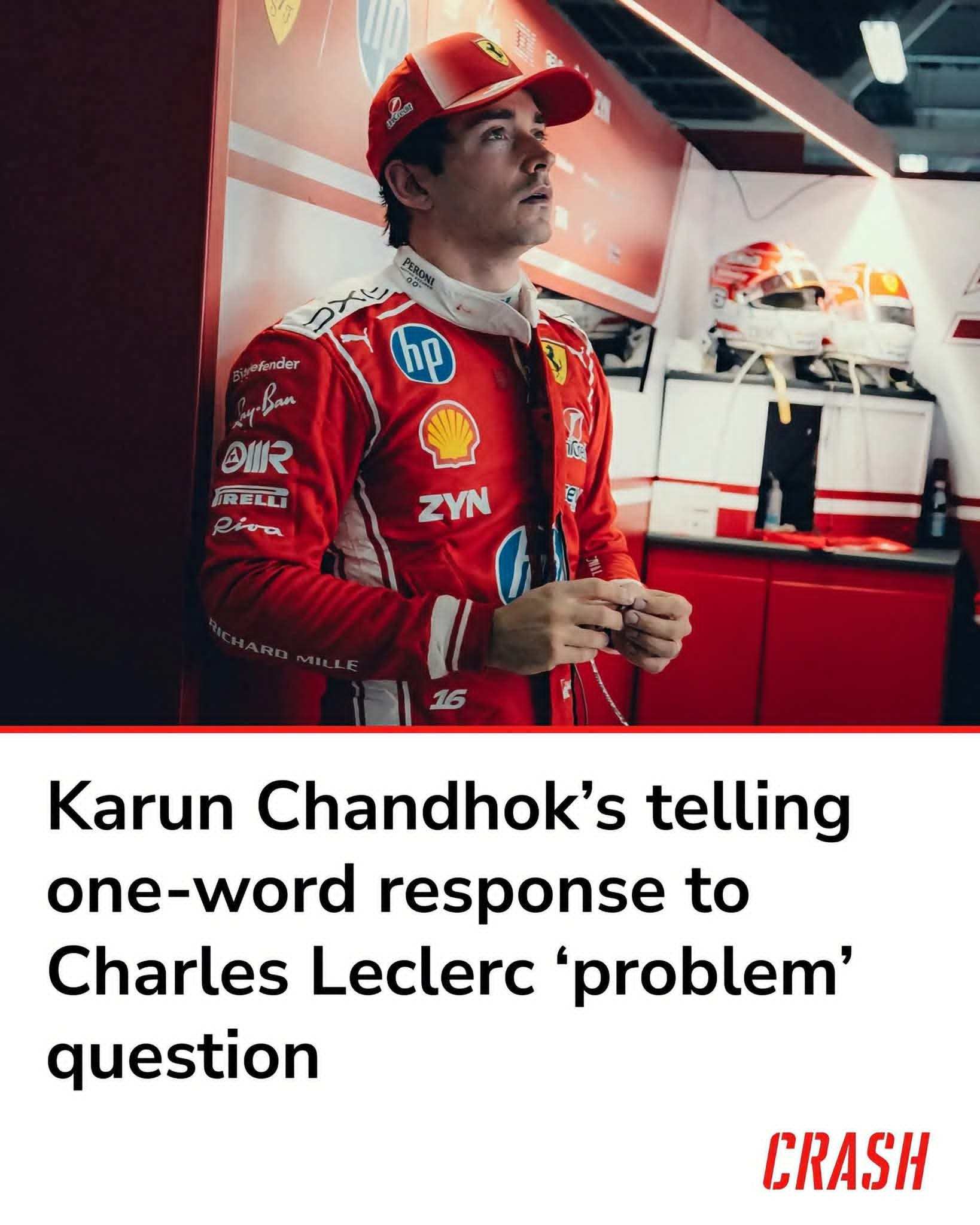
When asked directly whether Leclerc is the problem, Chandhok’s answer was immediate and unambiguous: “Yes.”
WHAT HAPPENED ON THE OPENING LAP IN MEXICO
Hamilton started from pole position in Mexico City, his first with Ferrari. Leclerc lined up third. At the start, the two red cars quickly found themselves side-by-side. Leclerc attempted an aggressive move around the outside of Turn 4. Neither driver made the corner cleanly. Leclerc cut across the grass and took the lead, while Hamilton lost momentum and was passed by Max Verstappen.
Leclerc received a five-second time penalty for leaving the track and gaining an advantage. Verstappen went on to win the race. Hamilton recovered to finish second, just 0.799 seconds behind the Red Bull. Leclerc ended up fourth. What should have been a potential Ferrari one-two turned into another afternoon of frustration and damage limitation.
Hamilton did not hide his feelings afterward. He called for “serious talks” inside the team and described Leclerc’s approach as “do or die.” The seven-time champion made clear he believed the internal battle had once again cost Ferrari a victory that was there for the taking.
CHANDHOK’S CLEAR-EYED ANALYSIS
Speaking on the F1 Show podcast with David Croft, Chandhok backed Hamilton’s view without hesitation. He pointed out that this was now the second clear example of Leclerc being too aggressive against his teammate, with both Hamilton and the team paying the price. The earlier incident at Monza earlier in the season had followed a similar pattern of wheel-to-wheel combat that left Hamilton compromised.
Chandhok offered important context that many armchair critics miss. In a grand prix car on the opening lap, drivers’ heart rates climb into the 170s. Adrenaline floods the system. Decisions are often driven by pure racing instinct rather than calculated team strategy. In that moment, a driver is not always thinking about the bigger picture of constructors’ points or long-term team harmony.
Still, Chandhok was firm. Leclerc needs to develop a calmer approach specifically when racing his teammate. Backing off and treating the other Ferrari differently from a rival does not come naturally to him. That is exactly why the team must step in and force the issue. Without structured rules of engagement and clear direction from the pit wall, the same mistakes will keep repeating.
WHY THIS MATTERS FOR FERRARI RIGHT NOW
This is not just another teammate spat. Ferrari has shown genuine pace at times in 2026. Hamilton took pole in Mexico and set the fastest lap. The car was competitive enough to fight for the win. Yet the team continues to leave points on the table through internal conflict. In a season where Mercedes and Kimi Antonelli have controlled the championship narrative, every lost opportunity hurts.
The impact goes beyond a single race result. Hamilton is still chasing an eighth title and wants to win with Ferrari. Leclerc has long been the face of the team’s future. When the two collide, the entire organisation suffers. Constructors’ championship points, which influence prize money, development resources, and grid prestige, are being squandered. The psychological toll on both drivers and the engineering staff is real. Trust erodes. Second-guessing creeps into radio communications. Strategy calls become more complicated.
Fred Vasseur has tried to manage the situation, but the pattern of incidents suggests the current approach is not working. After Monza, the drivers sat down face-to-face and claimed to have cleared the air. Mexico proved that conversation was not enough. Chandhok is right: the team has to impose structure because natural restraint is not emerging on its own.
THE BIGGER PICTURE FOR FORMULA 1
Teammate battles have always been part of Formula 1 theatre. Senna and Prost, Hamilton and Rosberg, Verstappen and Perez all produced memorable and sometimes toxic rivalries. What separates the successful ones is clear leadership and rules that prioritise the team when it matters most. Ferrari has not yet found that balance.
For the rest of the 2026 season, the final flyaway races in Brazil, Las Vegas, Qatar, and Abu Dhabi will test whether Ferrari can fix this before more damage is done. Hamilton has already signalled he will not stay silent. Leclerc’s aggressive instincts are part of what makes him fast, but they become a liability when directed at the car sharing the same garage.
Chandhok’s verdict cuts through the noise. The problem is not simply two competitive drivers racing hard. The problem is a lack of discipline in how that competition is managed. Until Ferrari forces a calmer, more team-oriented approach from Leclerc in particular, the Scuderia will keep handing victories to its rivals while its own drivers trade paint and radio messages.
The Mexico City Grand Prix should have been a statement of Ferrari’s strength. Instead, it became another reminder that talent alone is not enough. Structure, discipline, and prioritising the team over individual glory still separate champions from also-rans. Right now, Ferrari is learning that lesson the hard way.