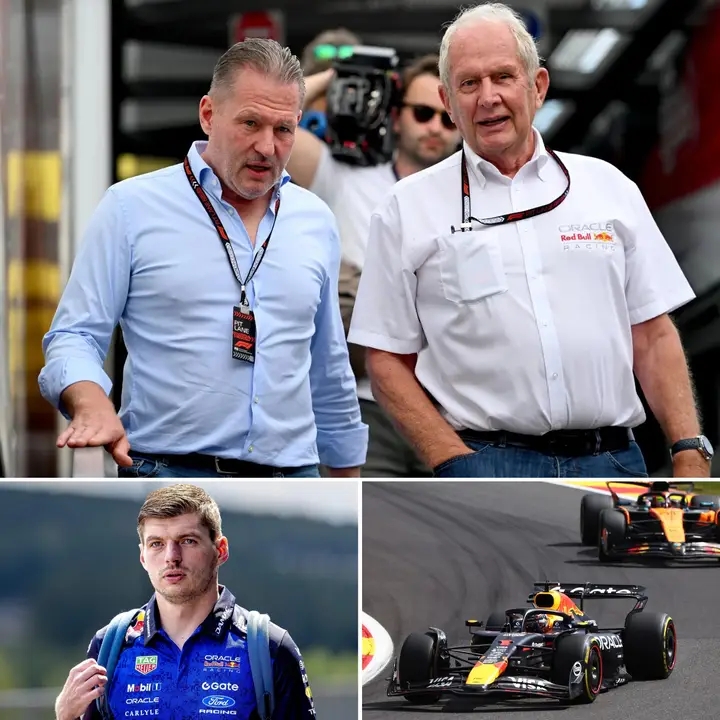
Formula 1 is built on constant innovation, but sometimes the biggest performance gain comes from knowing when not to change what already works. That debate exploded into the spotlight during the opening session of the 2026 Belgian Grand Prix weekend after Red Bull abandoned its experimental rear wing package and returned to a previous specification. The immediate result was impossible to ignore: Max Verstappen topped the FP1 timesheets.
The impressive turnaround quickly became one of the biggest talking points in the paddock after Jos Verstappen reportedly delivered a sharp 15-word message criticizing the team’s recent development direction. His comments have fueled discussions over whether Red Bull wasted valuable time pursuing aggressive aerodynamic concepts instead of refining an already competitive package.
RED BULL’S RETURN TO A FAMILIAR SETUP DELIVERS IMMEDIATE RESULTS
The opening practice session at Spa-Francorchamps offered an early indication that Red Bull may have rediscovered its rhythm. After experimenting with revised aerodynamic components over recent race weekends, the team elected to return to an older wing configuration that had previously delivered greater stability and driver confidence.
The effect appeared almost immediate. Verstappen looked significantly more comfortable attacking Spa’s high-speed corners, producing competitive lap times from the very beginning of the session. Rather than fighting an unpredictable rear end, the RB22 appeared far more balanced under braking and through medium and high-speed sections.
Although one practice session never determines the outcome of an entire race weekend, the early signs suggested Red Bull had taken a meaningful step in the right direction.
JOS VERSTAPPEN’S MESSAGE ADDS PRESSURE INSIDE RED BULL
Few figures in Formula 1 attract attention quite like Jos Verstappen whenever he comments on Red Bull’s performance. His reported message—essentially urging the team to stop changing something that was already working—quickly resonated throughout the F1 community.
Whether intended as public criticism or constructive advice, the statement highlights growing concerns surrounding Red Bull’s recent development philosophy.
In Formula 1, teams constantly search for performance gains measured in hundredths of a second. However, aggressive development can sometimes introduce new problems instead of solving existing ones. Jos Verstappen’s comments reflect the belief that Red Bull may have complicated a package that was already capable of winning races.
WHY THE AERODYNAMIC CHANGES BECAME SO CONTROVERSIAL
Modern Formula 1 cars generate enormous performance through aerodynamic efficiency. Even relatively small adjustments to a rear wing can influence:
- Corner entry stability
- Rear grip under acceleration
- Tire management
- Straight-line speed
- Driver confidence
The challenge comes when simulation data fails to match real-world performance.
Several teams have experienced situations where wind tunnel and CFD results promised significant gains, only for those upgrades to reduce overall performance once the car reached the circuit. When that happens, engineers face difficult decisions about whether to continue refining the concept or return to an earlier specification.
Spa appears to have provided Red Bull with a clear answer.
MAX VERSTAPPEN’S DRIVING STYLE BENEFITS FROM A PREDICTABLE CAR
Few drivers can extract performance from difficult machinery quite like Max Verstappen.
His ability to adapt has often masked underlying weaknesses within Red Bull’s car. However, even the very best drivers require a predictable platform to consistently operate at their absolute limit.
The apparent improvement in FP1 suggested Verstappen immediately regained confidence after the team reverted to the previous wing configuration. Rather than constantly correcting oversteer or fighting inconsistent balance, he was able to attack corners naturally and build speed throughout the lap.
That confidence often translates directly into lap time.
WHAT THIS MEANS FOR RED BULL’S DEVELOPMENT STRATEGY
The Belgian Grand Prix could prove to be a turning point for Red Bull’s engineering approach.
Instead of pursuing radical aerodynamic concepts throughout the remainder of the season, the team may now prioritize smaller, incremental upgrades built around a proven foundation.
That philosophy has historically delivered championship-winning campaigns. Rather than risking instability with major redesigns, successful teams often maximize reliability while introducing carefully validated improvements.
With every development token, wind tunnel hour and engineering resource carrying increased importance under Formula 1’s financial regulations, efficiency has become just as valuable as outright innovation.
THE CHAMPIONSHIP FIGHT LEAVES LITTLE ROOM FOR EXPERIMENTS
Every race weekend now carries enormous significance in the championship battle.
Ferrari, McLaren and Mercedes continue introducing upgrades designed to reduce Red Bull’s advantage. Any setback in development could quickly become costly over the remainder of the season.
If Red Bull has indeed rediscovered a stronger baseline, maintaining consistency may prove more valuable than chasing uncertain aerodynamic breakthroughs.
Championships are rarely won through one spectacular innovation alone—they are usually secured through continuous, reliable progress across an entire season.
SPA COULD MARK A CRUCIAL MOMENT FOR RED BULL
Spa-Francorchamps has frequently served as a venue where teams discover whether new developments genuinely work.
The circuit’s unique combination of long straights, high-speed corners and demanding elevation changes exposes aerodynamic weaknesses better than many tracks on the calendar.
For Red Bull, the encouraging FP1 performance may provide confidence that returning to a familiar setup was the correct decision. If the pace continues throughout qualifying and the race, the team could use Belgium as the foundation for the remainder of its championship campaign.
RIVALS WILL BE WATCHING CLOSELY
Red Bull’s competitors are unlikely to overlook what happened during FP1.
Ferrari and McLaren have worked relentlessly to reduce the gap at the front, and any indication that Red Bull has solved recent balance issues represents a significant development.
At the same time, rival engineers will continue searching for weaknesses they can exploit. Formula 1 development never stands still, meaning Red Bull cannot simply rely on past success.
The challenge now is maintaining the balance between innovation and stability without repeating mistakes that may have slowed their recent progress.
FINAL THOUGHTS
The Belgian Grand Prix weekend has already delivered one of the most fascinating technical stories of the 2026 Formula 1 season.
Max Verstappen’s pace after Red Bull returned to its previous wing configuration has intensified debate over the team’s recent development strategy, while Jos Verstappen’s pointed remarks have only amplified scrutiny surrounding the engineering direction inside the Milton Keynes outfit.
Whether this proves to be the decisive turning point in Red Bull’s season remains to be seen. However, if Spa’s early performance is any indication, the team may have rediscovered an important lesson that applies throughout Formula 1: innovation is essential, but knowing when to trust a proven package can be just as valuable.
As the championship battle intensifies, Red Bull’s ability to combine intelligent development with consistent performance could ultimately determine whether Verstappen remains firmly in control of another title challenge.