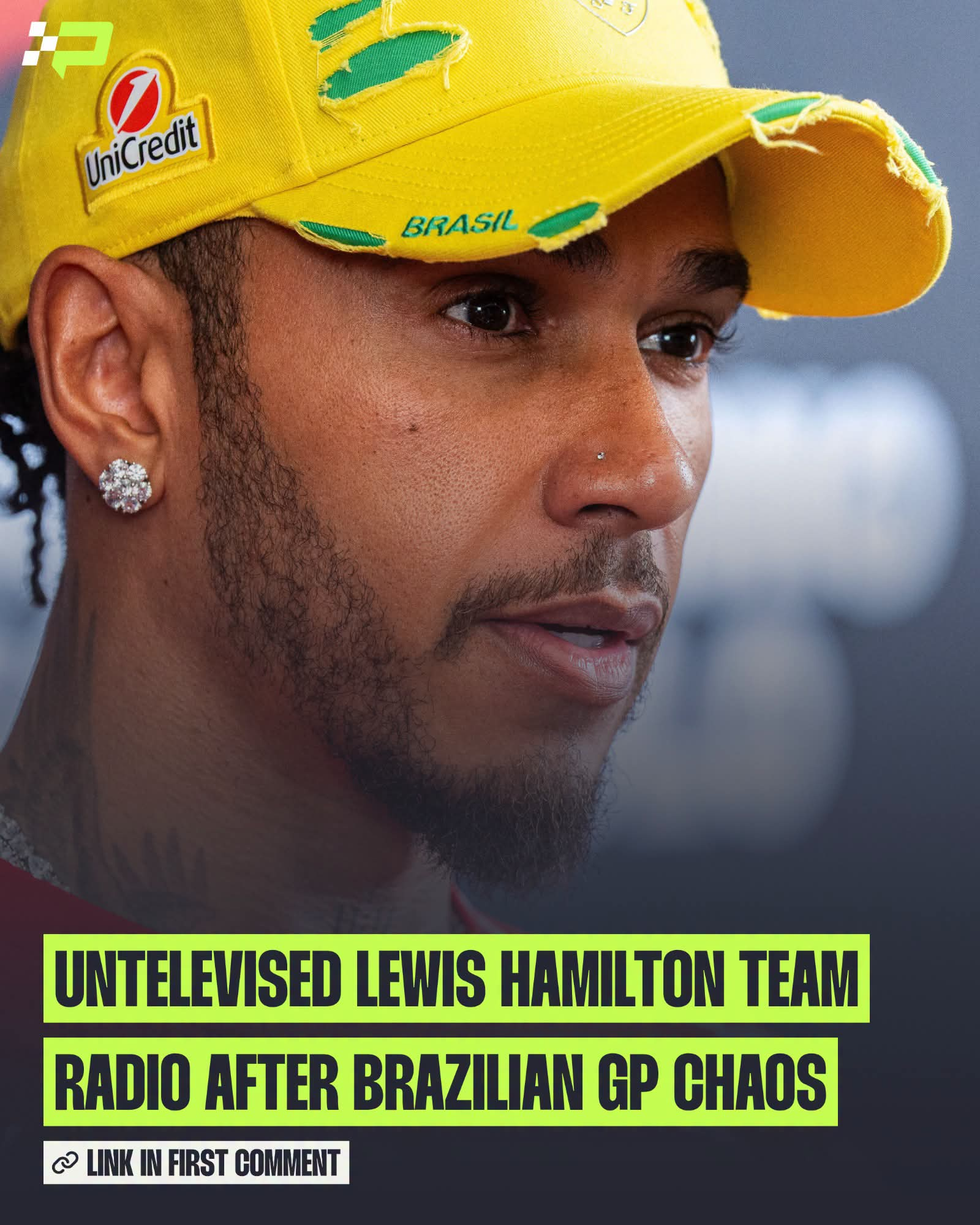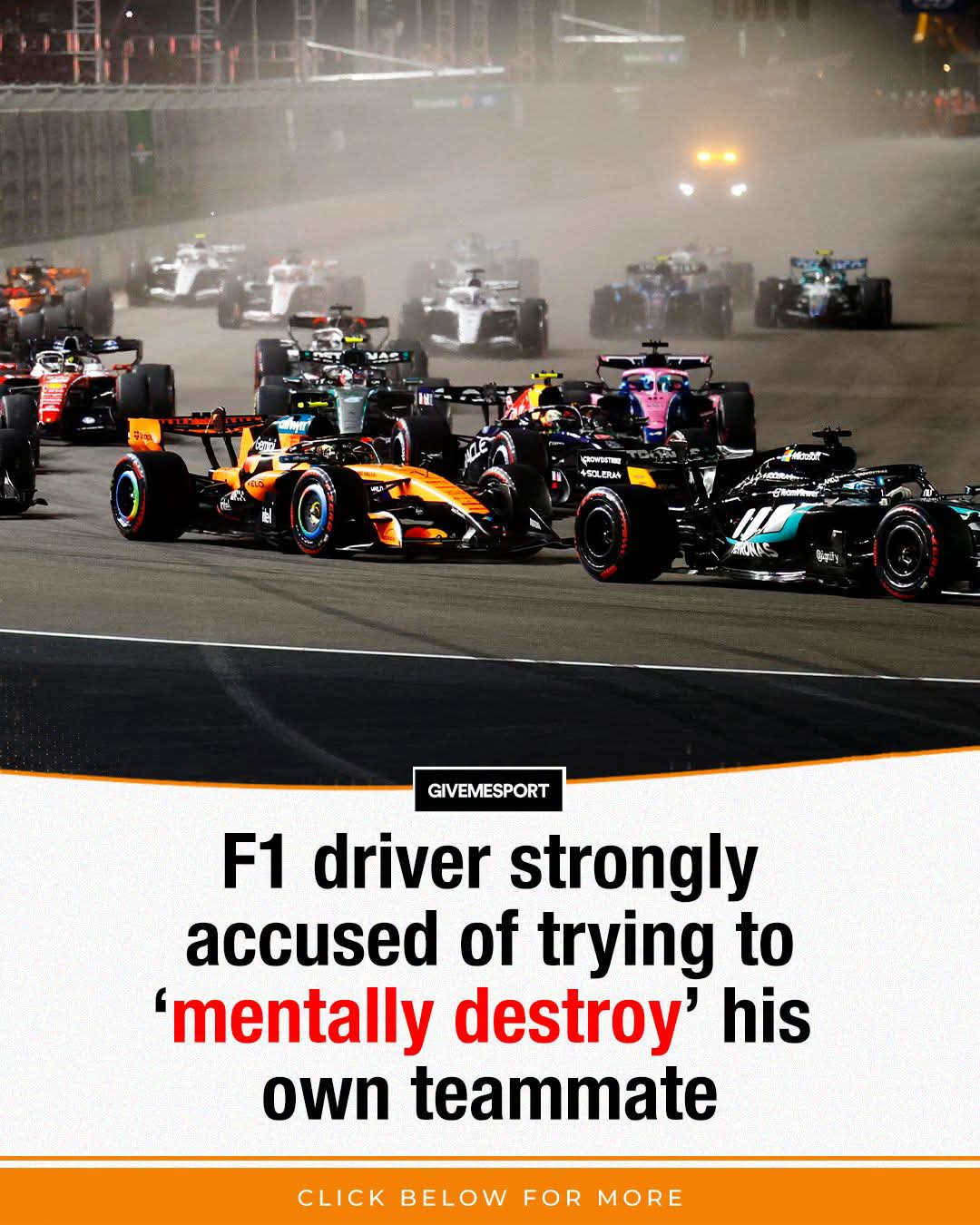
Lewis Hamilton has been accused of deliberately trying to undermine his Ferrari teammate Charles Leclerc following their controversial collision at the Las Vegas Grand Prix.
Former Formula 1 driver Ralf Schumacher has delivered a stunning assessment of the incident, suggesting that Hamilton’s actions were not simply the result of a racing misunderstanding but part of a wider attempt to establish himself as Ferrari’s undisputed number one driver.
The accusation has added another layer of controversy to an increasingly uncomfortable partnership between the two Ferrari stars, who have struggled to avoid public scrutiny following several incidents on track.
However, Schumacher’s interpretation is not shared by Ferrari team principal Frederic Vasseur, who has placed responsibility firmly on Leclerc.
RALF SCHUMACHER MAKES EXPLOSIVE HAMILTON ACCUSATION
Speaking on Sky Germany’s Backstage Boxengasse, Schumacher questioned Hamilton’s conduct during the Las Vegas collision and suggested the seven-time world champion was determined to gain psychological control over his teammate.
Schumacher claimed Hamilton was attempting to establish his authority within Ferrari and believed the British driver wanted Leclerc to suffer a significant psychological setback.
He also suggested that Hamilton deliberately failed to make room when Leclerc attempted to overtake him at Turn 7 on lap 38.
According to Schumacher, Hamilton had little to lose at that stage of the race and may have intentionally refused to yield.
These are serious allegations, but they remain Schumacher’s personal interpretation of the incident. There is no established evidence that Hamilton deliberately engineered the collision or intended to damage Leclerc psychologically.
Nevertheless, the comments have intensified the debate surrounding Ferrari’s driver relationship.
THE LAS VEGAS COLLISION THAT SPARKED THE CONTROVERSY
The incident occurred when Leclerc attempted to overtake Hamilton during the closing stages of the Las Vegas Grand Prix.
The two Ferrari teammates made contact, with Hamilton spinning as a result of the clash.
The stewards investigated the incident and held Leclerc responsible, handing him a 10-second time penalty. Although he crossed the finish line in sixth position, the penalty dropped him to 10th.
Leclerc subsequently explained that he believed Hamilton had not seen him alongside the car.
The Monegasque admitted that he may have underestimated Hamilton’s visibility at that moment, while also expressing disappointment about the consequences for Ferrari.
For the team, the incident was particularly damaging because both drivers were competing for valuable championship points.
Instead of working together to maximise Ferrari’s result, the teammates became involved in another costly confrontation.
VASSEUR REJECTS THE THEORY AND BLAMES LECLERC
Ferrari team principal Frederic Vasseur was far less interested in Schumacher’s psychological explanation.
The Frenchman made it clear that he believed Leclerc was responsible for the collision and was unhappy with the damage caused to the team’s interests.
Vasseur described Leclerc’s mistake as unacceptable and said he was particularly frustrated because Ferrari had already communicated its expectations following their previous incident in Mexico.
His comments suggest that Ferrari believes the situation should have been avoided.
That is an important distinction. While Schumacher sees the incident through the lens of Hamilton’s alleged psychological tactics, Vasseur appears focused on the immediate racing decision that resulted in a penalty.
Ferrari cannot afford repeated internal clashes, particularly when the constructors’ championship and valuable finishing positions remain important.
MEXICO INCIDENT ADDS TO FERRARI’S GROWING PROBLEMS
The Las Vegas collision was not an isolated disagreement.
Hamilton and Leclerc had already experienced a controversial moment at the Mexican Grand Prix, where Leclerc received a five-second penalty following an incident involving his teammate.
That previous confrontation had already raised questions about how Ferrari intended to manage its driver pairing.
Vasseur’s latest criticism suggests the team expected lessons to have been learned.
Instead, another collision has brought the relationship back into the spotlight.
The repeated incidents are becoming a serious concern because Ferrari needs both drivers operating at their best. Even when one driver has a stronger position in the championship, unnecessary contact can damage the team’s overall objectives.
The situation also places additional pressure on Vasseur, who must ensure that disagreements do not become a permanent feature of Ferrari’s race weekends.
HAMILTON’S CHAMPIONSHIP ADVANTAGE ADDS ANOTHER DIMENSION
According to the standings cited in the report, Hamilton leads Leclerc by 17 points with two races remaining.
That advantage gives the British driver a stronger statistical position heading towards the end of the season.
However, championship standings alone do not prove that Hamilton is deliberately attempting to undermine his teammate.
Both drivers have their own ambitions, and competing for position inside the same team naturally creates difficult situations.
Hamilton also brings enormous experience from his previous championship battles, including his famous rivalry with Nico Rosberg at Mercedes.
Schumacher referenced that period when discussing the current Ferrari situation, suggesting that the psychological battles between teammates can leave lasting consequences.
The comparison is interesting because Hamilton and Rosberg were once close friends before their championship rivalry became increasingly hostile.
Ferrari will be desperate to avoid a similar breakdown between its current drivers.
FERRARI MUST DECIDE HOW TO CONTROL THE SITUATION
The biggest challenge for Ferrari is finding a way to protect both drivers’ competitive ambitions without allowing their rivalry to damage the team.
Hamilton is a seven-time world champion with considerable experience, while Leclerc remains one of the most important long-term figures in Ferrari’s plans.
Treating either driver unfairly could create further problems, but allowing repeated confrontations to continue would be equally damaging.
Vasseur’s public criticism of Leclerc also raises questions about how Ferrari intends to handle future disagreements.
The team may need clearer instructions on when drivers can fight freely and when they must prioritise the bigger picture.
Ultimately, Ferrari needs results rather than internal controversy.
THE HAMILTON-LECLERC FEUD COULD BECOME FERRARI’S BIGGEST OFF-SEASON STORY
Schumacher’s allegations have ensured that the Las Vegas incident will remain a major talking point beyond the race weekend.
Whether Hamilton deliberately refused to make room or simply misjudged the situation remains a matter of interpretation. The stewards’ decision, however, placed the sporting responsibility on Leclerc.
What cannot be ignored is the growing pressure surrounding Ferrari’s driver partnership.
With two races remaining, both drivers will need to demonstrate that they can compete aggressively without compromising the team’s interests.
For Hamilton, the priority will be maintaining his advantage in the standings. For Leclerc, avoiding another costly incident will be essential as he attempts to finish the season strongly.
Ferrari has assembled two highly accomplished drivers, but managing their ambitions could prove just as difficult as building a championship-winning car.
The real question now is whether Vasseur can restore order before another confrontation turns an already tense partnership into a full-scale internal crisis.