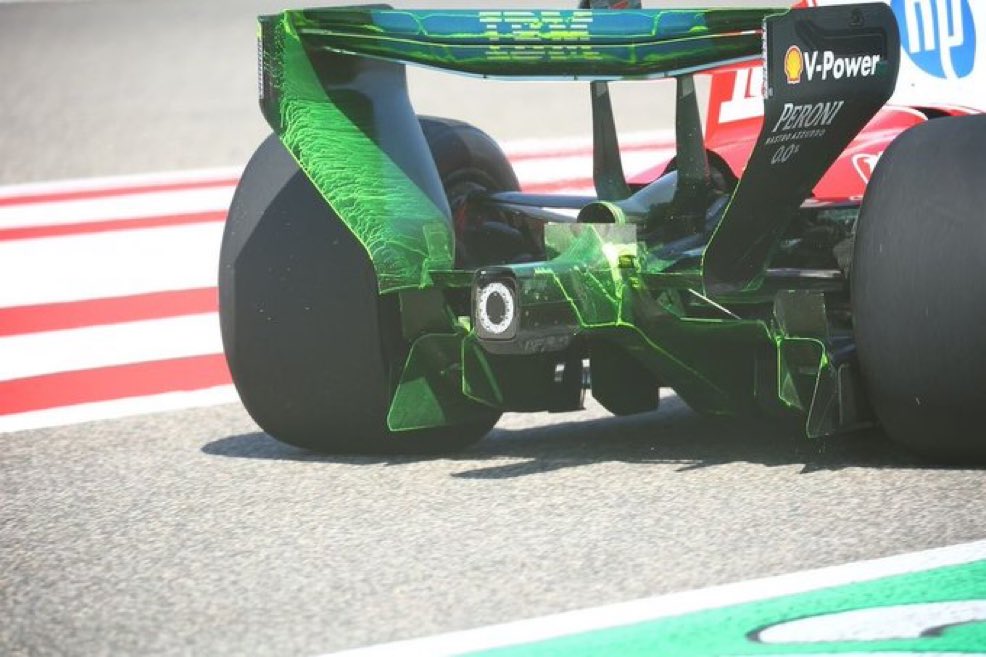
Formula 1’s technical landscape is set for another significant transformation after reports emerged that the FIA will prohibit Ferrari’s FTM concept and ban the controversial exhaust wing design from the 2027 season. The move represents another example of Formula 1’s governing body stepping in to close potential loopholes before they evolve into expensive development wars.
Although the regulation change will not affect the current 2026 championship, it sends a clear signal about the direction Formula 1 intends to take under its future technical regulations. With every team already planning long-term development projects, the FIA’s decision could reshape design philosophies well before the 2027 campaign begins.
FIA MOVES EARLY TO PREVENT A NEW DEVELOPMENT BATTLE
Formula 1 has always rewarded engineering creativity, but history shows that whenever one innovative concept threatens to create an unfair competitive advantage, the FIA rarely waits long before intervening.
According to reports, Ferrari’s FTM concept has now been outlawed, while exhaust wing solutions will no longer be permitted once the 2027 regulations come into force. By announcing the change well in advance, the governing body gives every team enough time to redirect research and development resources without wasting years pursuing designs that will never reach the racetrack.
The decision also avoids another costly technical arms race that could dramatically increase spending across the grid.
WHY THE EXHAUST WING BAN MATTERS
Aerodynamic innovation remains one of Formula 1’s biggest performance differentiators, and teams constantly search for ways to manipulate airflow around the car.
Exhaust wing concepts have attracted growing interest because of their potential to influence aerodynamic efficiency by exploiting airflow generated near the rear of the car. Even relatively small gains in this area can translate into meaningful improvements in lap time over an entire season.
The FIA appears determined to eliminate that avenue before it becomes central to future car development.
The move aligns with Formula 1’s broader objective of simplifying aerodynamic designs while promoting closer racing between competitors.
FERRARI MAY NEED TO RETHINK ITS LONG-TERM DEVELOPMENT
For Ferrari, the reported ban represents more than the loss of one technical solution.
Every Formula 1 team invests enormous resources into future regulations years before they arrive. If Ferrari had already allocated engineering time toward refining the FTM concept for future cars, those efforts will now require significant adjustment.
Fortunately for the Scuderia, the early timing of the announcement allows engineers to shift their focus toward alternative performance areas before major manufacturing begins.
While frustrating, such regulatory changes are nothing new in Formula 1, where adaptability often proves just as valuable as innovation itself.
OTHER TEAMS COULD BENEFIT FROM THE DECISION
Ferrari is unlikely to be the only constructor affected.
Several rival teams may have been investigating similar concepts behind closed doors, meaning the FIA’s intervention creates a level playing field before any one manufacturer gains a decisive advantage.
For smaller teams operating under tighter budgets, eliminating expensive aerodynamic development pathways could actually prove beneficial. Instead of chasing increasingly complex designs, resources can be redirected toward areas with longer-term regulatory stability.
That supports Formula 1’s cost-cap philosophy while reducing unnecessary technical escalation.
THE FIA CONTINUES TO SHAPE FORMULA 1’S FUTURE
The governing body’s willingness to intervene before controversial innovations reach widespread implementation highlights a proactive approach to regulation.
Rather than reacting after one team dominates through technical interpretation, the FIA appears focused on preventing major disparities before they emerge.
Recent seasons have demonstrated that rapid regulatory clarification has become an essential tool for maintaining competitive balance while preserving the spirit of the technical rules.
Although some engineers may view such restrictions as limiting creativity, Formula 1 continues to prioritize sustainable competition alongside innovation.
WHAT THIS COULD MEAN FOR THE 2027 GRID
While the immediate championship picture remains unchanged, the implications for 2027 could be significant.
Teams already designing next-generation chassis must now revisit portions of their aerodynamic concepts, potentially opening opportunities for entirely different innovations to emerge.
The ban also reinforces one important reality within Formula 1: no technical advantage is guaranteed to survive indefinitely.
Success increasingly depends not only on discovering performance gains but also on anticipating how regulations may evolve before a new concept ever reaches the circuit.
As preparations for Formula 1’s next era continue, Ferrari and its rivals now face another engineering challenge—finding speed within a rulebook that continues to evolve almost as quickly as the technology itself.