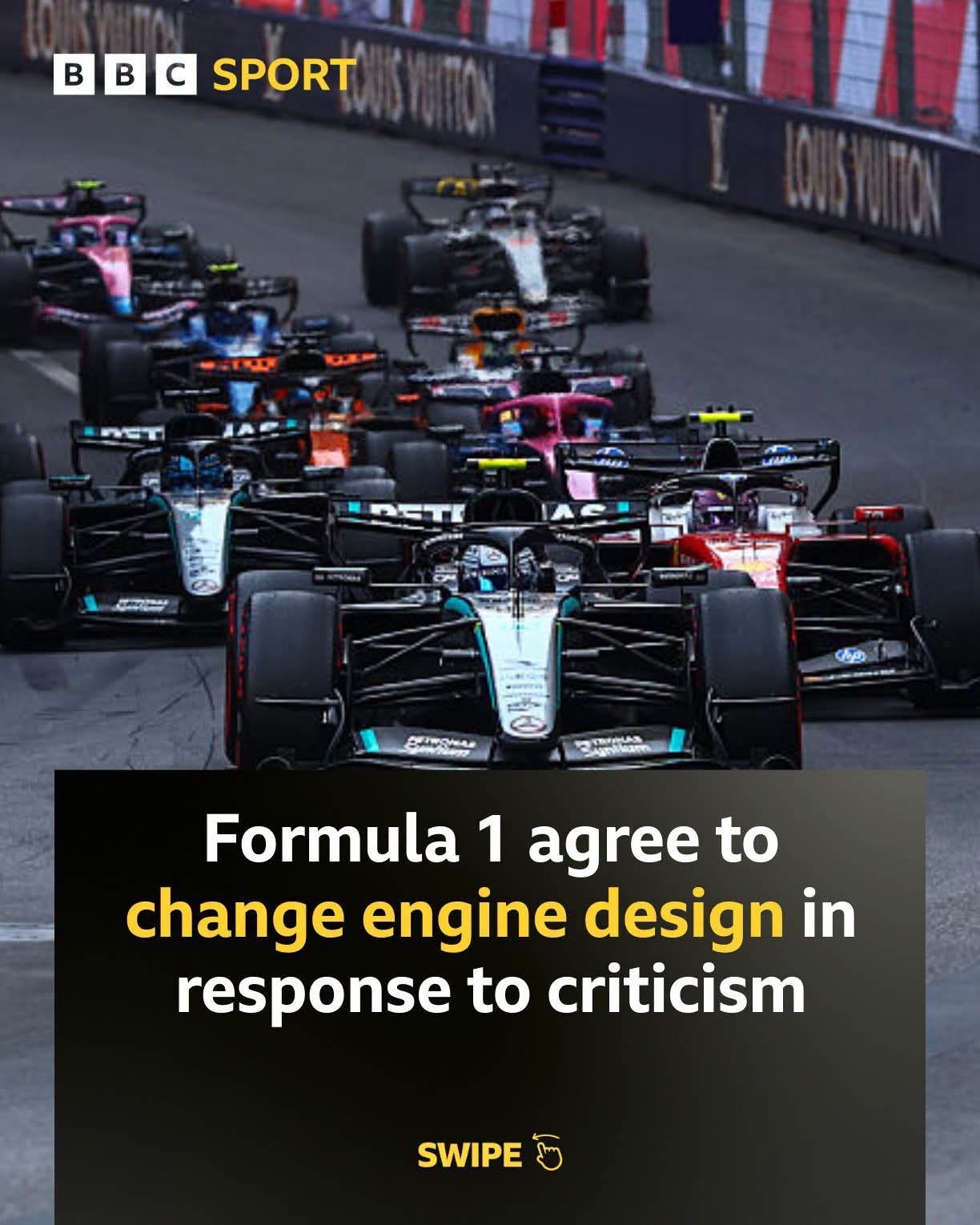
Formula 1 has taken a significant step toward reshaping its future after the FIA, teams, and power unit manufacturers agreed on a major revision to the sport’s controversial 2026 engine regulations. Following months of criticism from drivers, engineers, and fans, Formula 1 will gradually move away from its near 50-50 power split between internal combustion engines and electrical systems, aiming for a more traditional balance by 2028.
The decision represents one of the earliest and most substantial regulatory adjustments in modern F1 history, highlighting just how seriously the sport has taken concerns about the racing product under the new generation of power units.
WHY THE 2026 ENGINE RULES BECAME CONTROVERSIAL
When Formula 1 introduced its new engine regulations in 2026, the goal was ambitious. The sport wanted to become more sustainable, attract new manufacturers, and move closer to its long-term environmental objectives.
The result was a revolutionary power unit concept that dramatically increased the role of electrical energy. The new engines featured a near-equal contribution from the internal combustion engine and hybrid system, creating a 53-47 power split.
While the concept looked impressive on paper, reality proved more complicated.
Drivers quickly discovered that managing energy had become a dominant factor in performance. Instead of pushing flat-out through qualifying laps, competitors frequently found themselves lifting off the throttle, coasting into corners, and actively managing battery deployment.
For many drivers, that behavior felt completely at odds with Formula 1’s identity as the pinnacle of motorsport.
VERSTAPPEN’S CRITICISM BECAME IMPOSSIBLE TO IGNORE
Few drivers were more outspoken than Max Verstappen.
The four-time world champion repeatedly criticized the new generation of cars, arguing that excessive energy management was harming the quality of racing. At various points, Verstappen compared the cars to electric racing machinery and suggested that Formula 1 risked losing some of its core appeal.
His frustration reflected a broader sentiment across the paddock.
Fernando Alonso famously described fast corners as “charging stations,” highlighting how drivers were being forced to think about energy recovery rather than pure speed. Even competitors who supported Formula 1’s sustainability goals admitted that the balance between electrical and combustion power needed refinement.
As criticism mounted, the FIA, Formula One Management, teams, and manufacturers began searching for a compromise.
THE NEW ROADMAP TO 2028
The agreed solution will not happen overnight.
Instead of making a dramatic change for 2027, Formula 1 will gradually rebalance the engines over two seasons.
In 2027, the power split will move from 53-47 to 58-42 in favor of the internal combustion engine.
By 2028, the target 60-40 ratio will finally be achieved.
This will be accomplished by increasing fuel flow and boosting combustion engine output while simultaneously reducing the peak contribution from the electrical system.
The phased approach allows teams and manufacturers more time to adapt while avoiding a costly mid-cycle redesign of their current projects.
WHAT THE CHANGES MEAN FOR THE RACING
The biggest winner could be Formula 1 itself.
One of the primary complaints about the 2026 cars was that qualifying no longer felt like a flat-out sprint. Drivers often had to sacrifice performance to ensure sufficient energy remained available throughout the lap.
The revised regulations aim to restore the traditional Formula 1 experience, where drivers can attack every corner without constantly worrying about battery conservation.
Increasing combustion power while improving energy harvesting efficiency should reduce the amount of lifting and coasting required during both qualifying and races.
That could create faster lap times, more aggressive racing, and a more authentic challenge for drivers.
For fans, it means Formula 1 is listening.
WINNERS AND LOSERS OF THE NEW ENGINE DIRECTION
The regulation adjustment could have a major impact on the competitive landscape.
One fascinating element of the FIA’s latest evaluation is the discovery that Red Bull currently possesses the strongest internal combustion engine on the grid. That finding means rival manufacturers now have opportunities to close the gap through additional development allowances.
Mercedes, despite its dominant start to the season, has also received permission for limited upgrades. Ferrari, Audi, and Honda will receive even greater flexibility as they attempt to improve performance.
Honda faces perhaps the biggest challenge. Sources suggest its power unit currently trails the benchmark significantly, creating pressure on the Japanese manufacturer to accelerate development if it wants to remain competitive.
The revised regulations could therefore trigger an intense engine development race over the next two seasons.
WHY MANUFACTURERS SUPPORTED A COMPROMISE
Not every manufacturer wanted immediate changes.
Audi and Ferrari reportedly pushed back against a rapid shift to a 60-40 split in 2027, arguing that such a dramatic adjustment would undermine years of development work.
Their concerns were understandable.
Manufacturers have invested hundreds of millions of dollars into designing power units around the current regulations. A sudden rule change would have risked wasting valuable resources and creating unnecessary costs.
The compromise allows Formula 1 to address sporting concerns while protecting the investments already made by manufacturers.
That balance was essential to securing unanimous support.
WHAT THIS MEANS FOR THE FUTURE OF FORMULA 1
The decision sends a clear message about Formula 1’s priorities.
The sport remains committed to sustainability and technological innovation, but it is equally committed to preserving the quality of competition. Formula 1’s leadership understands that cutting-edge engineering means little if the racing product suffers.
By adjusting the regulations now, the FIA has demonstrated a willingness to adapt rather than stubbornly defend unpopular decisions.
That flexibility could prove crucial as Formula 1 continues evolving in an era defined by new technologies and changing fan expectations.
THE CHAMPIONSHIP IMPACT COULD BE ENORMOUS
Although the new rules will not fully arrive until 2028, their effects may be felt much sooner.
Manufacturers now know the direction Formula 1 is heading, and development programs will inevitably begin shifting toward that future. Teams that correctly anticipate the changes could gain a significant competitive advantage.
For title contenders such as Mercedes, Ferrari, Red Bull, and McLaren, the next two seasons may become as much about preparing for the future as fighting for current championships.
The engine war is far from over.
In fact, Formula 1’s latest regulatory compromise may have just started a new chapter in one of the sport’s most important battles. As teams race to maximize performance under the evolving rules, the winners of today’s engine debate could become the championship winners of tomorrow.