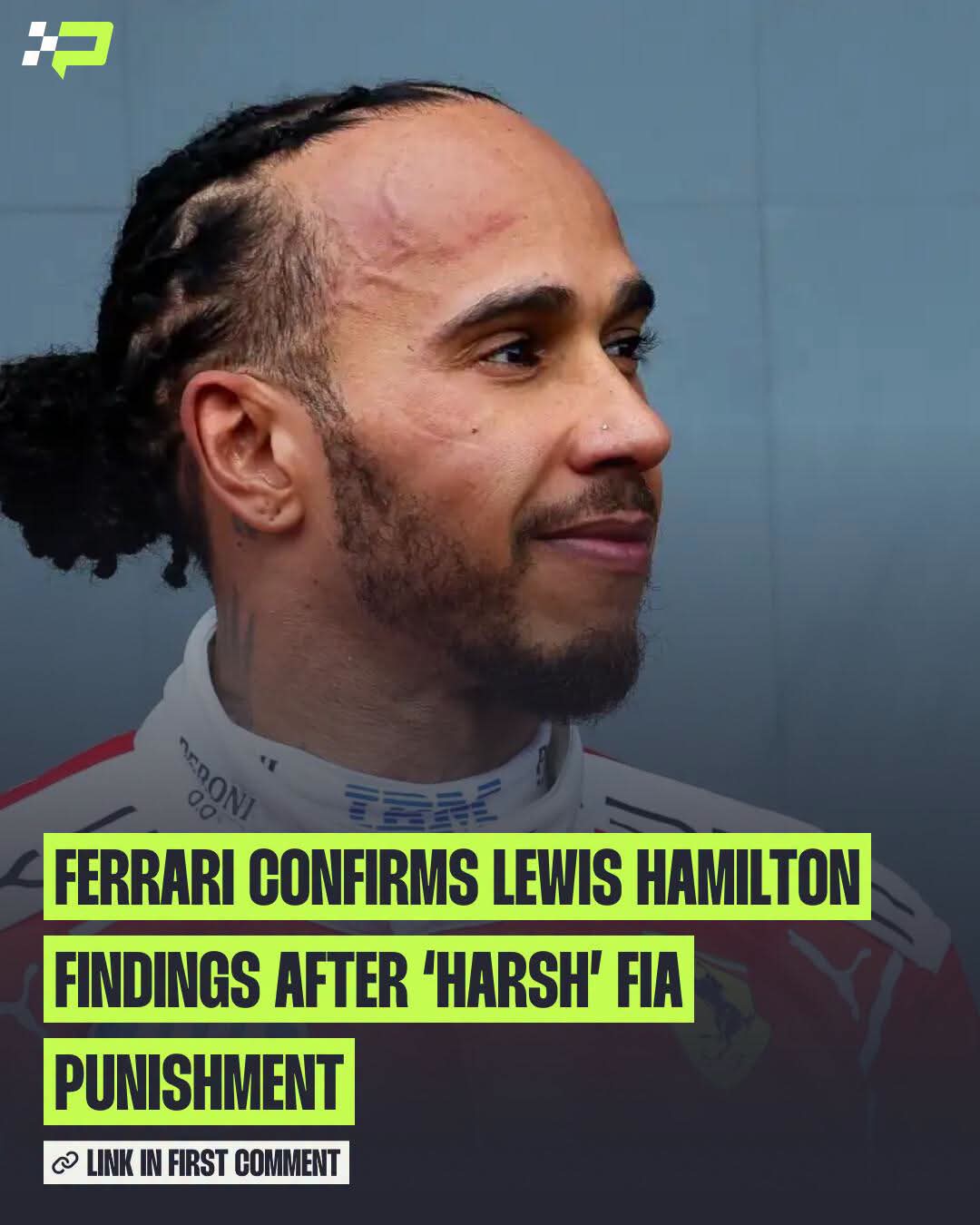
Lewis Hamilton’s home race at Silverstone delivered another dramatic chapter in Ferrari’s 2026 resurgence, but it also ignited fresh controversy over Formula 1’s race-start regulations. Although the seven-time world champion secured another podium finish, Ferrari team principal Fred Vasseur believes the five-second penalty imposed on Hamilton for an alleged false start was unnecessarily severe, insisting the team’s own systems showed no significant movement before the lights went out.
The incident has once again put the FIA’s methods of judging race starts under scrutiny, raising important questions about how tiny movements are interpreted in one of motorsport’s most pressure-filled moments.
FIA RULES HAMILTON MOVED BEFORE THE LIGHTS WENT OUT
Hamilton launched strongly from the grid during the British Grand Prix, immediately putting himself in contention near the front. However, the celebrations were short-lived when race control announced that the Ferrari driver was under investigation for a possible false start.
After reviewing the evidence, FIA stewards concluded that Hamilton’s front wheels rotated slightly after the third red light illuminated but before the official start signal. Using onboard footage and the movement of the yellow Pirelli lettering on the tyres, officials determined that even the slightest forward rotation constituted an infringement under Formula 1’s sporting regulations.
As a result, Hamilton received a five-second time penalty, costing him valuable race time during an event where every second mattered.
FERRARI INSISTS ITS DATA SHOWED SOMETHING DIFFERENT
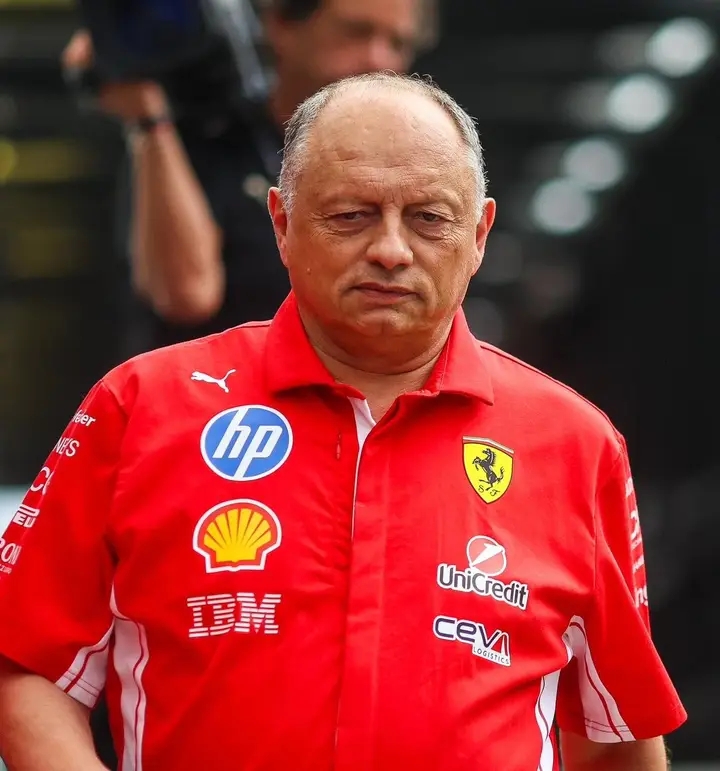
While Ferrari accepted the stewards’ ruling, Fred Vasseur openly questioned whether the punishment matched the evidence available.
According to the Ferrari boss, the team’s electronic sensors failed to detect any measurable movement from Hamilton’s car while it was positioned on the starting grid.
Vasseur acknowledged that television footage appeared to show a minimal tyre rotation but argued that relying solely on visual evidence without corresponding sensor confirmation made the punishment difficult to justify.
In his view, the decision felt particularly harsh considering the extremely small amount of movement involved.
The disagreement highlights an increasingly important issue in modern Formula 1, where technology and human interpretation do not always produce identical conclusions.
WHY THE INCIDENT HAS DIVIDED OPINION
False starts are among the clearest offences in Formula 1, yet Hamilton’s case sits in a grey area that continues to divide fans, teams and analysts.
Modern Formula 1 cars feature sophisticated sensors capable of measuring movement with remarkable precision. However, the FIA also reserves the right to use video footage whenever officials believe visual evidence demonstrates a breach of the regulations.
That combination means drivers can occasionally be penalized even when team telemetry appears to tell a different story.
Supporters of the FIA argue that maintaining absolute consistency is essential because allowing even minor movement before the lights go out could encourage drivers to push the limits further in future races.
Critics, however, believe there should be a clearer threshold separating insignificant wheel rotation from a genuine competitive advantage.
HAMILTON’S PERFORMANCE STILL SHOWED FERRARI’S GROWING STRENGTH
Despite the setback, Hamilton delivered another competitive drive that reinforced Ferrari’s growing momentum.
The British driver remained in contention throughout much of the race before eventually finishing third after Ferrari’s pit strategy dropped him behind teammate Charles Leclerc.
While Hamilton may have preferred to challenge for victory, another podium continues to strengthen his confidence within Ferrari following a difficult start to life with the Italian team.
Vasseur believes the improvement is not the result of one dramatic breakthrough but rather months of steady progress between Hamilton and his new engineers.
The team principal explained that understanding has developed gradually as Hamilton became more familiar with Ferrari’s operating methods while Ferrari simultaneously learned how to maximize the strengths of one of Formula 1’s greatest drivers.
THE BIGGER PICTURE FOR THE CHAMPIONSHIP
Although five seconds may seem relatively small over the course of a Grand Prix, penalties like this can have major implications in a championship fight where every point matters.
Hamilton remains firmly involved in the 2026 title battle, and Ferrari’s recent performances suggest the Scuderia now possesses the pace to consistently compete against Mercedes, McLaren and Red Bull.
If Ferrari can continue refining both strategy and reliability while maintaining its competitive speed, Hamilton’s pursuit of a record-breaking eighth world championship remains very much alive.
However, incidents like Silverstone also underline another reality of modern Formula 1: championships are often decided not only by outright speed, but by avoiding costly penalties, executing flawless starts, and eliminating even the smallest operational mistakes.
As the season progresses, Ferrari will hope that future weekends are remembered for Hamilton’s driving rather than controversial steward decisions.


The guiding principal should always be was infringement giving the Driver a competitive advantage. In this case, I don’t believe Hamilton had any competitive advantage.