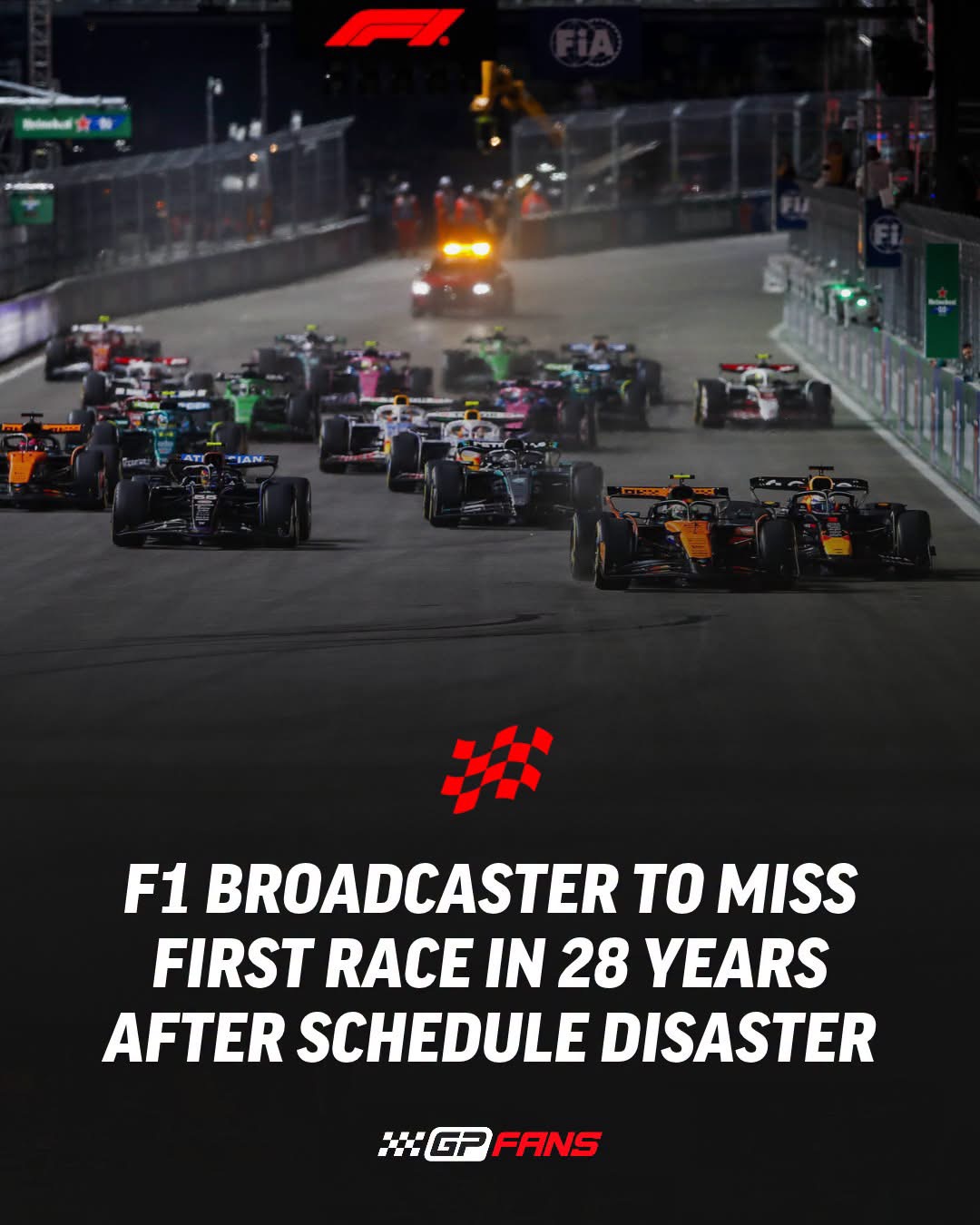
Long-time Formula 1 broadcaster Tom Clarkson will miss a Grand Prix for the first time in 28 years after a major calendar reshuffle clashed with long-standing personal commitments. The veteran media figure, who has attended more than 500 consecutive races since 1998, confirmed that the relocated Bahrain Grand Prix will bring an end to one of the most remarkable attendance streaks in the sport.
Clarkson described the situation as “really weird,” particularly because the race is heading to a circuit he genuinely loves.
HOW A CALENDAR CHANGE ENDED AN IRONMAN STREAK
The Bahrain Grand Prix was originally scheduled for earlier in the season but was postponed due to regional conflict. It has now been moved to Sepang, Malaysia, forming the middle leg of a late-season triple-header at the end of September and beginning of October.
That new date collides with a pre-arranged speaking tour. Clarkson and 1996 world champion Damon Hill are taking their “An Evening with Damon Hill – In Conversation with Tom Clarkson” show to Australia and New Zealand. The dates were planned around the original Formula 1 calendar. When the Bahrain race was relocated, the conflict became unavoidable.
Clarkson made clear that the tour commitments will be honoured. “Since all those plans were put in place of course the Bahrain Grand Prix is taking place at Sepang in Malaysia that middle weekend,” he said. “Which has slightly scuppered things. But we are committed to the tour. Nothing will change on the tour.”
THE END OF A 28-YEAR RUN
Clarkson’s streak began in 1998. In an era of expanding calendars, logistical complexity and constant travel, maintaining unbroken attendance across more than two decades and 500 races is an extraordinary feat. It required meticulous planning, resilience and a deep professional commitment to the sport.
That the streak should end not through illness, family emergency or choice, but through a late calendar change, makes the situation particularly frustrating. Formula 1’s global nature means the schedule is never entirely fixed, and geopolitical events can force significant adjustments with limited notice.
A PAINFUL MISS AT A FAVOURITE CIRCUIT
Adding to the disappointment is the venue itself. Sepang returns to the Formula 1 calendar for the first time since 2017, and Clarkson is an open admirer of the Malaysian circuit. He called it “one of the modern day classics” and noted that the hot, physical nature of the race would have made it an especially compelling event to cover in person.
“It’s going to be really weird,” he admitted. “Also not helped by the fact I love Sepang. I think it’s one of the modern day classics. Love the racetrack. I love the fact that it’s going to be a hot race. A physical race.”
THE HUMAN SIDE OF AN EXPANDING CALENDAR
Clarkson’s situation highlights the human cost of Formula 1’s increasingly complex and sometimes unstable calendar. Broadcasters, journalists, team personnel and support staff build their lives around the schedule. When races move at short notice, the ripple effects extend far beyond the track.
While drivers and teams adapt as part of their jobs, long-serving media figures who have organised their professional and personal commitments years in advance can find themselves with no good options.
A STREAK ENDS, BUT THE CONTRIBUTION CONTINUES
Missing one race does not diminish Clarkson’s remarkable record or his contribution to Formula 1 coverage over nearly three decades. Few people in the media paddock can match his continuity or institutional knowledge. The fact that the streak ends because he chose to honour a commitment with Damon Hill rather than abandon it speaks to his character.
When Formula 1 arrives at Sepang, Clarkson will be elsewhere, fulfilling a different professional obligation. The streak will be over. The respect for what he sustained for 28 years, however, will remain firmly intact.