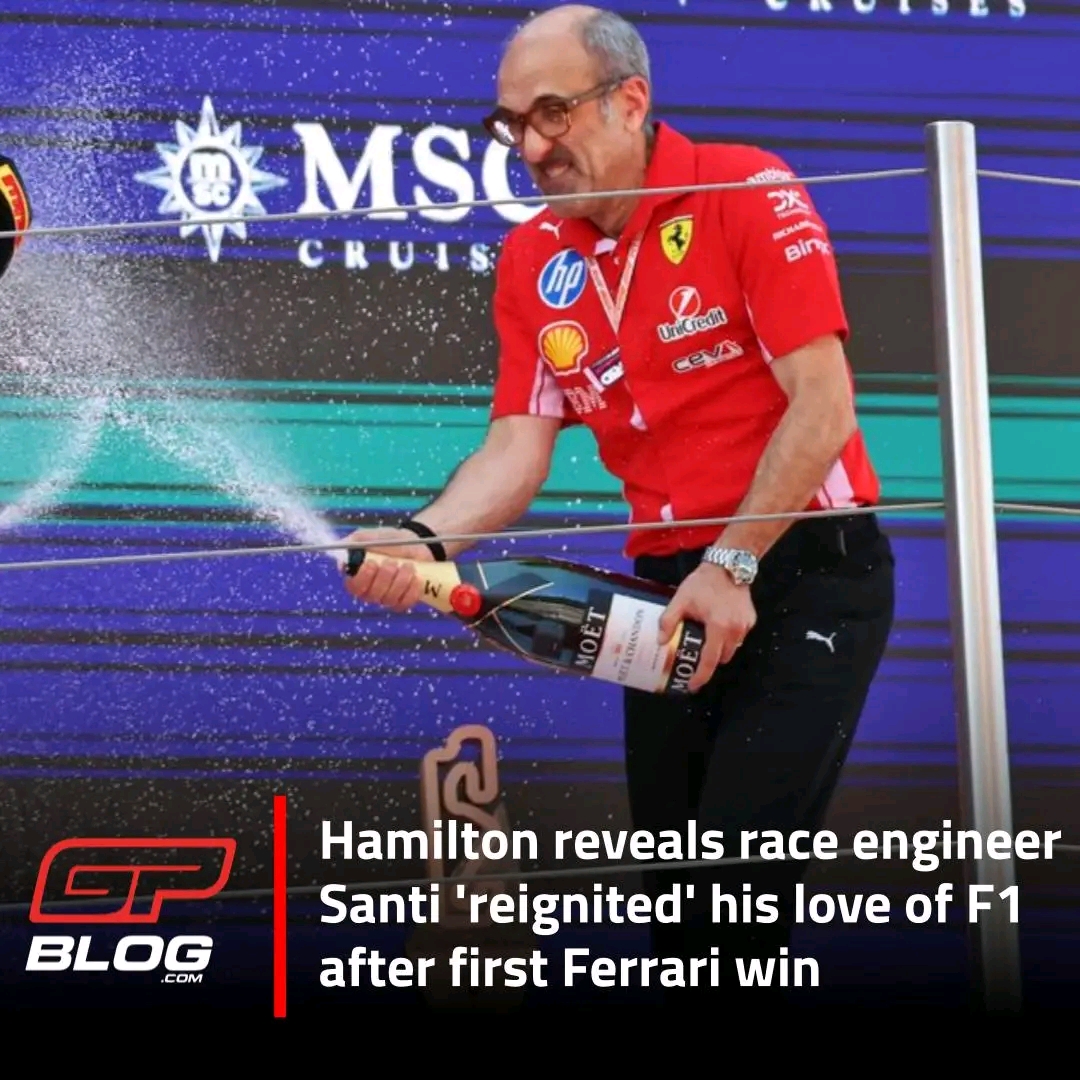
One of the standout developments from the Barcelona weekend was Hamilton’s relationship with race engineer Carlo Santi.
Hamilton revealed that the connection between them has developed quickly, with communication flowing naturally from the very early stages of their partnership. In Formula 1, this kind of “instant understanding” is rare. Most driver-engineer relationships take months, sometimes years, to fully stabilize.
Santi’s role has been crucial in simplifying complex race information, delivering calm and precise feedback, and ensuring Hamilton can focus entirely on driving performance rather than operational uncertainty.
This clarity is especially important at Ferrari, a team that has historically struggled with communication efficiency during critical race moments.
WHY DRIVER-ENGINEER CHEMISTRY IS SO IMPORTANT IN F1
Modern Formula 1 is no longer just about car speed. It is about execution.
The relationship between a driver and race engineer is one of the most decisive factors in race outcomes. Every lap involves tire updates, fuel targets, strategy changes, and competitor tracking. If communication breaks down, even slightly, it can cost positions or even podiums.
Hamilton has built much of his career success on strong engineer relationships that allow him to maximize in-race decision-making. The early signs suggest that the partnership with Santi is giving him a similar level of trust and clarity.
At Barcelona, this was visible in Ferrari’s strategic execution, which appeared more decisive and better timed than in earlier races this season.
WHAT THIS MEANS FOR FERRARI’S INTERNAL STRUCTURE
Beyond Hamilton’s individual performance, this development points to a wider improvement within Ferrari’s operational structure.
For years, Ferrari has been criticized for inconsistency in strategy calls and communication under pressure. Even with competitive cars, small errors in execution have often cost them valuable points in both drivers’ and constructors’ championships.
The emergence of a strong, stable, and confident driver-engineer pairing helps reduce those risks significantly. Santi’s ability to align Hamilton’s feedback with the pit wall strategy gives Ferrari a more stable decision-making chain during races.
If maintained, this could be one of the key factors that turns Ferrari from race winners into consistent title challengers.
IMPACT ON THE 2026 TITLE FIGHT
Hamilton’s Barcelona victory has tightened the championship battle and reintroduced Ferrari into serious contention.
While raw car performance remains crucial, Formula 1 championships are often decided by consistency and operational excellence. The smoother the communication between driver and engineer, the fewer mistakes a team makes across a season.
If the Hamilton–Santi relationship continues to strengthen, Ferrari could gain an edge in strategic adaptability, especially in unpredictable race conditions such as changing weather or safety car scenarios.
This could become a defining factor in the second half of the 2026 season, where pressure and margins typically increase.
CAN THE PARTNERSHIP LAST UNDER PRESSURE?
The biggest question moving forward is sustainability.
Barcelona provided a controlled environment where everything aligned in Ferrari’s favor. The real test will come at circuits where tire degradation is higher, overtaking is more difficult, and strategy decisions become more complex.
If Hamilton and Santi maintain their communication clarity under those conditions, it will confirm that this is not just a short-term improvement but a long-term performance advantage.
CONCLUSION
Lewis Hamilton’s first Ferrari win was a headline moment, but the deeper story lies in the growing trust between driver and engineer. Carlo Santi’s rapid integration into Hamilton’s working rhythm is already improving Ferrari’s race execution and strategic confidence.
In a championship where margins are razor-thin, this kind of partnership can be just as important as upgrades or raw pace. If it continues to develop, it may not only define Ferrari’s 2026 season but also reshape their long-term competitiveness in Formula 1.