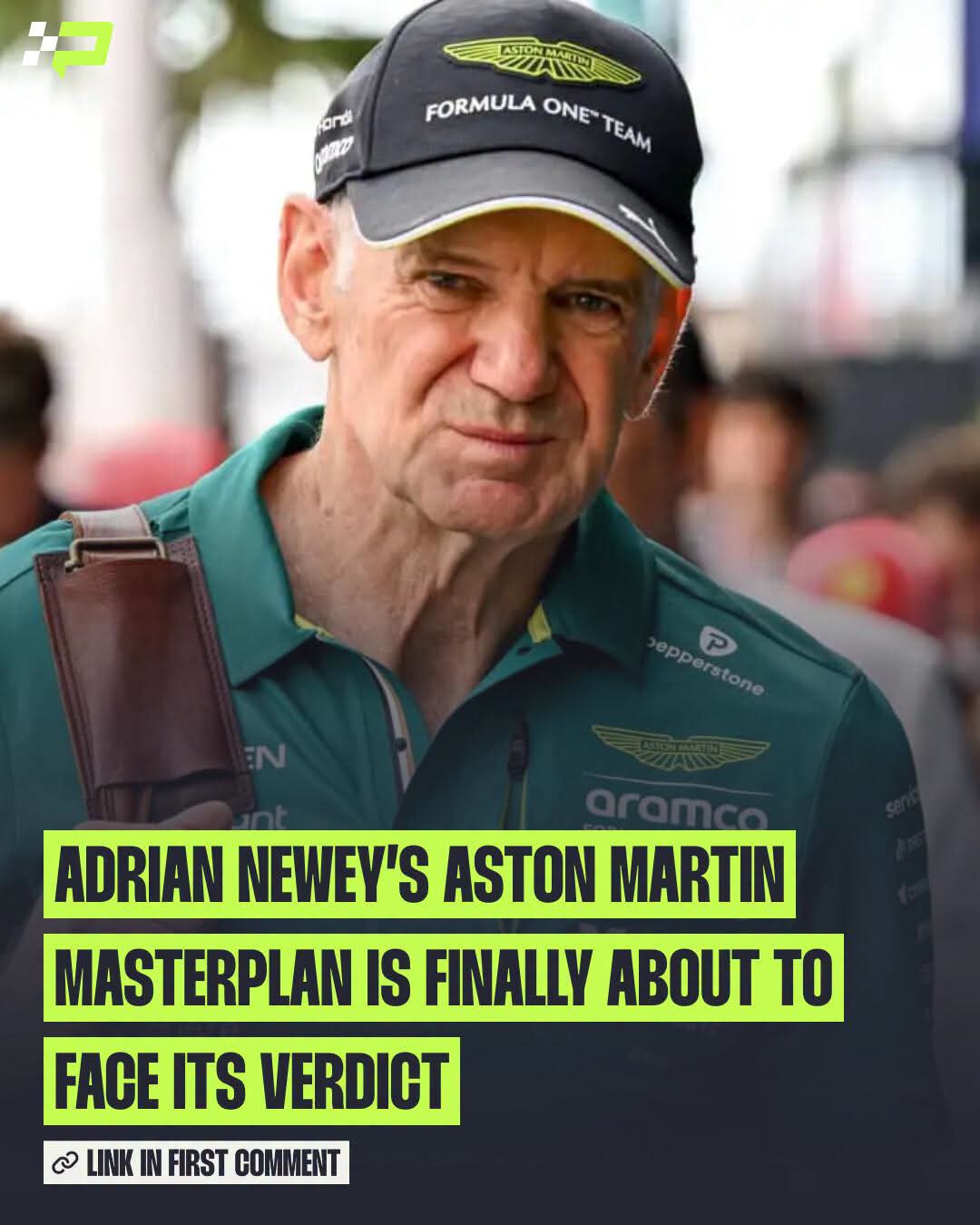
Aston Martin has endured one of the most disappointing Formula 1 campaigns in recent memory, but the team believes its fortunes could soon change. After months of frustration, technical setbacks, and disappointing race weekends, the Silverstone-based outfit is preparing to unveil what could be the most important upgrade package of the 2026 season. The changes, spearheaded by legendary designer Adrian Newey, are expected to debut at the Hungarian Grand Prix and could determine not only Aston Martin’s competitiveness but also Fernando Alonso’s Formula 1 future.
For Newey, whose reputation has been built on designing championship-winning machinery, the current AMR26 has been a rare stumble. Rather than hide from criticism, however, the British engineer has openly acknowledged the team’s mistakes while insisting that a bold recovery plan is already underway. His willingness to speak candidly has only increased anticipation surrounding Aston Martin’s next major step.
WHY ASTON MARTIN CHOSE TO SACRIFICE SHORT-TERM RESULTS
Instead of introducing small performance updates throughout the first half of the season, Aston Martin made the controversial decision to delay development and focus resources on one comprehensive upgrade package.
That approach has come at a heavy price. While rival teams steadily improved, Aston Martin appeared to stand still. The team slipped further down the competitive order, suffered reliability concerns, and even found itself struggling against newcomers Cadillac on certain weekends.
Newey admitted the decision was painful but necessary. Rather than spending resources on incremental gains, Aston Martin chose to invest in a larger transformation that could provide a stronger foundation for both the remainder of 2026 and future campaigns.
It is a high-risk strategy, but one the team believes offers far greater long-term rewards.
ADRIAN NEWEY ADMITS THE TEAM MADE MAJOR MISTAKES
Perhaps the most striking aspect of Newey’s recent comments is how openly he accepted responsibility for Aston Martin’s struggles.
According to the veteran engineer, the AMR26 followed an aggressive aerodynamic concept that ultimately created problems the team had not anticipated. Combined with outdated engineering systems and inefficient manufacturing processes, Aston Martin found itself fighting problems far deeper than simple lack of pace.
Rather than applying temporary fixes, the organization has undertaken a complete review of how it designs, develops, and manufactures its Formula 1 cars.
That overhaul includes modernizing simulation tools, expanding in-house manufacturing capabilities, improving production efficiency, and tightening communication between engineering departments.
While fans cannot immediately see these changes, Newey believes they are essential if Aston Martin is to compete consistently with Formula 1’s elite teams.
THE HUNGARIAN GRAND PRIX COULD CHANGE EVERYTHING
Attention now shifts toward the Hungarian Grand Prix, where Aston Martin plans to introduce its long-awaited upgrade package across both cars.
Reports indicate the revised AMR26 will feature significant aerodynamic changes, a redesigned nose, updated rear suspension, chassis modifications requiring fresh crash testing, and numerous newly manufactured in-house components. The package is also expected to reduce the car’s weight closer to Formula 1’s minimum limit while improving overall balance and drivability.
Unlike traditional mid-season updates, this appears to be a fundamental redesign rather than a collection of smaller improvements.
That explains why expectations inside the team remain unusually high.
FERNANDO ALONSO’S FUTURE MAY DEPEND ON THESE RESULTS
The timing of the upgrade is particularly significant because it arrives as Fernando Alonso continues evaluating his Formula 1 future.
The two-time world champion has remained remarkably composed despite Aston Martin’s difficult campaign, avoiding the public frustration that characterized some earlier stages of his career. However, Alonso has made it clear that he wants to see genuine evidence the project is moving in the right direction before fully committing to future seasons.
Newey himself acknowledged that Alonso’s experience remains invaluable to the team’s long-term ambitions. If the Hungarian upgrade delivers meaningful progress, Aston Martin hopes the Spaniard will continue leading its development into the next phase of the project.
Failure, however, could leave difficult decisions for both driver and team.
ASTON MARTIN’S LONG-TERM PROJECT IS BIGGER THAN ONE SEASON
Although immediate performance remains important, Aston Martin’s ambitions extend well beyond 2026.
The organization has invested heavily in facilities, personnel, and technical infrastructure over recent years. Bringing more manufacturing operations in-house gives the team greater flexibility, improved quality control, and faster development cycles—advantages that become increasingly valuable under Formula 1’s cost cap regulations.
These structural improvements may ultimately prove even more important than the upcoming aerodynamic package.
If Newey succeeds in creating stronger engineering foundations, Aston Martin could position itself as a genuine championship contender once Formula 1’s next technical cycle fully matures.
CAN ADRIAN NEWEY DELIVER ANOTHER REMARKABLE COMEBACK?
History suggests it would be unwise to underestimate Adrian Newey.
Throughout his career, several of his projects have required patience before reaching their full potential. Some initially struggled before evolving into race-winning and championship-contending machines after significant refinement.
That history fuels optimism that Aston Martin’s difficult first half of the season may simply represent the painful beginning of a much larger transformation.
Of course, Formula 1 has become more competitive than ever. Mercedes, Ferrari, McLaren, and Red Bull continue developing aggressively, meaning Aston Martin cannot afford another failed step.
ASTON MARTIN’S NEXT CHAPTER BEGINS NOW
Few upgrade packages in recent Formula 1 history have carried as much importance as Aston Martin’s upcoming Hungarian Grand Prix debut.
For Adrian Newey, it represents an opportunity to prove his ambitious vision remains on track despite early setbacks. For Fernando Alonso, it may provide the confidence needed to continue his remarkable Formula 1 career. For Aston Martin, it could finally validate years of investment aimed at transforming the team into a genuine title challenger.
If the upgrade performs as expected, the difficult opening months of 2026 may eventually be remembered as the necessary growing pains of a future championship contender. But if the package fails to deliver, serious questions will continue surrounding the team’s direction and whether its long-term project can fulfill the enormous expectations placed upon it.