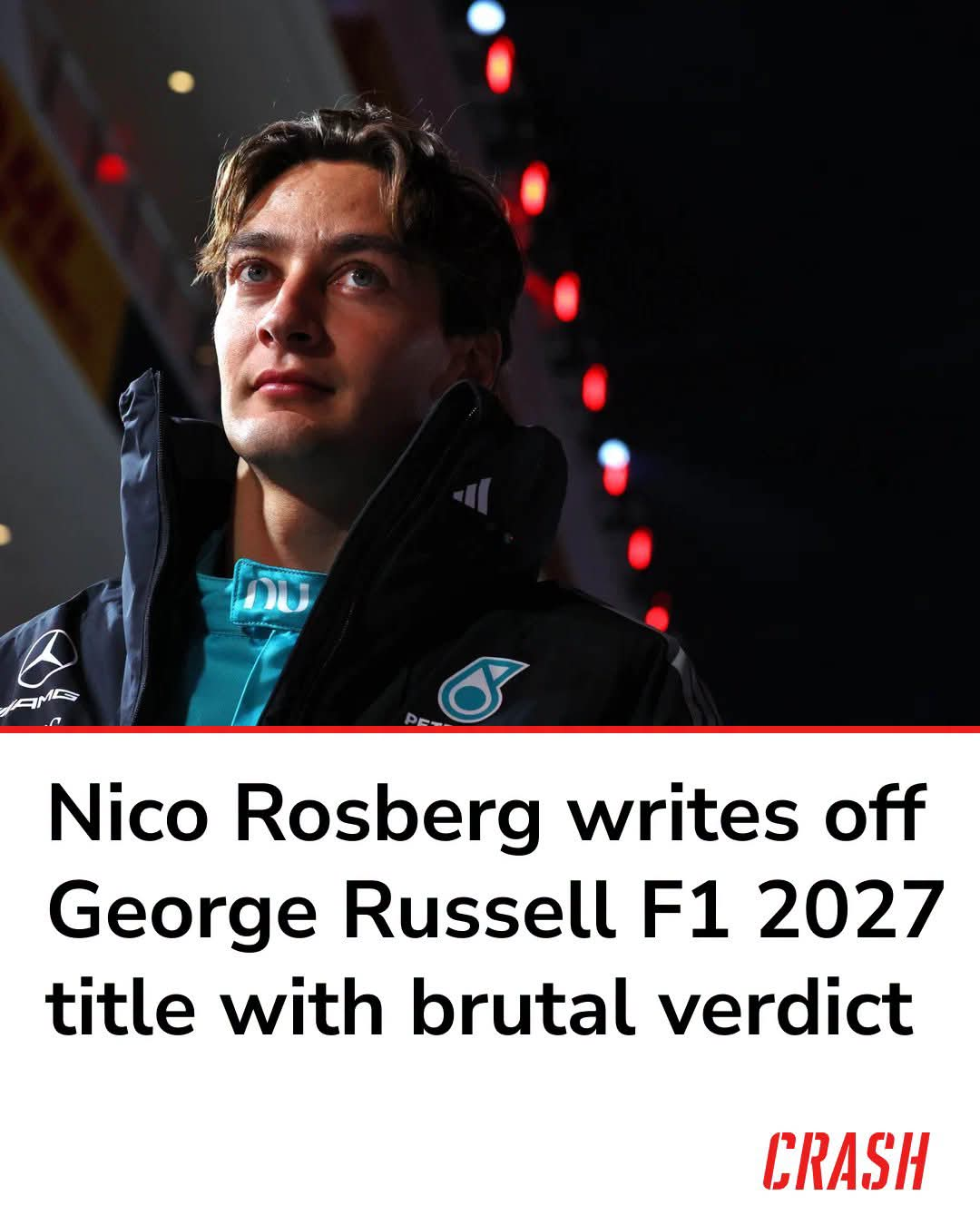
Nico Rosberg does not believe George Russell will challenge for the Formula 1 drivers’ championship in 2027. The 2016 world champion has delivered one of the season’s most cutting assessments, telling Sport Bild that the Mercedes driver has dug himself into a mental hole from which recovery will not come quickly.
Russell entered 2026 as the clear favourite at the Silver Arrows. He won the season-opening Australian Grand Prix from pole and carried the expectation that the new regulations would finally deliver the title that had long been predicted for him. Instead, the campaign turned into a public dismantling. Teenager Kimi Antonelli, who had looked close to losing his seat the previous year, seized control of the garage, sealed the championship in Mexico City, and left Russell 138 points behind with two races remaining. Antonelli sits on 402 points with nine wins. Russell has 264 points and three victories.
Rosberg’s list of 2027 contenders includes the defending champion Antonelli, Max Verstappen, Lando Norris, and the Ferrari pairing of Lewis Hamilton and Charles Leclerc. Russell does not appear. Rosberg openly acknowledged that omitting the Briton “somehow crazy” on paper, yet he insisted the psychological damage of the season runs too deep.
“He thought: ‘I am now the king of Formula 1, I’m dominating the season.’ And then this young driver comes along, who was almost on his way out of Formula 1 last year, and dominates so much that George doesn’t stand a chance anymore,” Rosberg said. “Going from so high up down into the basement like that is mentally extremely hard.”
THE PSYCHOLOGY OF A SUDDEN FALL FROM FAVOURITE TO SECOND DRIVER
Formula 1 history is littered with drivers who never fully recovered from being comprehensively beaten by a teammate. The mental shift from expected number one to clear number two is rarely clean. Russell’s early-season confidence appears to have collided with the reality that Antonelli adapted faster to the new cars and extracted more consistent performance over a full campaign.
Rosberg’s own career supplies the closest parallel. In 2015 he was beaten by Lewis Hamilton. He used the remaining races to rebuild momentum and returned in 2016 to take the title. That recovery required ruthless self-examination and a winter of focused work. Whether Russell possesses the same capacity remains the central question heading into 2027.
Mercedes has already confirmed both drivers will remain for next season. The team will not break up a pairing that delivered the constructors’ championship. That decision places Russell in a high-pressure environment. He must race the same machinery as a world champion who is younger, hungrier, and now carrying the psychological advantage of having broken his teammate once.
WHY THIS MATTERS FOR MERCEDES, THE TITLE FIGHT, AND THE BROADER GRID
Rosberg’s comments land at a delicate moment for Mercedes. The team spent years rebuilding after the end of the hybrid era dominance. The 2026 regulations were supposed to restore them to the front. Instead they produced a champion in Antonelli while exposing vulnerability in their senior driver. A second consecutive season in which Russell cannot match Antonelli would force difficult conversations about long-term hierarchy.
For the championship picture, the exclusion of Russell narrows the field of realistic contenders. Verstappen has finished the year with strong late momentum. Norris remains a consistent threat at McLaren. Ferrari’s dual threat of Hamilton and Leclerc cannot be dismissed despite their own internal struggles. Adding Russell back into that mix would have created a five- or six-way fight. Removing him simplifies the narrative around the top of the order.
The wider industry impact is subtler but real. Young drivers watching Antonelli’s rise see proof that patience and performance can overturn established pecking orders. Established stars watching Russell’s season see a warning about the speed at which confidence can evaporate when a teammate finds an extra tenth consistently.
CAN RUSSELL CLIMB OUT OF THE HOLE, OR IS 2027 ALREADY LOST?
Predictions in Formula 1 are dangerous. Regulations remain stable into 2027, giving teams less opportunity for radical redesigns. Mercedes will still field one of the strongest packages. Russell’s pure speed has never been seriously questioned. The issue is consistency under pressure and the ability to reset mentally after a public defeat.
Rosberg’s verdict is not a technical analysis of the car. It is a judgment on the driver. He believes the mental cost of watching a younger teammate seize the narrative is too high for a quick rebound. History suggests such holes can be escaped, but only with deliberate work and often with a different internal team dynamic.
Russell now faces a winter in which every simulator session, every media appearance, and every comparison with Antonelli will carry extra weight. The 2016 champion who once climbed out of a similar hole has already told the world he does not expect the same outcome this time. That public judgment will follow Russell into the first race of 2027 whether he likes it or not.
The numbers from 2026 are clear. The psychology, according to one of the sport’s most analytical former champions, is even clearer. George Russell’s path back to genuine title contention looks longer and steeper than the calendar suggests.