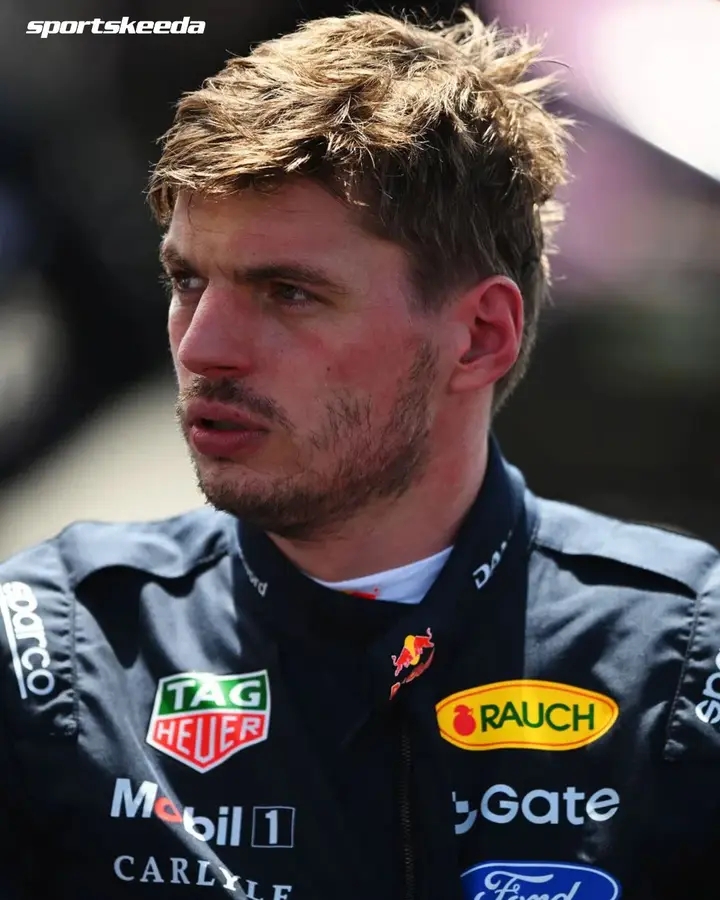
Under the dazzling lights of the Las Vegas Strip, the 2026 Formula 1 season delivered one of its most chaotic and compelling races yet. What unfolded over 50 laps was not merely a Grand Prix. It was a high-stakes chess match played at 200 mph, where slipstream battles, energy deployment, and pure racecraft decided the outcome. Max Verstappen emerged victorious, but the story goes far deeper than the checkered flag.
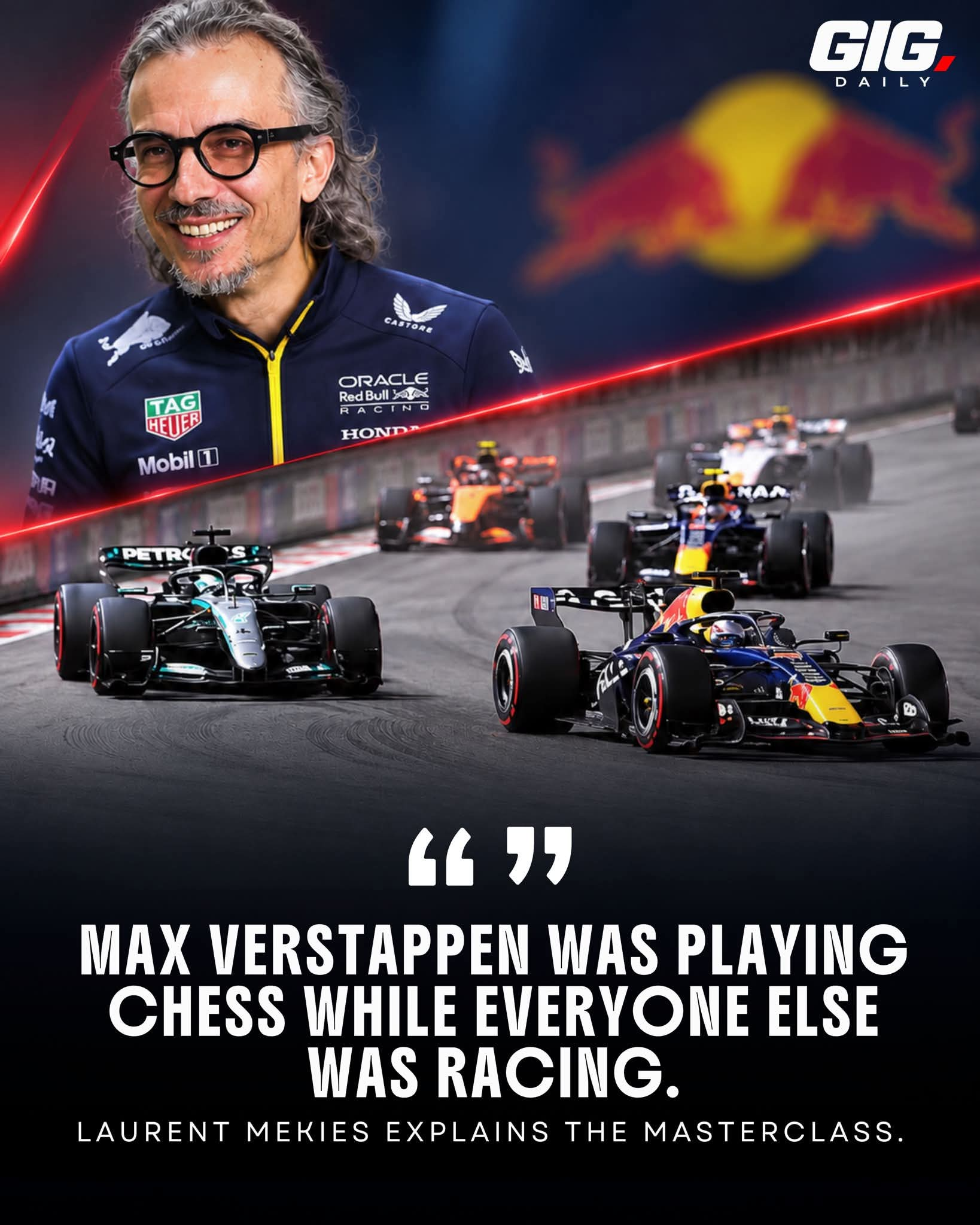
Red Bull team principal Laurent Mekies captured it perfectly after the race. “I think Max clearly outsmarted his opponents today with the way he defended for 50 laps.” That single observation cuts to the heart of why this drive stands out even among Verstappen’s remarkable career.
A RACE THAT FELT LIKE MARIO KART UNDER THE NEON LIGHTS
The Las Vegas Grand Prix has always promised spectacle. In 2026 it delivered chaos on an unprecedented scale. The long back straight down the Strip turned the race into a constant game of cat and mouse. Drivers repeatedly used the massive slipstream to dive past, only to be re-passed moments later as energy and positioning shifted.
Verstappen started from pole after Kimi Antonelli’s grid penalty. What followed was a relentless back-and-forth with the Mercedes pair of George Russell and Antonelli. Lead changes piled up—reports put the total at 35 across the 50 laps. Position swaps throughout the field numbered in the hundreds. Cars ran nose-to-tail in packs, the advantage swinging like a yo-yo every time they blasted toward the finish line.
Verstappen lost the lead multiple times on the long straight. He almost always took it back before the lap was complete, often around the outside at key corners or by carefully managing his battery deployment. He even radioed the team late in the race asking if there was a better energy strategy for the final lap. The reply was telling: he was already on the optimal path and had explored the options himself.
When Russell crashed late while trying to force the issue and Antonelli suffered a sudden loss of pace, the door opened. Lando Norris and Oscar Piastri, who had charged through the field, claimed second and third. Verstappen crossed the line just 0.639 seconds clear of Norris. Piastri’s recovery from 17th on the grid made the McLaren double podium even more impressive.
WHY MEKIES’ PRAISE MATTERS MORE THAN USUAL
Mekies did not simply say Verstappen drove well. He suggested the four-time world champion may have allowed certain overtakes on purpose. By letting rivals past in controlled moments, Verstappen could test how the cars behaved between the penultimate corner, the final chicane, and the line. He was gathering data in real time while under extreme pressure.
That level of strategic thinking under fire is rare. Modern Formula 1 cars demand constant energy management. The hybrid systems reward drivers who understand not only when to attack but when to absorb pressure, when to conserve, and when to spring the trap. Verstappen turned those constraints into an advantage.
His engineer later noted that many of the decisive moves came not on the straight itself but in the recovery phase afterward. Verstappen had already mapped the possibilities before the team could finish analyzing them. Mekies later described him as being “from a different planet.” The comment was not hyperbole. It reflected a driver operating at a level that still leaves even his own team slightly in awe.
THE BIGGER PICTURE: IMPACT ON THE CHAMPIONSHIP AND THE SPORT
This was Verstappen’s fourth victory of the 2026 season and the 75th of his career. In the championship picture it strengthened his hold on second place. With two races remaining, the gap to leader Kimi Antonelli remains substantial, but Verstappen has made it clear he is still the most complete driver on the grid when conditions turn complex.
For Mercedes the result stings. Russell and Antonelli had the pace to challenge, yet both ultimately fell short. Russell’s late crash and Antonelli’s final-lap issue handed the podium places to McLaren. Ferrari, meanwhile, continued its difficult campaign as Lewis Hamilton and Charles Leclerc collided once again and collected penalties.
Beyond the points, the race highlighted something important about the current generation of Formula 1. Pure speed is no longer enough. Circuits with long straights and heavy energy demands reward drivers who can think several moves ahead while managing tyre wear, battery state, and traffic simultaneously. Verstappen’s drive was a clinic in that skill set.
RACE INTELLIGENCE IN THE NEW ERA OF FORMULA 1
Older generations of Formula 1 sometimes romanticized the pure fighter who simply refused to yield. Today’s racing rewards something more sophisticated. Verstappen has long been known for his aggression and precision. In Las Vegas he showed the quieter quality that separates the great from the exceptional: the ability to stay calm, gather information, and choose the exact moment to strike or concede.
He did not simply defend for 50 laps. He controlled the race by deciding when the fight would happen and on what terms. That is race intelligence at the highest level.
Looking ahead to Qatar and Abu Dhabi, the remaining races will test different skills. Yet the lessons from Las Vegas will linger. Teams will study the energy management patterns. Drivers will watch the onboard footage of Verstappen’s recoveries. Young talents will see a masterclass in patience under pressure.
WAS THIS ONE OF VERSTAPPEN’S SMARTEST DRIVES?
Mekies believes so. Many who watched the race will agree. It lacked the dramatic last-corner collision or the dominant lights-to-flag procession that sometimes define “great” drives. Instead it offered something rarer: a driver solving a complex, evolving puzzle in real time while the entire field tried to break him.
In an era when cars are more sophisticated and strategies more layered than ever, Verstappen continues to prove that the human element still decides the biggest races. He did not just win in Las Vegas. He out-thought the opposition for nearly two hours under the brightest lights in the sport.
That is the kind of performance that will be remembered long after the final standings of 2026 are settled.