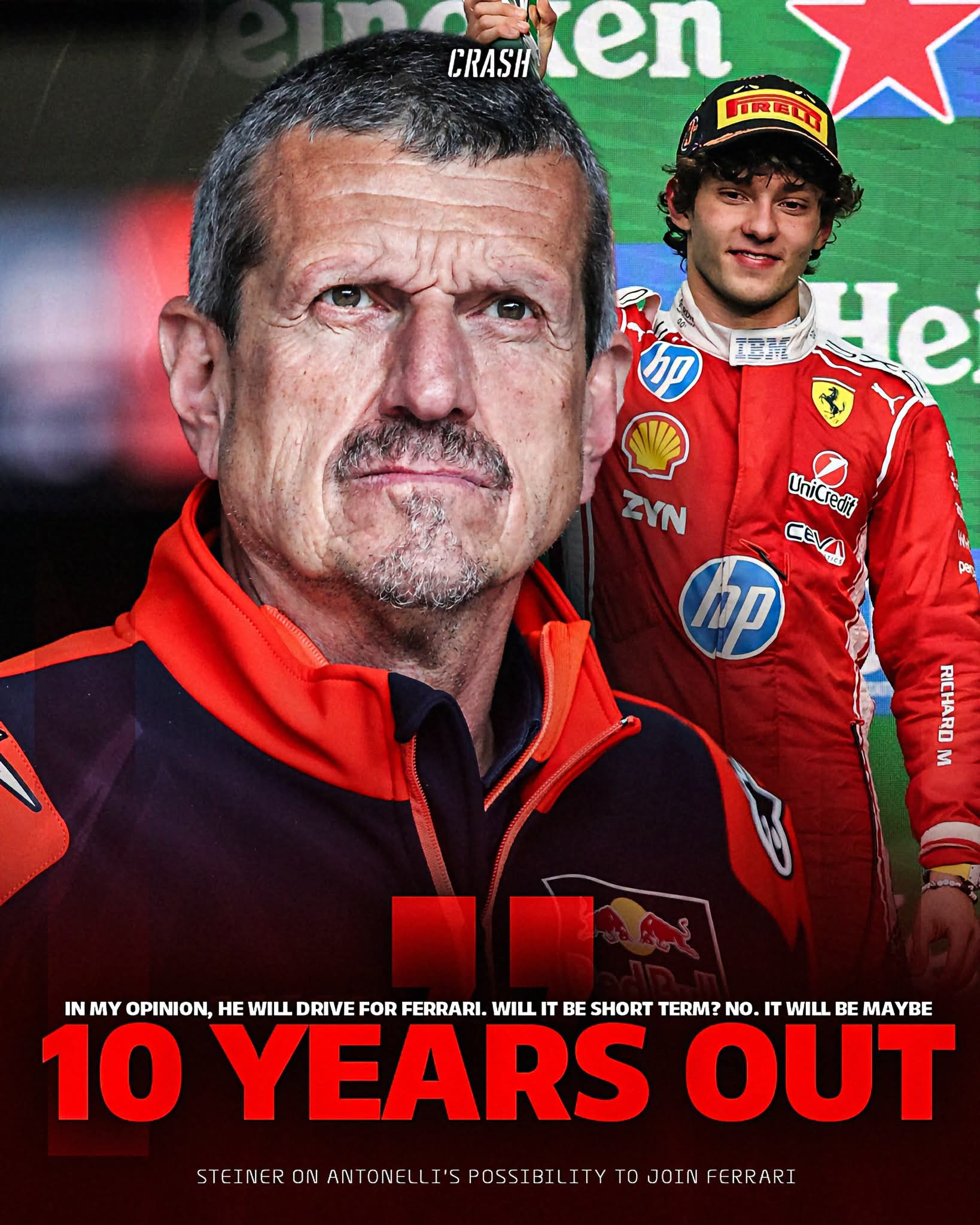
Former Haas Formula 1 team principal Guenther Steiner has delivered a clear-eyed take on the future of newly crowned world champion Andrea Kimi Antonelli. The Italian youngster, still only 20, will eventually race in red for Ferrari, Steiner believes. Just not anytime soon. The timeline he offered is striking: maybe ten years from now.
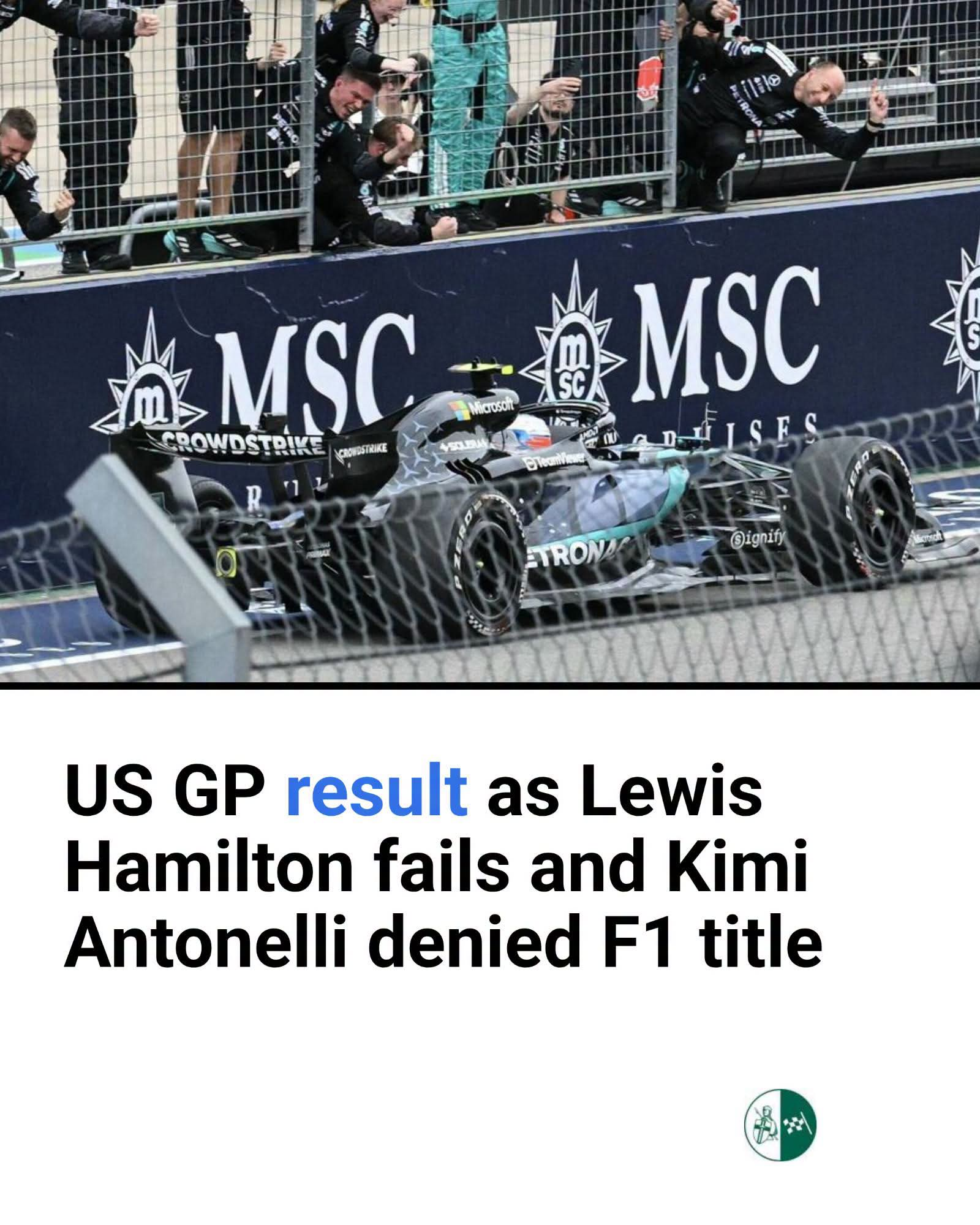
Antonelli sealed the 2026 drivers’ title in Mexico City, becoming the youngest champion in Formula 1 history and Italy’s first since Alberto Ascari in 1953. He did it in a Mercedes. That single detail sits at the heart of Steiner’s comments and the complicated national mood surrounding the achievement.
THE ONLY IMPERFECTION IN AN OTHERWISE PERFECT ITALIAN STORY
Steiner, speaking to RacingNews365, framed the situation with characteristic bluntness. Italians keep asking why their new champion is not driving for Ferrari. “That’s the only not-so-perfect thing for Italy,” he said, “that there is an Italian champion not driving for Ferrari.”
He does not see an immediate switch. Antonelli is 20 and still under contract with Mercedes until at least the end of 2027. Steiner’s prediction is longer-term: “He’s so young, so at some stage, in my opinion, he will drive for Ferrari. Will it be short term? No. It will be maybe 10 years out. But at some stage, obviously, as an Italian with this talent, he will get there.”
Then came the line that flipped the usual transfer narrative. “I would turn it around. They will get him. He could go tomorrow if he wants.”
The message is straightforward. Ferrari would take Antonelli in a heartbeat. The decision, when it eventually comes, will sit with the driver and the team that has nurtured him since he was a child.
WHY AN ITALIAN CHAMPION IN A MERCEDES CREATES A NATIONAL TENSION
Ferrari is more than a Formula 1 team in Italy. It is the national team. Generations of fans have grown up cheering the Scuderia even when the drivers were not Italian. An Italian world champion who races for the biggest rival creates a split loyalty that Steiner has watched closely.
Antonelli’s success is historic. He ended a 73-year wait for an Italian champion. He is the first Italian title winner who did not do it in an Italian car (Ascari won with Ferrari, Giuseppe Farina with Alfa Romeo). Yet the celebrations in Italy have carried a note of reservation precisely because the silver arrows, not the red cars, delivered the glory.
Steiner has been consistent on this point across the season. After Antonelli’s emotional Monza victory earlier in 2026 — the first Italian win at the Italian Grand Prix in 60 years — he argued the ideal world would see the young star in a Ferrari. Driving for Mercedes, he suggested, makes full national embrace harder. The fans still want their team to win even while admiring the Italian who is beating them.
That cultural weight is real. It explains why some voices in Italy treat Antonelli’s title as almost incomplete. It also explains why Steiner’s long-term prediction resonates so strongly. The gravitational pull of Ferrari on an Italian talent of this calibre is enormous.
MERCEDES BUILT THE CHAMPION — AND STILL HOLDS THE KEYS
Context matters. Mercedes signed Antonelli as an 11-year-old after Ferrari passed. The German team invested heavily in his development, and he repaid that faith by winning the title in only his second full season. He has spoken repeatedly about the family atmosphere at Brackley and his gratitude for the opportunity.
His current deal runs through 2027 at minimum. Any move before then would require agreement from both sides and significant financial consequences. Steiner is not predicting a mid-contract break. He is looking further ahead, to a point when Antonelli may have multiple titles, when the next generation of regulations arrives, and when the personal ambition of racing for the most iconic team in the sport could outweigh the loyalty that currently binds him.
In the short term, Mercedes remains the stronger package under the current rules. Antonelli has already shown he can win championships there. Steiner himself expects more titles: “I’m pretty sure he will win a few more world championships.”
WHAT A FUTURE FERRARI MOVE WOULD MEAN FOR EVERYONE INVOLVED
For Ferrari the appeal is obvious. The team has not had a drivers’ champion since Kimi Räikkönen in 2007. An Italian world champion in red would be commercial and emotional rocket fuel. The Tifosi would embrace him in a way they never fully can while he races in silver and teal. Piero Ferrari has already expressed interest in the idea, while acknowledging contracts must be respected.
For Mercedes the risk is longer-term. Losing a generational talent to their fiercest rival would sting, even if it happened a decade from now. The team has built its post-Hamilton era around Antonelli and George Russell. Keeping the champion motivated and committed through multiple contract cycles will be a priority.
For Antonelli himself the calculation is personal. He is still at the very beginning of what could be a long career. At 20 he has time to collect more titles, learn, and decide what legacy he wants. Racing for Ferrari would close a cultural circle for Italy. Staying at Mercedes and building a dynasty of his own would write a different, equally impressive story.
The broader industry impact is subtler but real. Formula 1 thrives on narratives of loyalty, ambition, and national identity. An eventual Antonelli-to-Ferrari transfer would become one of the defining driver market stories of the 2030s. It would also highlight how the sport’s biggest teams still fight over the rarest talents even when those talents are already world champions.
THE LONG GAME IS JUST BEGINNING
Steiner’s assessment feels measured rather than sensational. He is not stirring drama for the sake of it. He is recognising the unique position Antonelli occupies: Italian, young, already a champion, and currently racing for the wrong team in the eyes of many of his countrymen.
Ten years is a long time in Formula 1. Regulations will change. Team strengths will shift. Personal priorities will evolve. Yet the core truth Steiner pointed to remains. An Italian driver of this quality and this level of success will always feel the pull of Maranello. Whether he answers it is ultimately his choice.
For now the story is simpler and more impressive. A 20-year-old from Bologna has rewritten the record books in a Mercedes. Italy has a champion again. And the conversation about where he might end his career has already begun — even if the answer, according to one of the most experienced voices in the paddock, is still a decade away.