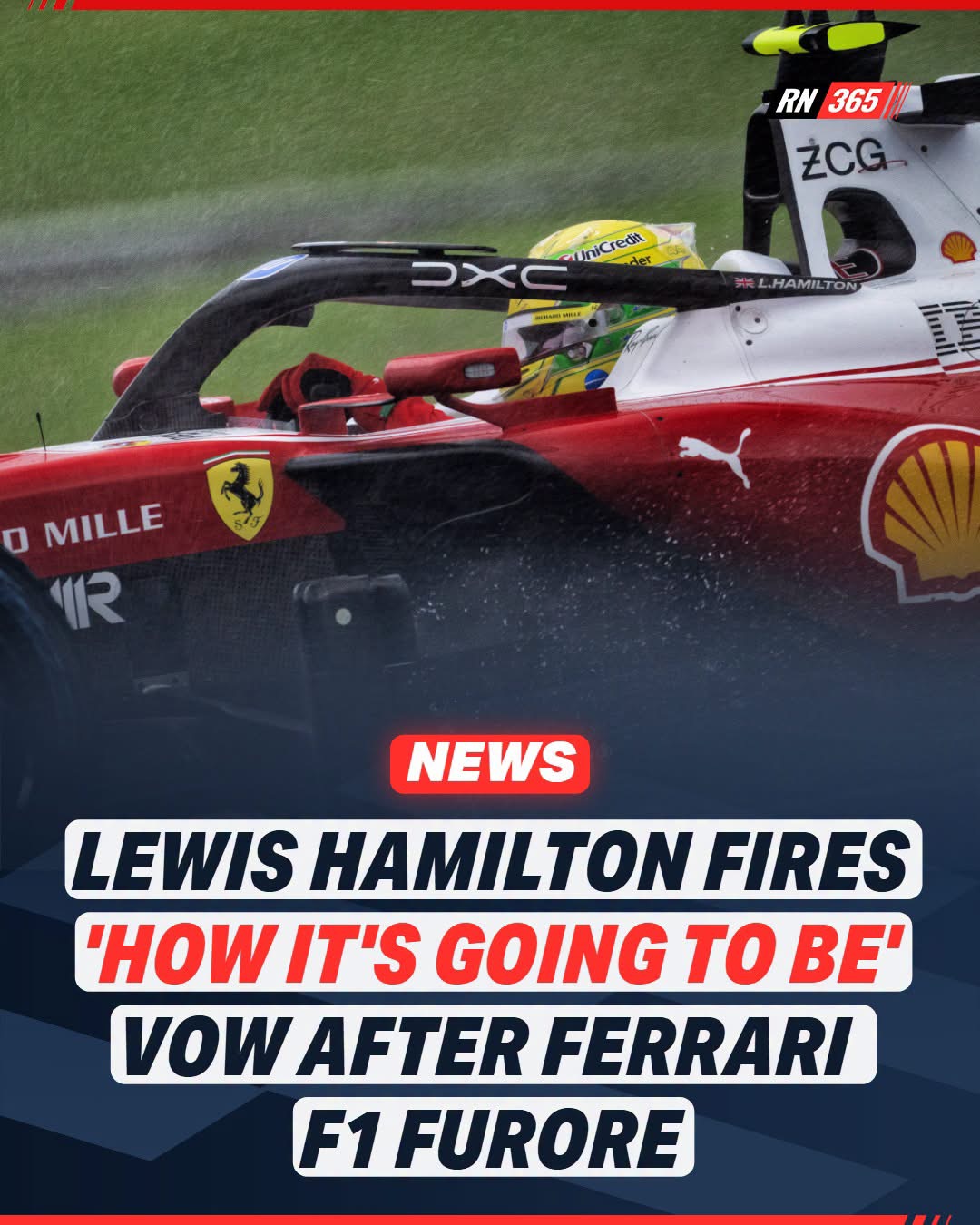
Lewis Hamilton has made it clear that he has no intention of reducing his influence at Ferrari, delivering a strong message as tensions surrounding his relationship with Charles Leclerc continue to attract attention.
The seven-time world champion insists that he will keep pushing for changes within the Scuderia for as long as he remains part of the organisation. His ambition is not simply to compete in red overalls but to help transform Ferrari into a team capable of winning championships consistently.
Hamilton’s latest comments come at a sensitive moment. Ferrari has been dealing with internal tensions following its disappointing situation in Mexico City, where the rivalry between its two drivers reportedly contributed to the team missing a potential one-two finish.
Despite the criticism surrounding his approach, Hamilton believes Ferrari has the ingredients to challenge for the championship in 2027.
HAMILTON MAKES HIS POSITION CLEAR AT FERRARI
Hamilton has acknowledged that his arrival at Ferrari was always going to create challenges, particularly because Leclerc had already established himself as a central figure within the organisation.
The Monegasque driver has spent years building relationships with Ferrari’s engineers and management. He is also a product of the team’s driver development programme, making his connection with the Scuderia particularly strong.
However, Hamilton has no intention of simply accepting the existing structure without trying to improve it.
Speaking to the media, he admitted that his outspoken personality and constant demands for progress could make his arrival difficult for some people within the organisation.
He made his intentions unmistakable, explaining that he had already pushed for numerous changes and would continue doing so throughout his time at Ferrari.
His message was straightforward: he is there to win, and he expects everyone around him to work towards that objective.
CHARLES LECLERC’S POSITION MAKES THE SITUATION MORE COMPLICATED
One of Ferrari’s biggest challenges is managing two drivers who both believe they deserve to compete at the highest level.
Leclerc is not an inexperienced teammate waiting for instructions. He has established himself as one of the team’s leading figures and has spent several seasons developing the relationships needed to influence Ferrari’s direction.
Hamilton, meanwhile, arrived with seven world championships and extensive experience of building successful teams.
That creates an interesting internal dynamic.
While Leclerc understands Ferrari’s established working culture, Hamilton brings a different perspective shaped by his championship-winning years at Mercedes.
Neither driver is likely to accept a secondary role without a serious competitive reason.
Hamilton insists he has worked hard to establish a positive relationship with Leclerc, stressing that cooperation between them is essential if Ferrari wants to return to the top.
However, maintaining that harmony could become increasingly difficult whenever strategic decisions or championship opportunities favour one driver over the other.
MEXICO CITY CONTROVERSY ADDS PRESSURE
The latest comments arrive after Ferrari experienced another difficult moment in its relationship with its drivers during the Mexico City Grand Prix.
The battle between Hamilton and Leclerc reportedly cost the team a potential one-two finish, bringing renewed attention to the question of whether Ferrari needs a clearer driver hierarchy.
When a team has two highly competitive drivers, disagreements are almost inevitable. The problem emerges when those disagreements begin affecting the team’s overall results.
Ferrari cannot afford to allow internal competition to become more important than its championship ambitions.
Hamilton’s comments suggest that he believes cooperation and continued development are the answers. Nevertheless, the team will need to ensure that both drivers understand their responsibilities when competing against each other.
The coming races could reveal whether Ferrari’s leadership has found a way to manage the situation effectively.
HAMILTON BELIEVES FERRARI CAN FIGHT FOR THE 2027 CHAMPIONSHIP
Despite the difficulties, Hamilton remains optimistic about Ferrari’s future.
The British driver believes the team has the potential to challenge for the championship next season, provided it addresses the weaknesses currently preventing the car from delivering consistent results.
His confidence is significant because Hamilton has experienced what it takes to build a championship-winning operation.
He understands that success requires more than a fast car. It involves communication between departments, effective development programmes, strong technical leadership and the ability to respond quickly when problems emerge.
Hamilton is therefore looking beyond individual race results.
His focus is on helping Ferrari create an environment where every department works towards the same objective.
That approach could prove valuable if the team can translate his experience into meaningful improvements rather than allowing internal disagreements to distract from the bigger picture.
FERRARI’S POWER UNIT REMAINS A MAJOR CONCERN
One of the biggest technical issues Hamilton wants Ferrari to address is its power unit.
The SF-26 chassis has been regarded as one of the stronger packages on the grid, but the engine has struggled to deliver the same level of performance, particularly in terms of top-end speed.
Ferrari initially adopted a smaller turbocharger configuration, which offered advantages in drivability but reportedly left the car lacking some acceleration and power at the end of long straights.
The team subsequently used part of its available ADUO development opportunities to introduce changes to its power unit around the Italian Grand Prix.
Hamilton is hoping the engine department can make further progress ahead of the next championship campaign.
He has also revealed that he is working with Ferrari’s aerodynamic and vehicle dynamics leadership to preserve the strengths of the current car while correcting smaller weaknesses.
This is an important part of his approach. Rather than completely abandoning the existing concept, Ferrari needs to understand what works and build on those foundations.
HAMILTON’S EXPERIENCE COULD BECOME FERRARI’S BIGGEST ADVANTAGE
Hamilton’s influence at Ferrari will ultimately be judged by whether his ideas produce results.
His championship experience gives him a valuable understanding of what successful teams require, particularly when dealing with technical development and pressure from competing manufacturers.
However, there is a difference between identifying problems and convincing an entire organisation to change.
Ferrari has its own established working culture, technical leadership and development priorities. Hamilton must build trust with those responsible for delivering the improvements he wants.
His willingness to challenge existing methods could become a major advantage if the team embraces constructive criticism.
But if disagreements develop between departments or management, the same forceful personality could create additional tension.
The challenge is finding the right balance between demanding higher standards and maintaining unity.
FERRARI MUST DECIDE HOW TO MANAGE ITS TWO LEADING DRIVERS
Another major issue heading into 2027 will be Ferrari’s approach to driver management.
The team must decide whether Hamilton and Leclerc should continue receiving equal opportunities or whether championship circumstances will eventually require one driver to receive priority.
There are arguments on both sides.
Treating both drivers equally can maintain motivation and prevent unnecessary resentment. However, when a championship becomes realistic, refusing to make strategic decisions could cost Ferrari valuable points.
Hamilton’s latest remarks indicate that he wants a team where everyone pushes each other to improve.
That philosophy sounds promising, but it will only work if Ferrari can prevent competition between its drivers from damaging the wider organisation.
Leclerc’s influence is unlikely to disappear, and Hamilton will expect his experience to carry significant weight.
Ferrari’s management must therefore establish an environment where both drivers can contribute without allowing personal ambitions to overshadow the team’s objectives.
HAMILTON IS NOT BACKING DOWN AS FERRARI’S FUTURE TAKES SHAPE
Hamilton’s latest declaration sends a clear message: he does not intend to become a passive member of Ferrari simply because he has joined an organisation with an established structure.
He wants changes, expects improvements and believes the team has the potential to fight for championships again.
That ambition is understandable, particularly given Ferrari’s long wait for another drivers’ championship.
However, the real test will be whether Hamilton can turn his influence into measurable progress while maintaining a productive relationship with Leclerc and the wider team.
Ferrari needs more than strong statements. It needs a competitive power unit, effective development and a driver partnership capable of working together under pressure.
Hamilton has made his intentions clear. Now the Scuderia must demonstrate that it can turn those ambitions into championship-winning results.