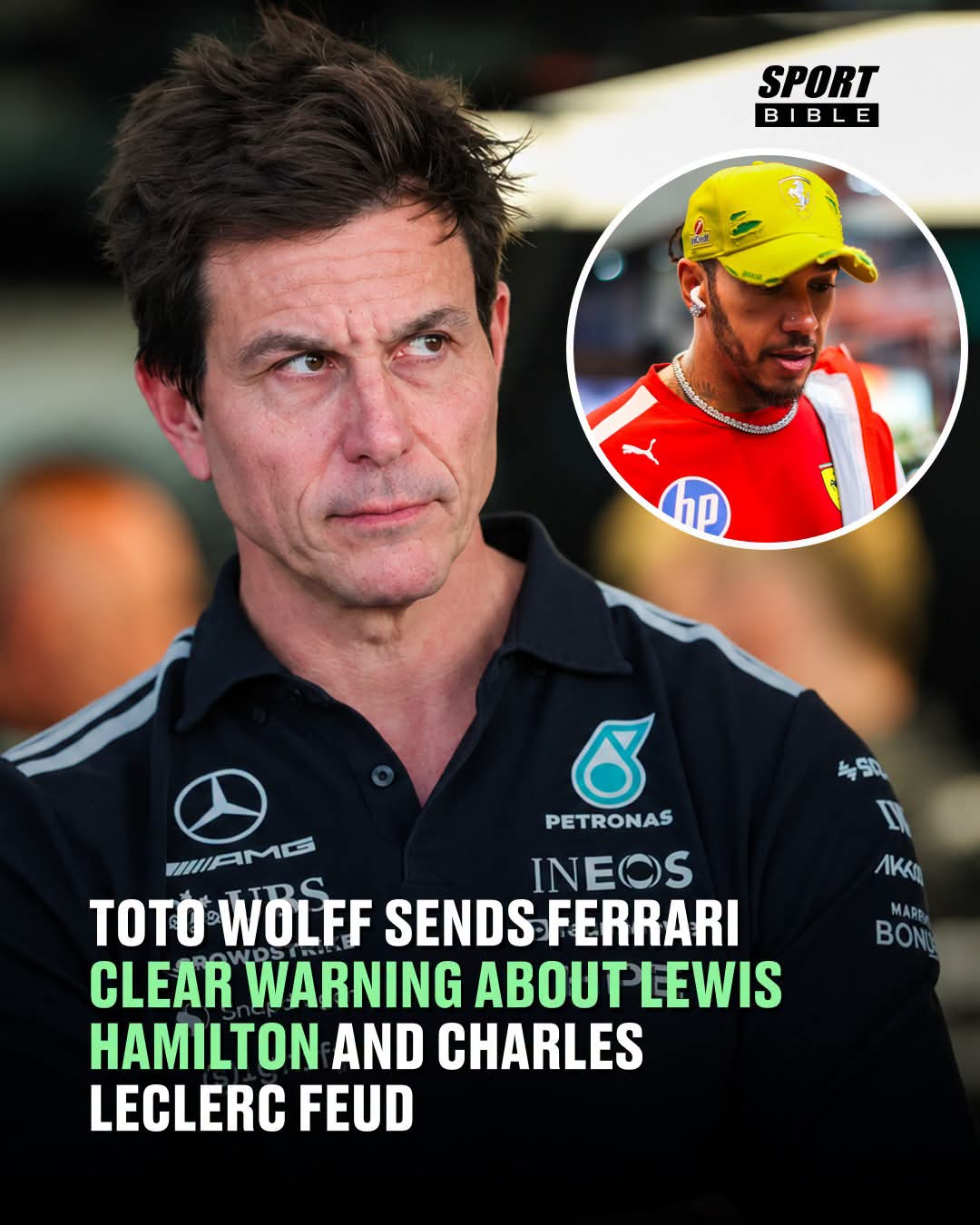
Ferrari’s growing internal tension between Lewis Hamilton and Charles Leclerc has attracted the attention of one man who understands better than most what happens when two world-class drivers are fighting for control inside the same Formula 1 team. Mercedes team principal Toto Wolff has now offered a revealing perspective on the situation, drawing direct comparisons with the bitter rivalry he once managed between Hamilton and Nico Rosberg.
Wolff’s comments arrive at a difficult moment for Ferrari, with the team attempting to prevent its two leading drivers from allowing personal competition to damage its wider championship ambitions. Following their opening-lap collision at the Mexico City Grand Prix, Hamilton and Leclerc have exchanged public criticism, raising questions about how effectively Ferrari can manage the relationship as the 2026 season approaches its final stages.
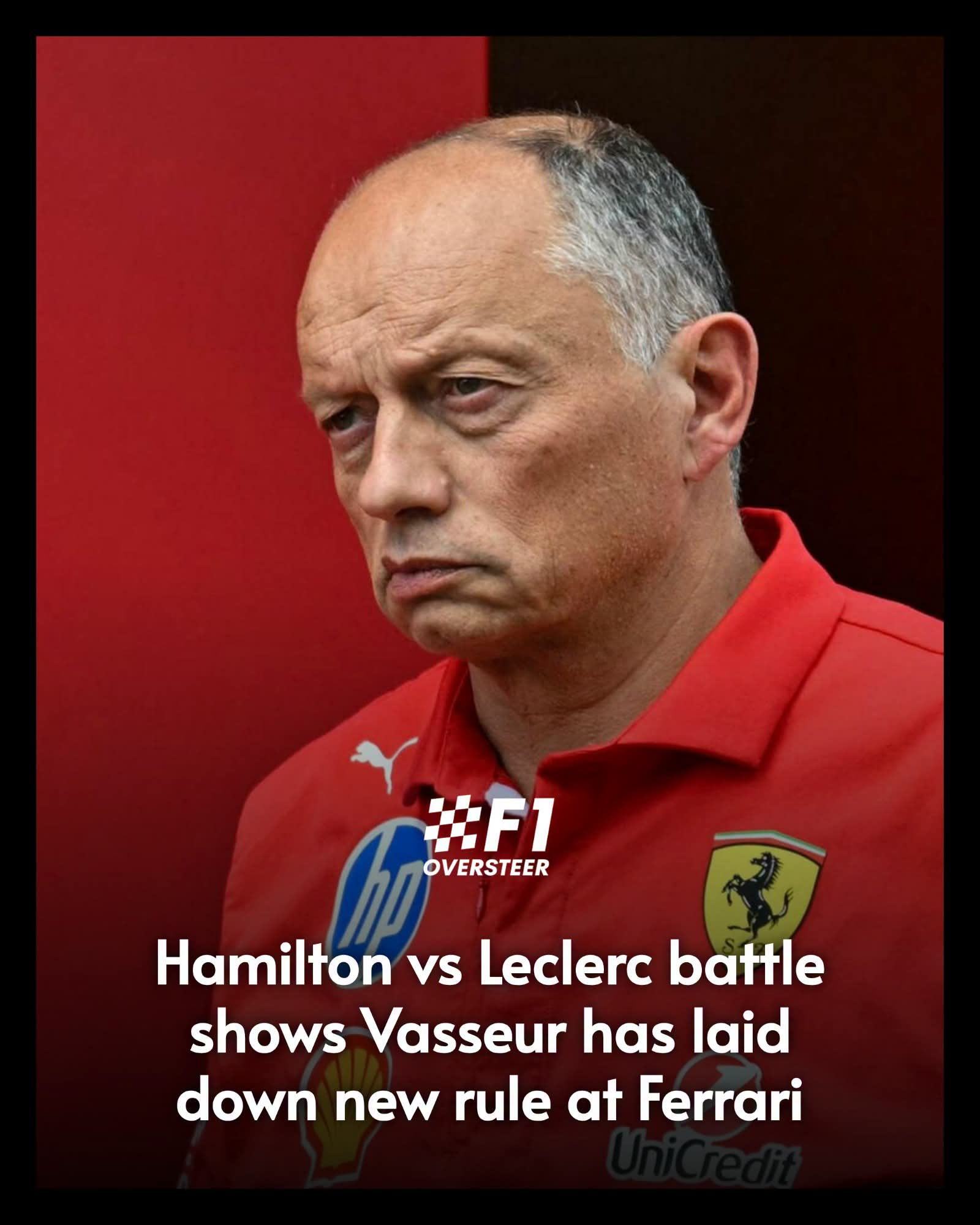
For Ferrari team principal Fred Vasseur, the situation is particularly delicate. Both drivers have the speed, experience and ambition to demand competitive treatment, but their rivalry could become a serious distraction if the team fails to establish clear boundaries.
TOTO WOLFF RECOGNISES A FAMILIAR PROBLEM AT FERRARI
Speaking ahead of the Brazilian Grand Prix, Wolff admitted that the Hamilton-Leclerc situation reminded him of the difficult years he spent managing Hamilton and Rosberg at Mercedes.
The Austrian executive was responsible for overseeing the relationship between the two drivers from 2013 until Rosberg’s retirement in 2016. Their partnership eventually developed into one of Formula 1’s most intense teammate rivalries, particularly during the championship battles of 2014, 2015 and 2016.
When asked what advice he would give Vasseur, Wolff suggested that he had already answered similar questions repeatedly during his own experience at Mercedes.
He explained that the situation felt like déjà vu, recalling the four seasons in which Hamilton and Rosberg competed alongside each other.
Wolff also made it clear that he did not intend to tell Vasseur how to manage his drivers. However, his comments carried an important message: having two exceptionally competitive drivers in one team can create problems that cannot always be solved through ordinary conversations.
Ferrari may be discovering that reality at precisely the wrong time.
WHY HAMILTON AND LECLERC’S RIVALRY COULD BECOME A BIGGER PROBLEM
The central issue for Ferrari is not simply that Hamilton and Leclerc are competing against each other. Teammates fighting for position is a normal part of Formula 1, especially when both believe they have the ability to lead the team.
The danger begins when that competition affects decision-making, compromises race results or creates a public disagreement that overshadows the team’s objectives.
Their Mexico City Grand Prix clash demonstrated how quickly an internal battle can become expensive. The two Ferrari drivers made contact on the opening lap, creating an opportunity for Max Verstappen to move ahead and ultimately secure victory.
That incident placed Ferrari under scrutiny because the team lost the opportunity to control the race from the front while its drivers were involved in their own battle.
The subsequent public exchanges made the situation even more complicated. Instead of the discussion being limited to racing incidents and team strategy, attention shifted towards responsibility, fairness and how the two drivers viewed each other’s conduct.
For a team with Ferrari’s history and expectations, allowing that narrative to continue could become a distraction from the technical and competitive work required to win races.
WOLFF REVEALS WHY TWO ELITE DRIVERS CAN BE DIFFICULT TO CONTROL
Wolff’s most significant observation was that the strongest drivers often possess the same qualities that make them difficult to manage.
He pointed out that elite competitors have strong personalities and an uncompromising desire to win. Those characteristics are essential for championship success, but they can also create tension when two drivers with similar ambitions share one garage.
This is particularly relevant to Hamilton and Leclerc.
Hamilton arrived at Ferrari with seven world championships, enormous experience and a reputation built across successful periods at McLaren and Mercedes. Leclerc, meanwhile, has spent years establishing himself as Ferrari’s leading driver and has a long-term relationship with the team.
Neither driver joined Ferrari simply to play a supporting role.
That creates a management challenge for Vasseur. Treating both drivers fairly is important, but fairness does not necessarily mean allowing every competitive disagreement to develop without intervention.
Ferrari must protect the freedom of its drivers to race while ensuring that neither compromises the team’s interests.
Wolff’s experience suggests that finding that balance can be considerably more difficult than it appears from outside the garage.
THE MERCEDES-HAMILTON-ROSBERG RIVALRY PROVIDES A WARNING
The history of Hamilton and Rosberg at Mercedes explains why Wolff is taking the Ferrari situation seriously.
The two drivers had known each other since their younger racing days and were once friends. However, their relationship deteriorated as Mercedes became the dominant force in Formula 1 and both drivers found themselves fighting for world championships.
Their rivalry produced public disagreements, tense team meetings and controversial moments on the track.
The 2014 Belgian Grand Prix collision became a major turning point, while further incidents during their championship battles demonstrated how difficult it could be to maintain cooperation between two drivers competing for the same prize.
The 2016 Spanish Grand Prix collision was another defining moment. Both Mercedes drivers retired after making contact on the opening lap, handing an unexpected victory opportunity to their rivals.
Wolff suggested that serious incidents sometimes became the point at which the drivers finally understood the limits of acceptable behaviour.
His message to Ferrari was therefore about more than managing public relations. The team must make it clear that its employees, sponsors, brand and collective objectives cannot be sacrificed whenever its drivers disagree.
However, Ferrari should not assume that allowing tensions to escalate is necessary before taking action. Mercedes’ experience demonstrates the consequences of failing to maintain control, not a guaranteed formula for resolving conflict.
FRED VASSEUR HOLDS A PRIVATE MEETING WITH HAMILTON AND LECLERC
Ferrari has already taken steps to address the situation.
Ahead of the Sao Paulo Grand Prix, reports indicated that Vasseur held a meeting with Hamilton and Leclerc at the team’s hotel on Thursday evening.
The meeting reportedly involved reviewing the Mexico City incident and the public exchanges that followed. It was also reported that Vasseur reminded both drivers that Ferrari’s interests must come before their individual competition.
The team principal was understandably unwilling to reveal the details of the discussion.
When questioned about the meeting, Vasseur referred to the way Wolff had handled similar conversations between Hamilton and Rosberg during their Mercedes years.
He explained that he would not disclose the private content of the discussion because doing so would be disrespectful to the drivers and the team.
Vasseur also emphasised that Ferrari was working for its brand, sponsors and, most importantly, the thousands of employees whose work supports the racing operation.
That statement reflects the wider responsibility facing Hamilton and Leclerc. Their individual ambitions matter, but the team depends on cooperation across engineering, strategy, manufacturing and operations.
A disagreement between two drivers can therefore affect far more people than those directly involved in the incident.
LECLERC SAYS THE MATTER IS SETTLED AS FERRARI LOOKS TOWARDS BRAZIL
One encouraging development for Ferrari is Leclerc’s indication that he considers the disagreement settled.
The Monegasque driver has suggested that he wants to move forward and concentrate on the upcoming race weekend rather than continue discussing the Mexico City incident.
That position gives Ferrari an opportunity to reduce the attention surrounding the dispute and return its focus to performance.
However, a public declaration that an issue is settled does not automatically guarantee that the competitive relationship has been repaired.
The real test will come when Hamilton and Leclerc find themselves racing closely again. Their ability to respect one another’s space, follow team instructions and avoid unnecessary risks will provide a much clearer indication of whether Vasseur’s intervention has worked.
The Brazilian Grand Prix is therefore important beyond the points available. Ferrari will be under observation to see whether its drivers can compete without allowing their rivalry to become another major talking point.
FERRARI CANNOT AFFORD TO REPEAT MERCEDES’ MISTAKES
There is an important difference between the situation Ferrari faces and the one Mercedes experienced during the Hamilton-Rosberg years.
Mercedes had two drivers fighting for consecutive world championships during a period when the team enjoyed a significant competitive advantage. Ferrari’s immediate challenge is to ensure that internal disagreements do not undermine its ability to challenge its rivals and deliver consistent results.
Nevertheless, the underlying problem is similar.
Both situations involve two highly competitive drivers who believe they deserve the opportunity to fight for victories. Both also require a team principal capable of maintaining authority without destroying the motivation of either competitor.
Vasseur must therefore establish clear expectations before another on-track disagreement creates a bigger crisis.
That could involve clearer communication about racing conduct, stronger expectations around wheel-to-wheel battles and consistent intervention when either driver crosses an agreed boundary.
The important point is that any rules must apply equally. If Hamilton and Leclerc believe that one driver receives preferential treatment, the disagreement could simply move from the racetrack into the team’s management structure.
Ferrari’s challenge is not to eliminate competition between its drivers. It is to ensure that their competition benefits the team rather than damages it.
THE NEXT CHAPTER OF THE HAMILTON-LECLERC SAGA COULD DEFINE FERRARI’S SEASON
Wolff’s comments have added another dimension to Ferrari’s internal situation because they come from someone who has already experienced the consequences of allowing two championship-calibre drivers to compete without sufficient control.
His experience with Hamilton and Rosberg shows that teammate rivalries can become deeply personal when victories and championships are at stake. It also demonstrates that a team principal’s ability to manage those relationships can be just as important as the performance of the car.
For Hamilton, the situation represents another test of his relationship with Ferrari as he continues his effort to deliver success with the Italian team. For Leclerc, it is an opportunity to demonstrate that he can remain focused on his own performance while competing alongside one of the most accomplished drivers in Formula 1 history.
For Vasseur, the responsibility is even greater. He must keep both drivers motivated while making sure Ferrari remains the priority.
The immediate question is whether the private meeting will produce a lasting improvement or simply calm the situation temporarily.
If Hamilton and Leclerc return to racing without further controversy, Ferrari could finally move beyond the Mexico City incident. But if another disagreement develops, Wolff’s warning may become even more relevant.
Ferrari has two drivers capable of delivering major results. The challenge now is ensuring that their determination to beat each other does not become the very thing that prevents the team from beating its rivals.