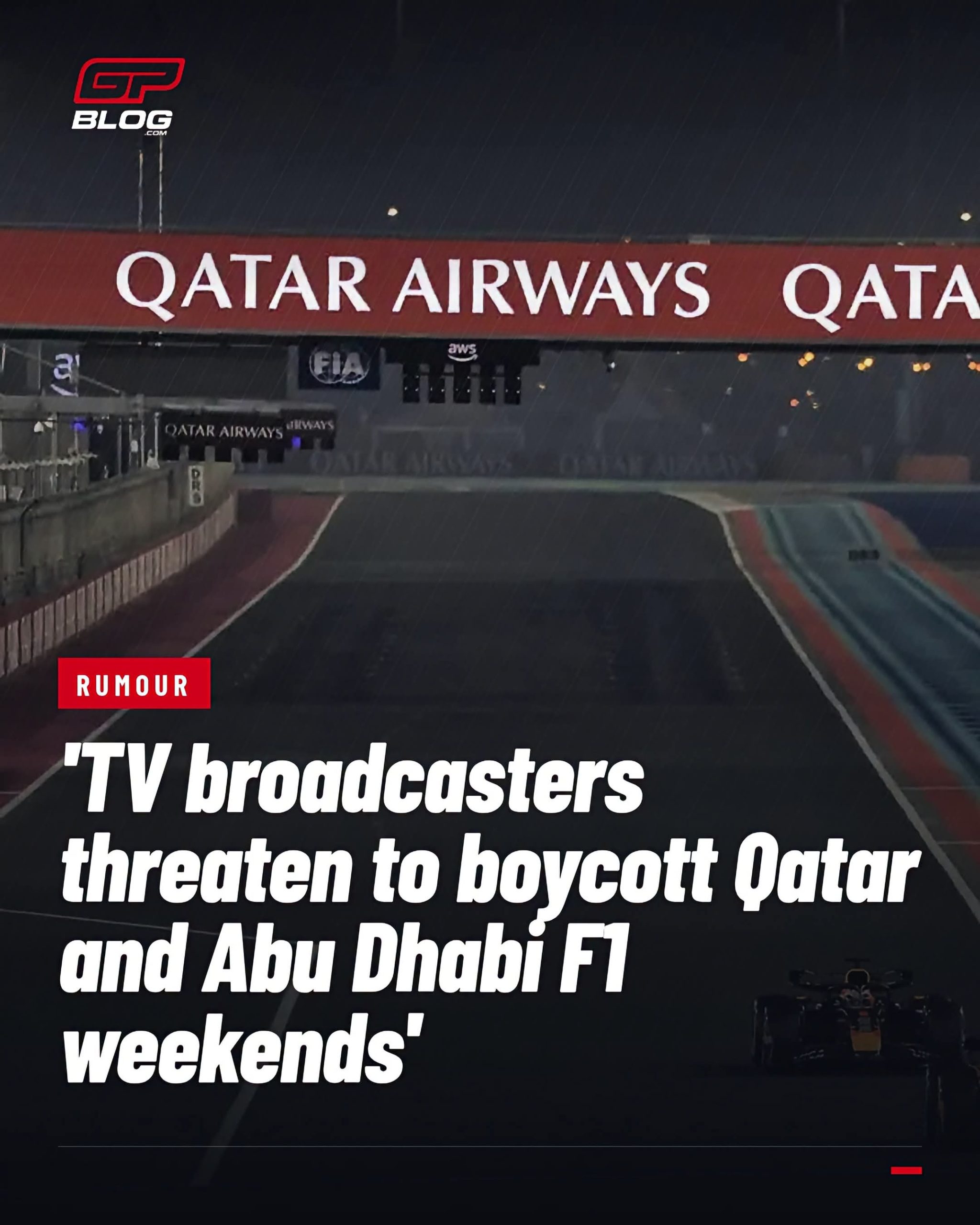
Formula 1 is facing a potentially serious broadcasting crisis, with several major television networks reportedly considering a boycott of the Qatar and Abu Dhabi Grands Prix because of the ongoing security situation in the Middle East.
According to German publication BILD, broadcasters including France’s Canal+, Austria’s Servus TV and Spain’s DAZN are reportedly planning not to send their television crews to the two events if they proceed as scheduled. Sky Sports, which covers Formula 1 in the United Kingdom, Germany and Italy, is also said to be considering similar measures.
The reports raise fresh questions about whether the final races of the 2026 championship can take place under normal conditions, particularly as concerns about the safety of personnel travelling to the region continue to grow.
MAJOR F1 BROADCASTERS CONSIDER WITHDRAWING TRACKSIDE CREWS
The potential boycott could create significant complications for Formula 1’s broadcasting operations.
Television networks depend on trackside personnel to conduct driver interviews, capture behind-the-scenes footage, produce live coverage and deliver content directly from the paddock.
If several major broadcasters refuse to send their employees to Qatar and Abu Dhabi, the championship could face an unusual situation in which races proceed without the normal presence of international television crews.
Canal+, Servus TV and DAZN are among the broadcasters reportedly considering the move, while Sky Sports is also said to be evaluating its position.
Although the reports do not establish that the networks have formally withdrawn from the events, the possibility of such a coordinated response represents a significant warning for Formula 1 and its organisers.
The situation could also influence other commercial partners and suppliers who regularly travel with the championship.
QATAR AND ABU DHABI FACE GROWING SAFETY QUESTIONS
The concerns extend beyond television broadcasting.
According to BILD, employees of a sports equipment manufacturer supplying several Formula 1 teams are also reportedly expected not to travel to the Middle East races, despite normally being present in the paddock.
This development highlights how the uncertainty could affect different areas of the championship’s operations.
Formula 1 requires thousands of people to deliver a Grand Prix weekend, including engineers, mechanics, hospitality workers, media personnel, logistics teams and commercial partners.
Their safety is essential to the successful organisation of every event.
Even if drivers and teams remain willing to compete, the absence of important supporting personnel could create logistical difficulties.
The central question is therefore no longer simply whether the races can be organised, but whether everyone involved can travel and work under acceptable safety conditions.
MOTOGP’S QATAR GRAND PRIX PROVIDES A WARNING FOR FORMULA 1
The situation has already attracted attention in MotoGP, where the Qatar Grand Prix is currently scheduled to proceed despite concerns surrounding travel to the region.
According to the report, Spain’s DAZN was the only broadcaster to send its television crew to Lusail International Circuit for the MotoGP weekend.
Other broadcasters, including TNT Sports in the United Kingdom and Sky Sports in Italy, were conducting interviews remotely rather than sending their usual trackside personnel.
Yamaha also withdrew from the weekend, while several riders reportedly expressed reservations about travelling.
Ducati rider Marc Marquez addressed the situation during Thursday’s press conference, making it clear that he would have preferred to be somewhere else.
“I mean, I would like to be in another place. For that reason, I arrived on the latest flight possible, and I will leave on the earliest flight possible. But we are here, we are ready to race, and with full concentration,” he said.
His comments illustrate the difficult position facing competitors and personnel when sporting commitments continue despite wider security concerns.
Formula 1 will be watching developments closely, particularly because its Qatar and Abu Dhabi events involve even larger international broadcasting and commercial operations.
LIBERTY MEDIA AND THE FIA FACE A DIFFICULT DECISION
A cancellation or postponement of either Grand Prix would create significant consequences for Formula 1’s commercial and sporting operations.
The Qatar and Abu Dhabi races form part of the championship’s closing schedule, meaning any disruption could affect the calendar, teams’ logistics, broadcasters and commercial agreements.
Liberty Media has a major financial interest in ensuring that races proceed successfully, while the FIA is responsible for overseeing the sporting and regulatory framework.
However, commercial considerations cannot be allowed to outweigh the safety of the people involved.
A Grand Prix requires more than 20 drivers arriving at a circuit. Hundreds of team personnel and thousands of supporting workers contribute to making each event possible.
If broadcasters, suppliers or teams believe travelling is unsafe, Formula 1 could face increasing pressure to reconsider its plans.
The challenge for the organisers will be balancing contractual obligations with their responsibility to protect everyone involved.
A BROADCASTING BOYCOTT COULD CHANGE HOW THE RACES ARE COVERED
Even if the Qatar and Abu Dhabi Grands Prix proceed, the absence of major broadcasters’ trackside crews could significantly change the viewing experience.
Formula 1 coverage relies heavily on interviews, paddock reporting, technical analysis and access to drivers and team personnel.
Remote interviews could replace some of these activities, but they would not necessarily provide the same level of access or atmosphere.
There could also be complications surrounding local production arrangements and the coordination of international broadcasting teams.
For fans, the races might still appear on television, but the surrounding coverage could be noticeably different.
Such a situation would also raise questions about whether other broadcasters would follow the same approach if concerns continue.
WILL FORMULA 1 MOVE OR CANCEL THE FINAL TWO RACES?
At this stage, the reported broadcaster plans should not be confused with an official cancellation of either Grand Prix.
Qatar and Abu Dhabi remain on the published 2026 calendar, and the reports do not establish that Formula 1, the FIA or the race organisers have formally abandoned the events.
Nevertheless, the possibility of broadcasters withdrawing their personnel introduces another layer of uncertainty.
If the security situation deteriorates or more organisations refuse to send employees, Formula 1 could be forced to consider alternative arrangements.
A postponement, relocation or cancellation would each present significant logistical and sporting challenges, especially so late in the season.
The championship’s organisers will need to assess the situation carefully rather than assume that existing commercial commitments guarantee the events can proceed.
SAFETY MUST COME BEFORE FORMULA 1’S COMMERCIAL INTERESTS
The reported developments represent a serious test for Formula 1’s leadership.
The sport has built an enormous international calendar, attracting millions of viewers and generating substantial commercial revenue. However, that global operation depends on the people who travel around the world to make every race possible.
Broadcasters, drivers, mechanics, engineers and other personnel should not be expected to ignore legitimate safety concerns simply to protect the championship schedule.
The MotoGP situation demonstrates that sporting events can continue while international coverage and participation are affected by security considerations.
Formula 1 could now face a similar challenge if the reported broadcaster boycott develops into a wider withdrawal of personnel.
For now, the Qatar and Abu Dhabi Grands Prix remain scheduled, but the growing uncertainty has placed the final stages of the 2026 season under an uncomfortable spotlight.
The biggest priority should be ensuring that every person involved can participate safely. No championship finale, regardless of its commercial importance, is worth putting lives at unnecessary risk.