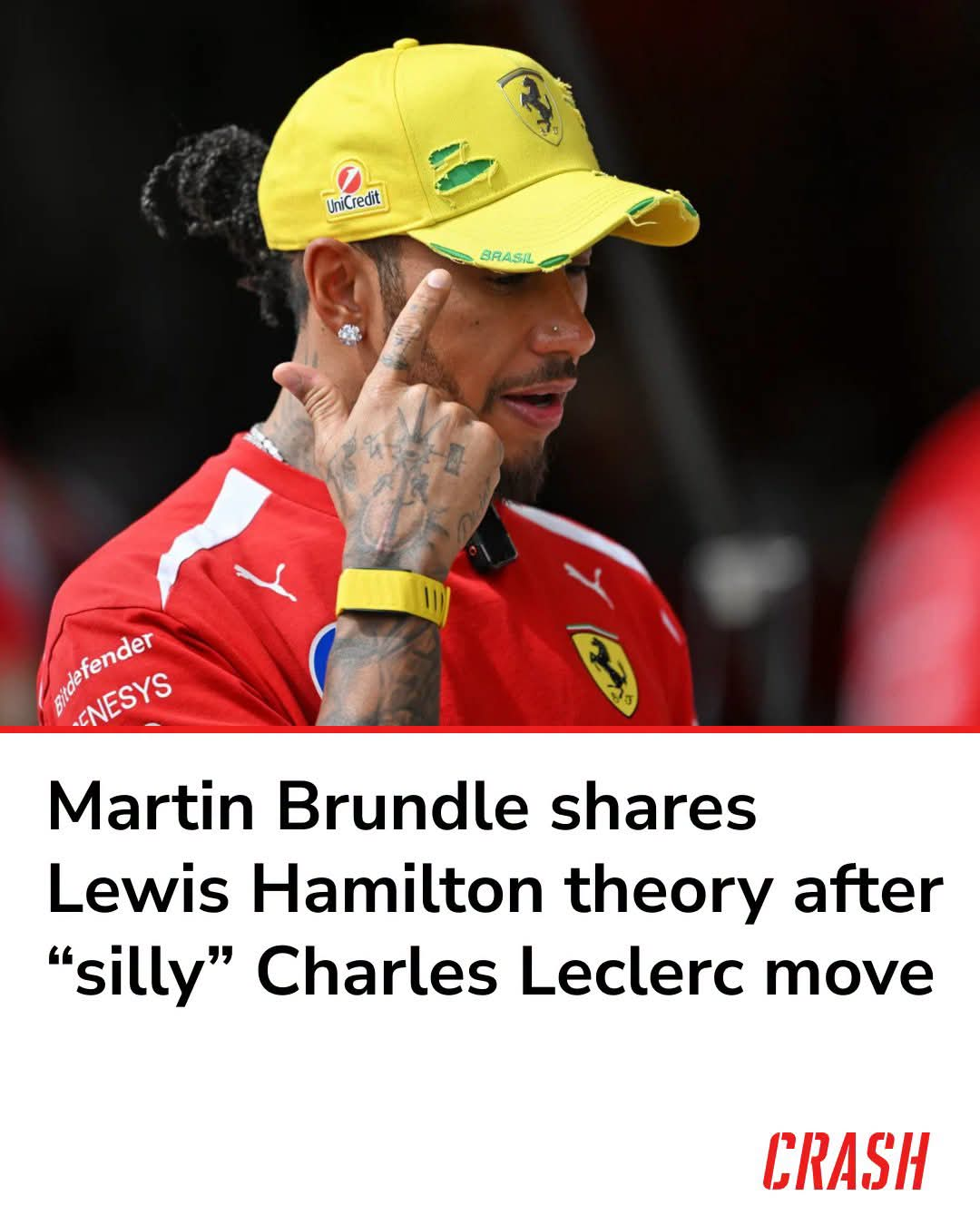
Formula 1 rarely delivers pure theatre quite like a pair of elite teammates colliding on the opening lap of a Grand Prix. At the 2026 Mexico City Grand Prix, Lewis Hamilton and Charles Leclerc delivered exactly that, and the fallout is still echoing through the paddock as the circus moves to Brazil. Sky Sports legend Martin Brundle has now delivered his blunt assessment, and it should make Ferrari’s management sit up straight.
The seven-time champion started on pole. His teammate challenged hard at Turn 4. Both Ferraris ran wide. Max Verstappen, never one to miss an opportunity, slotted between them. Verstappen took the win. Hamilton finished second. Leclerc, after a five-second penalty, ended up fourth. What should have been a potential one-two for the Scuderia became another reminder that talent alone does not win championships when two drivers refuse to yield.
THE MEXICO CITY INCIDENT THAT EXPOSED THE TENSION
The sequence was straightforward yet devastating. Leclerc went for the outside at Turn 4. Both cars left the track. Leclerc gained the position by cutting the corner. Hamilton was left compromised, and Verstappen pounced. Brundle was clear in his post-race analysis: the squabbling cost Ferrari track position at the worst possible moment. Leclerc should have given the place back, but Verstappen’s opportunistic move made that impossible.
This was not an isolated flash of aggression. Earlier in the season the pair had already clashed at Monza and shown friction at Zandvoort. What Mexico revealed was that the competitive edge both men carry has not softened with time or team orders. Hamilton has spoken openly about the frustration of a teammate working against him. Leclerc has defended his right to race. The result is a classic F1 problem dressed in red: two number ones in the same garage.
BRUNDLE’S TAKE CUTS THROUGH THE CORPORATE SPIN
Martin Brundle does not do soft landings. The former grand prix driver and long-time Sky Sports analyst pointed out the uncomfortable truth about modern Formula 1. Drivers are measured and rewarded as individuals. When adrenaline spikes and a gap appears, the instinct is pure racing. He quoted Ayrton Senna’s famous line: if you no longer go for a gap that exists, you are no longer a racing driver. Hamilton and Leclerc did exactly that.
Brundle expects Ferrari to hold internal talks before or during the Brazilian Grand Prix weekend. He predicts the team will emerge with the standard statement: everything has been discussed, everyone understands, it will not happen again. Then he delivered the line that lands hardest. In reality, everyone knows it will.
That prediction is not cynicism. It is experience. Teammate rivalries of this intensity rarely resolve with a single meeting. They simmer until the next high-stakes moment on track.
WHY THIS MATTERS FOR FERRARI AND THE CHAMPIONSHIP PICTURE
Ferrari has invested heavily in bringing Hamilton to Maranello. The partnership was supposed to elevate the team into consistent title contention. Instead, the early seasons have delivered strong moments mixed with self-inflicted damage. Every point lost to internal battling is a point gifted to Red Bull, McLaren, or whoever else is in the fight.
The constructors’ championship is a team sport in the purest sense. A one-two in Mexico would have delivered a significant haul. Instead the team left with a fragmented result and public airing of grievances. That kind of noise affects the factory, the engineers, and the sponsors who expect discipline from the world’s most famous racing team.
For Hamilton, now in the later phase of a legendary career, the stakes feel personal. He has little interest in carefully managed PR. Brundle has described him as “unfiltered,” ready to call out decisions he believes cost the team. For Leclerc, still in his prime and long the face of Ferrari’s future, the pressure is different. He must prove he belongs alongside one of the greatest of all time without becoming the supporting act.
The broader industry watches closely. Star power sells. A Hamilton-Leclerc rivalry generates headlines, social media engagement, and television interest. But sustained internal conflict can also damage a team’s reputation for professionalism. Fans love wheel-to-wheel racing. They dislike watching a team throw away results through ego.
THE PSYCHOLOGY OF TWO ALPHA DRIVERS
Formula 1 history is littered with similar pairings. Senna and Prost. Hamilton and Rosberg. Verstappen and Perez at times. The pattern is familiar. Both drivers believe they are the best. Both refuse to play second fiddle. Team management must walk a tightrope between giving them freedom to race and imposing order when the team’s interests are threatened.
Ferrari’s current leadership under Fred Vasseur faces exactly that challenge. Clear rules of engagement help, but rules only work when both drivers accept them in the heat of the moment. Mexico showed that the competitive fire still burns hotter than any internal guideline. Hamilton’s post-race comments and Leclerc’s defence of his move suggest the underlying tension remains unresolved even after the team sat down to talk in Brazil.
WHAT COMES NEXT IN BRAZIL AND BEYOND
The Brazilian Grand Prix offers an immediate test. Interlagos rewards bold overtaking and punishes mistakes. If the Ferraris are competitive again, the question is whether the drivers can race each other cleanly while protecting the team’s overall result. Brundle’s prediction suggests the next flashpoint is only a matter of time.
Looking further ahead, Ferrari must decide how hard it is willing to manage the relationship. Number one status can be formal or informal. Some teams designate a clear lead driver when the championship is on the line. Others leave it to the track and accept the occasional collision. Neither approach is risk-free when the talent gap between the two drivers is small and both refuse to back down.
Hamilton’s experience and media presence give him leverage. Leclerc’s youth and long-term contract give him security. The team sits in the middle, trying to extract maximum performance from both without losing either. That balancing act will define the rest of the 2026 season and possibly the years that follow.
A RIVALRY THAT ADDS DRAMA BUT DEMANDS DISCIPLINE
Martin Brundle has seen enough of Formula 1 to recognise the difference between healthy competition and destructive friction. His warning is not that Hamilton and Leclerc should stop racing each other. It is that Ferrari cannot keep treating every clash as a one-off that talks will fix. The competitive DNA that makes both men special is the same DNA that will keep producing these moments.
For fans, the drama is compelling. For the team, every lost opportunity hurts. The coming races will show whether Ferrari can channel that intensity into results or whether the next collision will cost them more than just track position. Brundle believes the latter is more likely. History suggests he is rarely wrong on these matters.