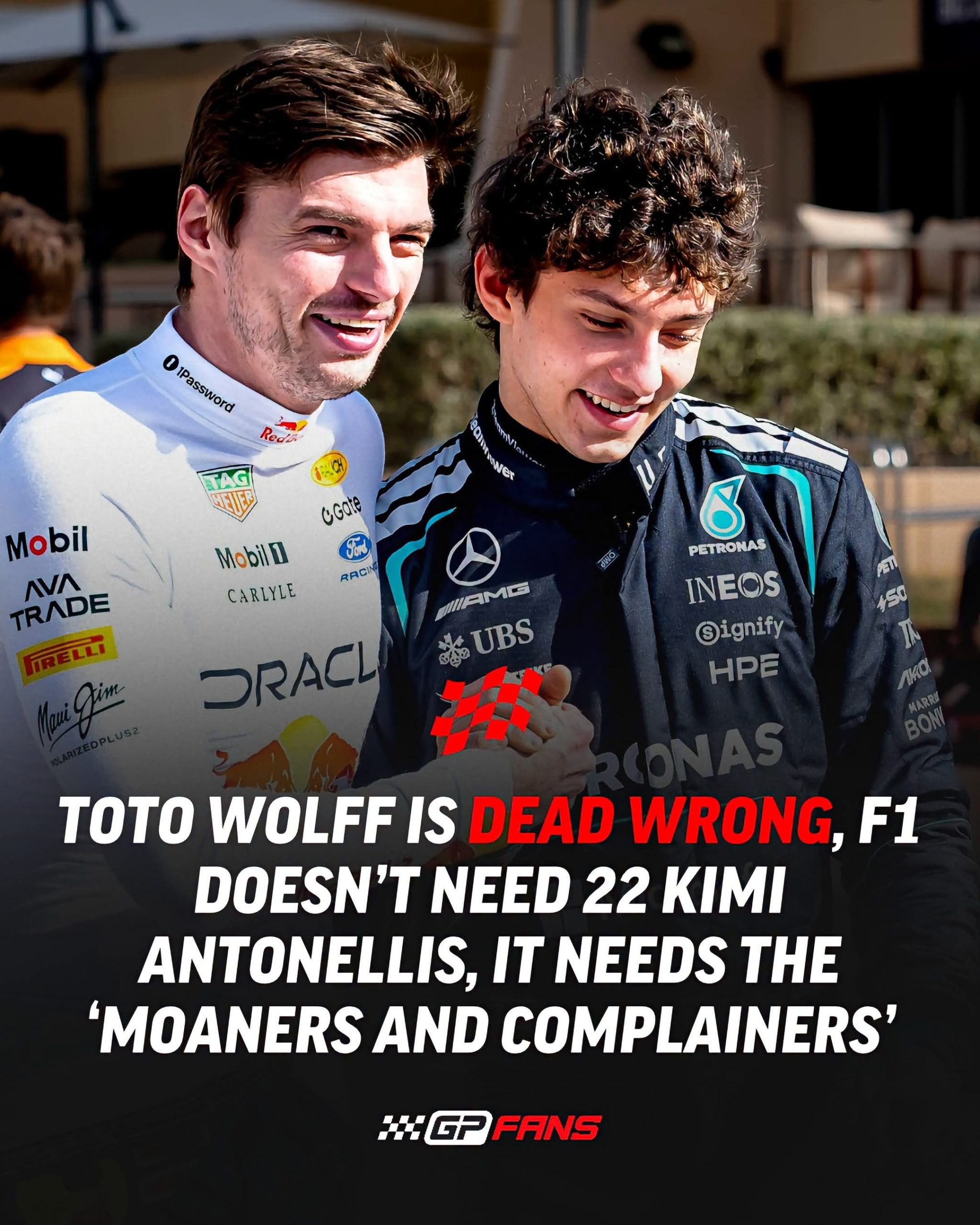
Formula 1 needs more than talented drivers who smile for the cameras, respect every rival and avoid controversial comments. It also needs competitors willing to challenge authority, express frustration and create the rivalries that keep millions of fans emotionally invested in the sport. That is the argument emerging after Mercedes team principal Toto Wolff praised Kimi Antonelli as the ideal model for the next generation of Formula 1 drivers while taking aim at those he described as entitled, selfish and constantly complaining.
Antonelli’s historic championship victory has undoubtedly given Mercedes a reason to celebrate. At just 20 years and 68 days old, the Italian became the youngest world champion in Formula 1 history, delivering a remarkable achievement after winning nine races and securing 16 podium finishes.
However, Wolff’s comments have opened a much bigger debate about the personalities Formula 1 needs to remain entertaining. While the Mercedes boss believes the sport should embrace drivers who demonstrate humility, integrity and respect, there is an argument that eliminating the outspoken personalities could remove some of the drama that makes F1 such a global attraction.
And with Max Verstappen, Lewis Hamilton and Fernando Alonso among the sport’s most recognisable personalities, the question is becoming increasingly important: does Formula 1 really want a grid full of drivers like Antonelli?
TOTO WOLFF DECLARES A NEW ERA FOR FORMULA 1 DRIVERS
Following Antonelli’s championship triumph in Mexico, Wolff delivered a strong assessment of what he believes the modern Formula 1 driver should represent.
The Mercedes team principal suggested that the traditional image of a ruthless competitor who prioritises personal success above everything else is becoming outdated.
“This notion of win at all costs, selfish, opportunistic, ruthless for your own benefit, that model of racing driver has died,” Wolff said.
He then praised Antonelli for demonstrating values that he believes should influence younger drivers entering the championship.
“We have a new champion that represents values: humility, integrity, loyalty, respect. Being himself. He should be a role model for many other young drivers.”
Wolff also appeared to direct criticism towards drivers who regularly complain over team radio, make excuses or become involved in unnecessary controversies.
“Look at this kid of 20 years and then think what you can do in order to improve. That’s the message to these kids,” he added.
There is little doubt that Antonelli has become an impressive ambassador for Mercedes. His achievement at such a young age, combined with his respectful public personality, makes him an attractive figure for the championship.
However, Wolff’s argument raises an interesting question about whether being a good representative of the sport should also mean avoiding the confrontational personalities that have historically made Formula 1 so compelling.
FORMULA 1 CANNOT AFFORD TO LOSE ITS OUTSPOKEN PERSONALITIES
There is an important difference between encouraging respectful behaviour and expecting every driver to behave in exactly the same way.
Formula 1 is a competitive sport where drivers are constantly fighting for victories, championships, contracts and recognition. The pressure is enormous, and strong personalities naturally emerge from those circumstances.
Some drivers express frustration through team radio. Others challenge decisions made by the FIA, question their teams or openly criticise competitors.
While those moments can sometimes become uncomfortable, they also create conversations that extend beyond the actual racing.
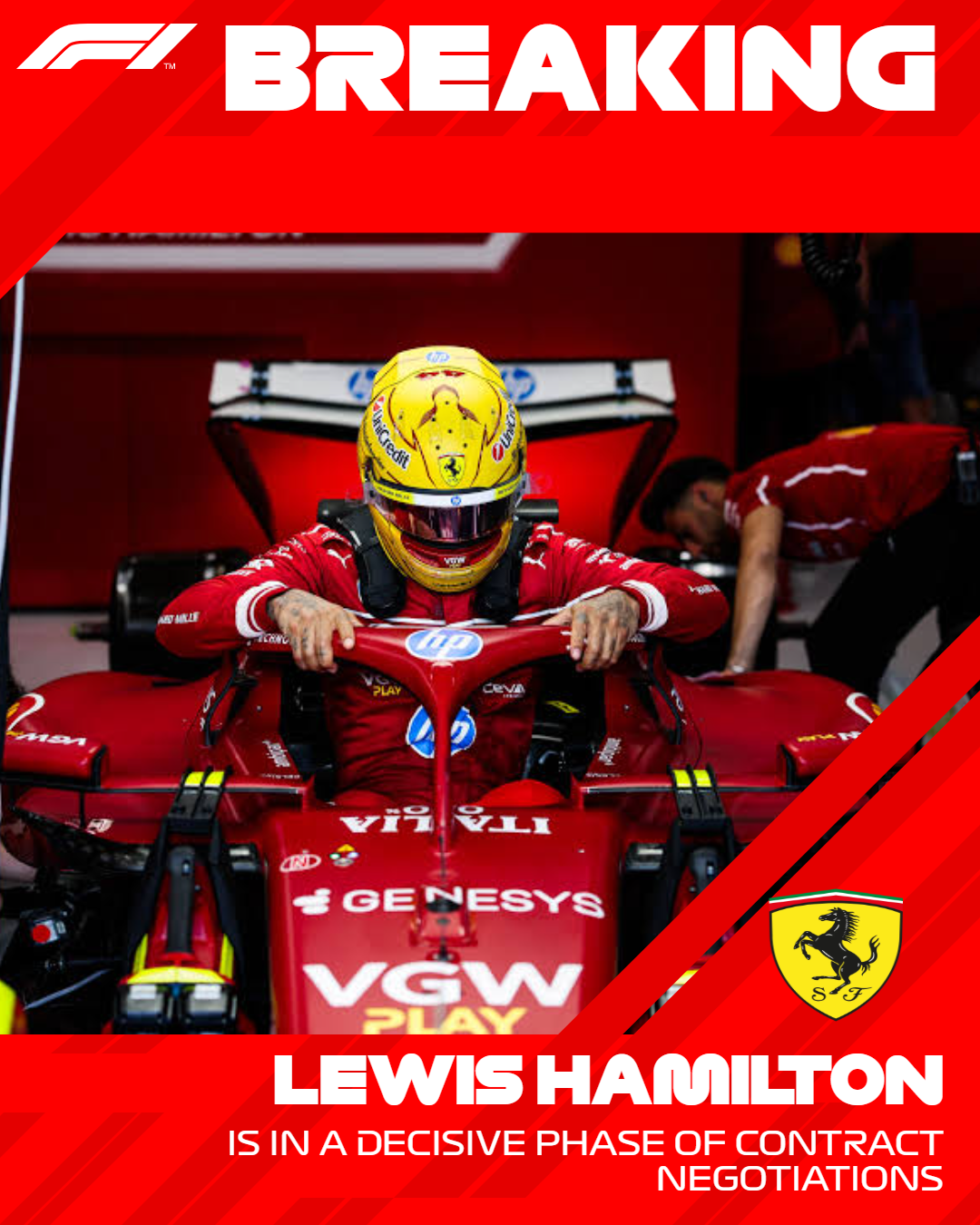
The ongoing disagreement between Hamilton and Charles Leclerc following the Mexican Grand Prix is a perfect example.
Their opening-lap confrontation became one of the biggest stories surrounding the race, with Hamilton accusing his teammate of a “do or die” approach and questioning whether Ferrari had lost a potential victory because of the incident.
Without that disagreement, much of the post-race discussion would have focused almost entirely on Antonelli’s championship achievement.
Instead, Ferrari’s internal tension became a major talking point across the Formula 1 world.
That does not mean the controversy was necessarily good for Ferrari, but it demonstrates how strongly personalities and rivalries can influence the sport’s wider popularity.
MAX VERSTAPPEN IS EXACTLY THE KIND OF DRIVER F1 STILL NEEDS
If Wolff’s criticism of radio complaints and confrontational personalities is considered alongside the career of Max Verstappen, it becomes clear why the debate is complicated.
The four-time world champion has never been afraid to express his frustration, whether towards his own team, race officials or rival drivers.
Verstappen’s direct communication style has frequently generated headlines, and his willingness to challenge decisions has made him one of the most closely watched figures in Formula 1.
His personality is not universally appreciated, but that is precisely part of what makes him such an important character in the championship.
Fans do not always agree with him. Some admire his honesty and uncompromising approach, while others believe he can be unnecessarily confrontational.
Either way, his comments generate discussion.
The Mexican Grand Prix also provided another example of the intense competitive environment surrounding Verstappen. The Red Bull driver capitalised on the opening-lap drama between Ferrari’s two drivers and went on to secure victory.
Formula 1 needs drivers who can deliver exceptional performances, but it also benefits from competitors who are willing to speak openly about what happens behind the scenes.
Verstappen’s personality has become part of his sporting identity. Attempting to make every driver behave in the same manner would remove an important element of what makes the championship interesting.
HAMILTON AND ROSBERG PROVED HOW POWERFUL A FORMULA 1 RIVALRY CAN BE
One of the strongest arguments against Wolff’s vision comes from Formula 1’s recent history.
The bitter rivalry between Lewis Hamilton and Nico Rosberg at Mercedes remains one of the defining stories of the modern era.
Their relationship deteriorated as they repeatedly fought for race victories and championship honours, eventually reaching its most dramatic conclusion in 2016.
Both drivers were competing for the same team, but their individual ambitions created an atmosphere that was impossible to ignore.
There were controversial collisions, tense press conferences, disagreements and moments when the relationship between the two Mercedes stars appeared close to breaking point.
Rosberg eventually defeated Hamilton to become world champion before announcing his retirement shortly afterwards.
That rivalry was not always comfortable for Mercedes, but it attracted enormous attention and became a defining part of the team’s history.
The lesson is that Formula 1’s biggest personalities do not always produce the easiest working environment.
Sometimes the very qualities that make a driver difficult to manage are the same qualities that make them fascinating to watch.
VERSTAPPEN AGAINST HAMILTON IN 2021 CHANGED FORMULA 1 FOREVER
Another example is the extraordinary championship battle between Verstappen and Hamilton in 2021.
Their rivalry developed into one of the most intense title fights in Formula 1 history, with Red Bull and Mercedes battling for supremacy throughout the season.
The competition featured aggressive wheel-to-wheel racing, public accusations, disagreements over driving standards and constant pressure on both teams.
The controversy reached its peak at the Abu Dhabi Grand Prix, where the championship was decided under circumstances that generated enormous debate.
The aftermath attracted attention far beyond traditional motorsport audiences.
People who rarely watched Formula 1 suddenly found themselves discussing the championship, the FIA’s decisions and the rivalry between the two drivers.
The season also helped demonstrate how Formula 1 could become a mainstream entertainment product without abandoning its sporting identity.
The important point is not that controversy should be manufactured or that drivers should deliberately create hostility.
Rather, genuine competition naturally produces strong emotions, disagreements and rivalries.
A championship where everyone behaves perfectly at all times might be easier for team principals to manage, but it could struggle to create the same emotional investment among fans.
F1’S BIGGEST PERSONALITIES ARE BECOMING HARDER TO REPLACE
The argument becomes even more relevant when considering the future of Formula 1’s most established stars.
Hamilton and Alonso are both in their 40s, and questions about how long they will continue competing at the highest level are becoming increasingly relevant.
Verstappen remains one of the sport’s central figures, but Formula 1 will eventually need new personalities capable of attracting the same level of attention.
Antonelli has already demonstrated that he can become a major sporting star through his performances.
His championship victory at 20 is a remarkable achievement, and his personality makes him appealing to fans who appreciate humility and respect.
However, being a successful champion and being an entertaining personality are not necessarily the same thing.
Hamilton has built a global profile through his achievements, outspoken views and willingness to discuss subjects beyond racing.
Alonso has remained a compelling figure because of his confidence, sharp observations and refusal to hide his frustrations.
Verstappen’s directness and competitive intensity have also helped make him one of the sport’s most recognisable drivers.
Formula 1 needs younger competitors who can develop their own identities rather than simply attempting to reproduce the personalities of previous champions.
Antonelli may become one of those figures, but the championship should not assume that every future star must follow his approach.
WHY 22 KIMI ANTONELLIS COULD BE A PROBLEM FOR FORMULA 1
The suggestion that Formula 1 could become less entertaining with 22 drivers behaving like Antonelli is deliberately provocative, but it raises a legitimate discussion.
A grid full of respectful, disciplined and media-friendly drivers would certainly make life easier for team principals and commercial partners.
There would potentially be fewer public disagreements, fewer controversial radio messages and fewer personal rivalries.
However, the sport could also lose some of the unpredictability that keeps fans interested between race weekends.
Formula 1 is not simply a competition involving 22 drivers completing laps. It is also a championship built around personalities, team politics, national pride and the emotional stories that develop throughout a season.
Fans become attached to drivers for different reasons.
Some admire technical ability, others appreciate sportsmanship, while many are attracted to the confidence, determination and occasional arrogance of elite competitors.
Not every driver needs to be controversial, but there must be room for different personalities.
The ideal Formula 1 grid is not one where everybody behaves identically. It is one where drivers can express themselves while remaining accountable for their actions.
TOTO WOLFF MAY BE RIGHT ABOUT RESPECT BUT WRONG ABOUT THE BIGGER PICTURE
Wolff’s praise of Antonelli is understandable.
The young Italian has achieved something extraordinary, and his humility following the biggest victory of his career deserves recognition.
There is also nothing wrong with encouraging drivers to show respect towards competitors, teams, officials and fans.
However, there is a difference between promoting good values and suggesting that the sport has moved beyond the aggressive personalities that helped build its popularity.
Formula 1 needs discipline, but it also needs emotion.
It needs drivers who can work professionally with their teams while remaining fiercely competitive on the circuit.
It needs champions who can accept defeat, but it also needs competitors willing to question decisions when they believe something has gone wrong.
Most importantly, it needs genuine rivalries.
The Hamilton-Rosberg battle, the Hamilton-Verstappen championship fight and the current Hamilton-Leclerc disagreement demonstrate how much attention can be generated when personalities and competitive ambitions collide.
Those stories can sometimes become uncomfortable, but they are part of the sport’s identity.
THE FUTURE OF FORMULA 1 SHOULD NOT BE BUILT AROUND ONE PERSONALITY TYPE
Antonelli deserves enormous credit for his historic championship, and Mercedes should be proud of the young driver it has developed.
But his success should not become a standard that every other driver is expected to follow.
Formula 1 has always been a mixture of contrasting personalities. Some champions have been calm and diplomatic, while others have been outspoken, aggressive and difficult to manage.
That diversity is part of what makes the championship special.
Wolff is right to encourage humility, integrity and respect, but Formula 1 must be careful not to confuse those values with silence or unquestioning obedience.
A driver should be able to challenge a team decision without being labelled a problem. Equally, a driver should understand that being outspoken does not excuse dangerous behaviour or disrespect towards others.
The future of the sport should allow both Antonelli’s calm approach and Verstappen’s uncompromising competitiveness to exist on the same grid.
Hamilton and Alonso have shown how powerful strong personalities can become, while the next generation must find its own way of connecting with fans.
Formula 1 does not need 22 identical champions.
It needs talented drivers with different characters, genuine rivalries and enough freedom to make the sport unpredictable.
And if Toto Wolff wants a championship without the moaners, complainers and outspoken competitors, he may discover that removing those personalities could also remove some of the very drama that keeps Formula 1 in the global spotlight.