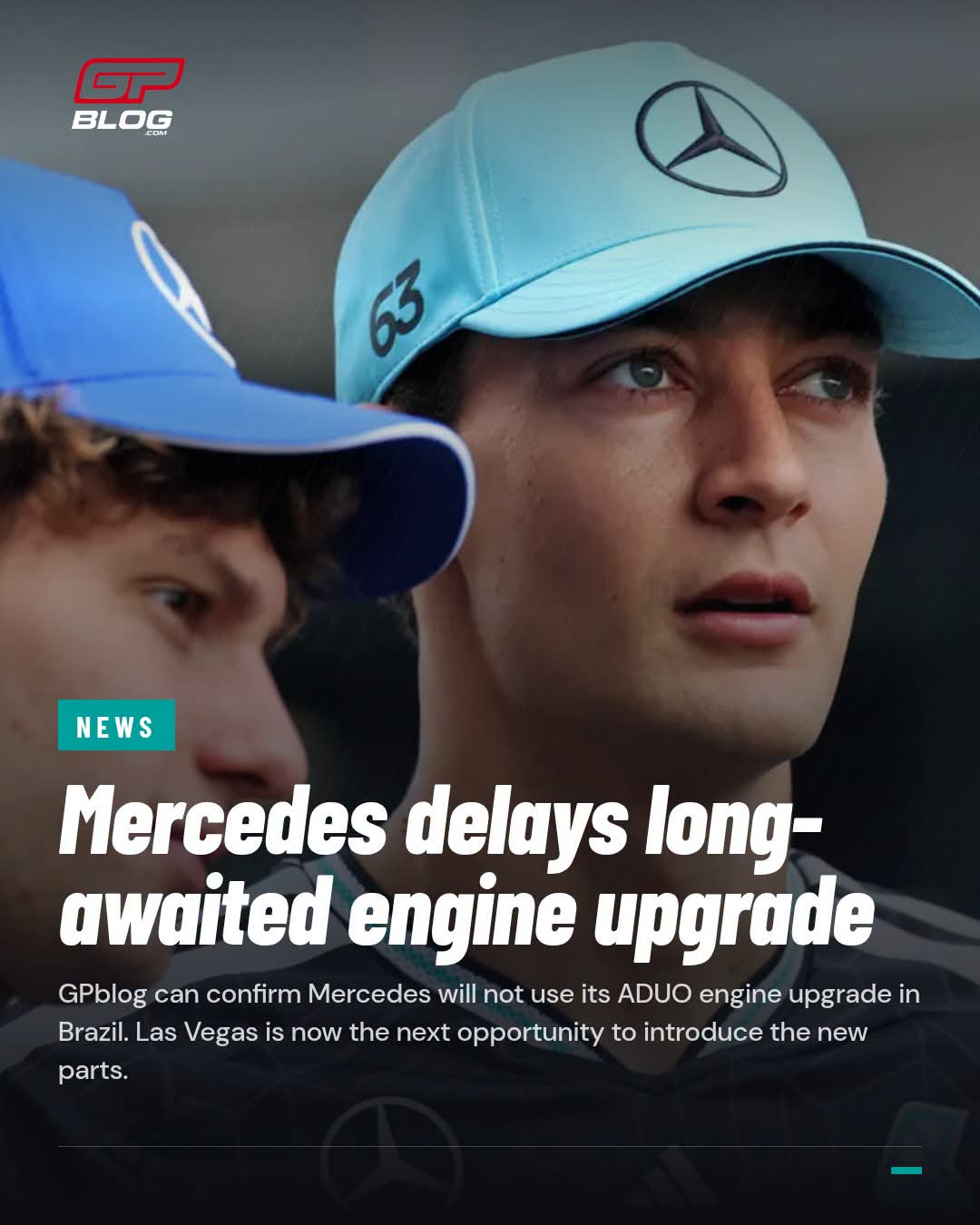
Mercedes has made a significant decision regarding its long-awaited Formula 1 engine upgrade, with the team ruling out the Brazilian Grand Prix as the debut event for its new power unit specification. The development represents another delay for the Silver Arrows, who had hoped to introduce improvements through the FIA’s Additional Development and Upgrade Opportunities (ADUO) system.
The decision means the Las Vegas Grand Prix is now the next possible opportunity for Mercedes to bring the upgraded engine onto the track. However, there is no guarantee that the new specification will be ready even by then. For George Russell, who has been waiting for the improved components, the delay creates another complication in an already frustrating season.
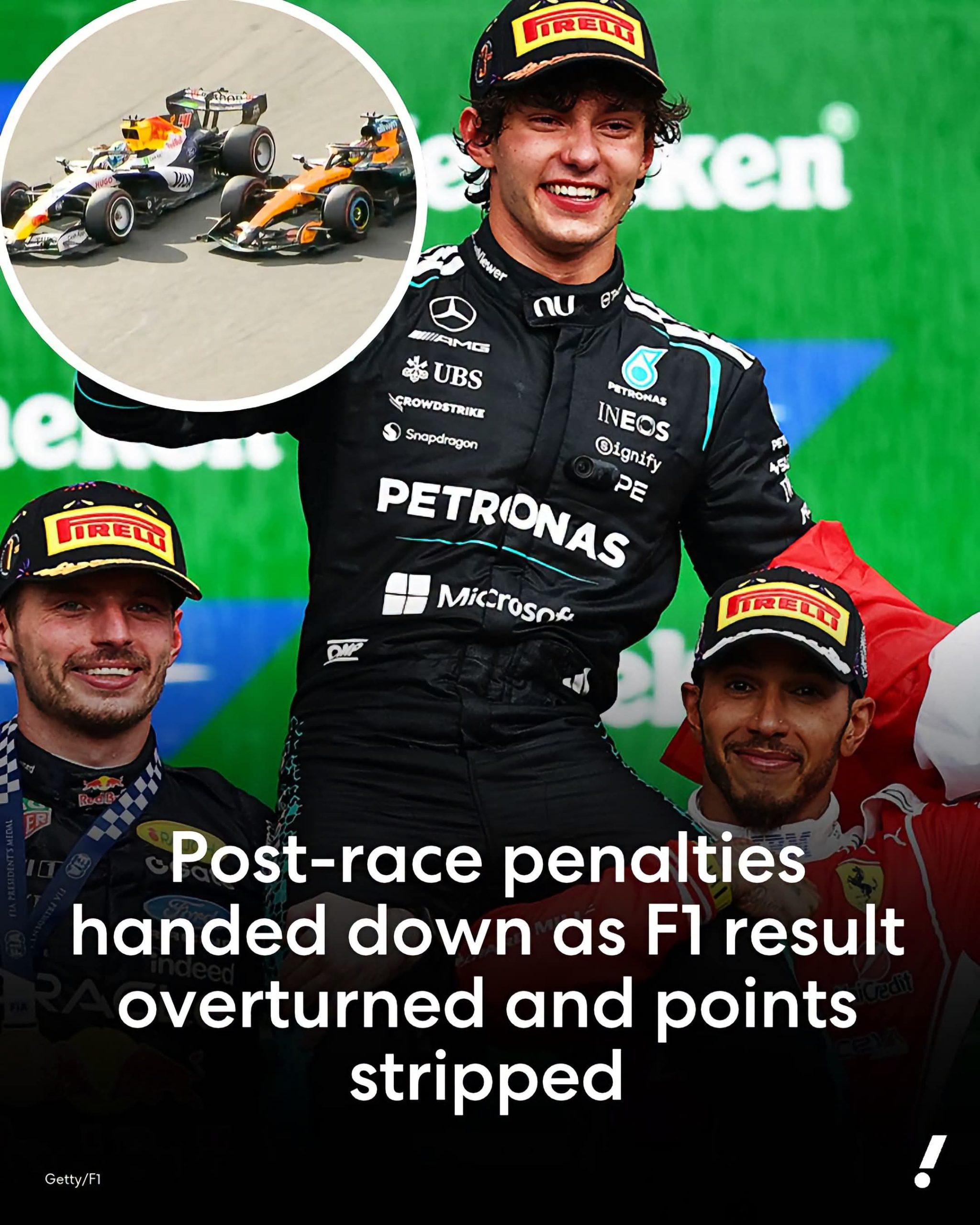
Mercedes has enjoyed considerable success in 2026, with Kimi Antonelli securing the drivers’ championship in Mexico. Yet the team’s decision to postpone its engine development highlights that winning the title does not mean every technical challenge has been solved.
MERCEDES RULES OUT BRAZILIAN GRAND PRIX ENGINE DEBUT
According to an exclusive report from GPblog, Mercedes will not introduce its new ADUO engine upgrade during this weekend’s Brazilian Grand Prix.
The team had previously considered several possible introduction dates, including Austin, Mexico, Brazil and Las Vegas. However, the new specification was absent from the cars at the previous two events, and Interlagos has now been ruled out as well.
That leaves the Las Vegas Grand Prix as the next available opportunity for Mercedes to deploy the improved components.
The decision is particularly important because the upgrade was expected to provide the team with another opportunity to strengthen its internal combustion engine performance.
Mercedes has already demonstrated impressive competitiveness throughout the campaign, but the additional development allowance gives its engineers an opportunity to address an area where the FIA identified room for improvement.
The delay does not necessarily suggest that the upgrade has failed or that Mercedes is experiencing a major technical crisis. It could simply reflect the team’s preference to introduce the components only when they are satisfied with their reliability and performance.
Nevertheless, the timing will attract attention because Mercedes has been working towards this development for several months.
WHY THE FIA APPROVED MERCEDES’ ADUO ENGINE UPGRADE
The FIA’s ADUO system was introduced to help manufacturers whose internal combustion engines fall behind the strongest competitors.
Following its first assessment, Mercedes was found to be approximately two to four per cent behind the leading internal combustion engine, identified in the report as Red Bull Ford Powertrains.
That assessment gave Mercedes an additional homologation opportunity for the 2026 season, alongside another upgrade opportunity for 2027.
The distinction between the internal combustion engine and the complete power unit is important.
Modern Formula 1 power units combine conventional combustion technology with sophisticated electrical systems. The FIA assessment focused on the combustion engine rather than the overall performance of every component.
Consequently, Mercedes receiving permission to develop its engine further does not automatically mean its entire power unit has been weaker than its rivals.
It does, however, demonstrate that the manufacturer has identified an area where additional development could produce meaningful gains.
For a team competing at the front of the grid, even relatively small improvements can make a difference across an entire race weekend.
GEORGE RUSSELL’S ENGINE SITUATION ADDS ANOTHER COMPLICATION
Russell has particular reasons to be interested in the upgrade.
Following the Singapore Grand Prix, the British driver identified Las Vegas as a possible venue for his next engine change. He was keen to combine that change with the introduction of Mercedes’ improved specification.
The original plan was to introduce the upgraded components while Russell was already taking a grid penalty for using additional engine parts.
However, an earlier engine problem disrupted that strategy.
According to GPblog, an engine failure during the Malaysian Grand Prix weekend forced Mercedes to install replacement components in Singapore. That meant Russell had to take a grid penalty before the improved specification was available.
The driver subsequently explained that the failed engine had completed six race weekends, although it had only been used during Sunday’s race in Hungary.
With several Grands Prix still remaining at that stage, Russell anticipated that another engine change would be necessary before the end of the season.
The situation illustrates how complicated power unit management can become during a long Formula 1 campaign.
Teams must balance performance, reliability and component allocation while avoiding unnecessary grid penalties. Introducing a new specification at the wrong event could leave a driver starting further down the grid without enough opportunities to recover.
WHY LAS VEGAS COULD BE THE PERFECT OPPORTUNITY
With Brazil removed from consideration, Las Vegas has emerged as the next possible destination for Mercedes’ upgraded engine.
The location could make strategic sense, particularly if Russell needs another engine change.
Rather than introducing the new specification at a circuit where overtaking is difficult, Mercedes may prefer an event where its driver has a better opportunity to recover positions after taking a grid penalty.
Las Vegas presents a different type of challenge from traditional circuits. Its long straights and heavy braking zones place considerable emphasis on power delivery, efficiency and straight-line performance.
That could make it an interesting environment in which to evaluate the improvements.
However, the team must also consider reliability. An engine upgrade is only valuable if it can deliver consistent performance without introducing new technical problems.
Mercedes will therefore need to be confident that the components are ready before committing to their introduction.
GPblog’s report confirms that Las Vegas is the next opportunity, not that the upgrade has officially been scheduled for that weekend.
MERCEDES’ CHAMPIONSHIP SUCCESS DOES NOT REMOVE ITS TECHNICAL CHALLENGES
Kimi Antonelli’s historic championship victory in Mexico has placed Mercedes in an extremely strong position.
The Italian secured his first drivers’ title at just 20 years and 68 days old, becoming the youngest world champion in Formula 1 history.
Mercedes has also benefited from a strong season from Russell, despite the British driver’s recent difficulties.
The latest standings supplied in the report show Antonelli leading with 380 points, while Russell sits fourth on 250 points.
However, the gap between championship success and technical perfection remains significant.
Mercedes can celebrate winning the drivers’ championship while continuing to improve its power unit. In fact, the ADUO allowance gives the team an opportunity to strengthen its technical position beyond the current season.
Ferrari, Red Bull and McLaren will also be monitoring developments closely. Any meaningful improvement from Mercedes could influence the competitive balance heading into the final races and provide valuable momentum for the next campaign.
The most important question is whether the upgrade will deliver enough performance to justify the additional development work.
WHAT THE DELAY MEANS FOR MERCEDES’ RIVALS
The decision to postpone the upgrade until at least the Las Vegas opportunity gives Mercedes’ competitors more time before they have to respond to the new specification.
Red Bull Ford Powertrains will be particularly interested because the FIA assessment identified its internal combustion engine as the benchmark against which Mercedes was measured.
Ferrari will also be watching developments, especially as the Scuderia continues to deal with internal pressure following the Hamilton-Leclerc controversy in Mexico.
For rival teams, the delay could provide a temporary advantage in terms of preparation and planning. However, it would be premature to assume that Mercedes has lost ground simply because the new parts are not arriving in Brazil.
A carefully developed upgrade introduced later could prove more valuable than rushing an unfinished package onto the car.
Mercedes has already demonstrated that it possesses the pace to compete for victories and championships. Its priority now should be ensuring that the next development step strengthens that advantage rather than compromising reliability.
BRAZILIAN GRAND PRIX BECOMES AN IMPORTANT TEST WITHOUT THE UPGRADE
The Brazilian Grand Prix will now provide another opportunity to evaluate Mercedes’ existing power unit specification.
Interlagos is a demanding circuit, with elevation changes, technical sections and a long start-finish straight. Its combination of corners and acceleration zones can expose weaknesses in both engine performance and energy deployment.
Russell will be particularly keen to put together a clean weekend after recent difficulties with deployment issues and disappointing results.
Antonelli, meanwhile, arrives as the newly crowned world champion, giving Mercedes an opportunity to demonstrate its strength even without the new engine components.
The absence of the upgrade does not mean Mercedes cannot compete for victory in Brazil. The team already has a competitive package, and its performance will depend on several factors beyond the combustion engine.
However, the decision will inevitably keep attention focused on Las Vegas.
THE BIG QUESTION IS WHETHER MERCEDES CAN MAKE THE UPGRADE COUNT
Mercedes has received an important opportunity from the FIA, but the delay in introducing its new engine specification means the team must wait longer to discover the full benefits.
For Russell, the development is especially relevant because his next engine change could provide an opportunity to combine a potential grid penalty with the improved components.
For Antonelli, the championship is already secured, but stronger technical performance would help Mercedes maintain its position at the front of Formula 1.
The Las Vegas Grand Prix is now the next possible stage for the long-awaited upgrade, although Mercedes has not definitively confirmed that the new specification will appear there.
One thing is clear: the Silver Arrows are not finished developing their 2026 package.
After securing the drivers’ championship, Mercedes now has another technical objective. If the upgrade delivers the expected gains, it could become an important advantage as the team prepares for the final stages of the season and the next era of Formula 1 competition.