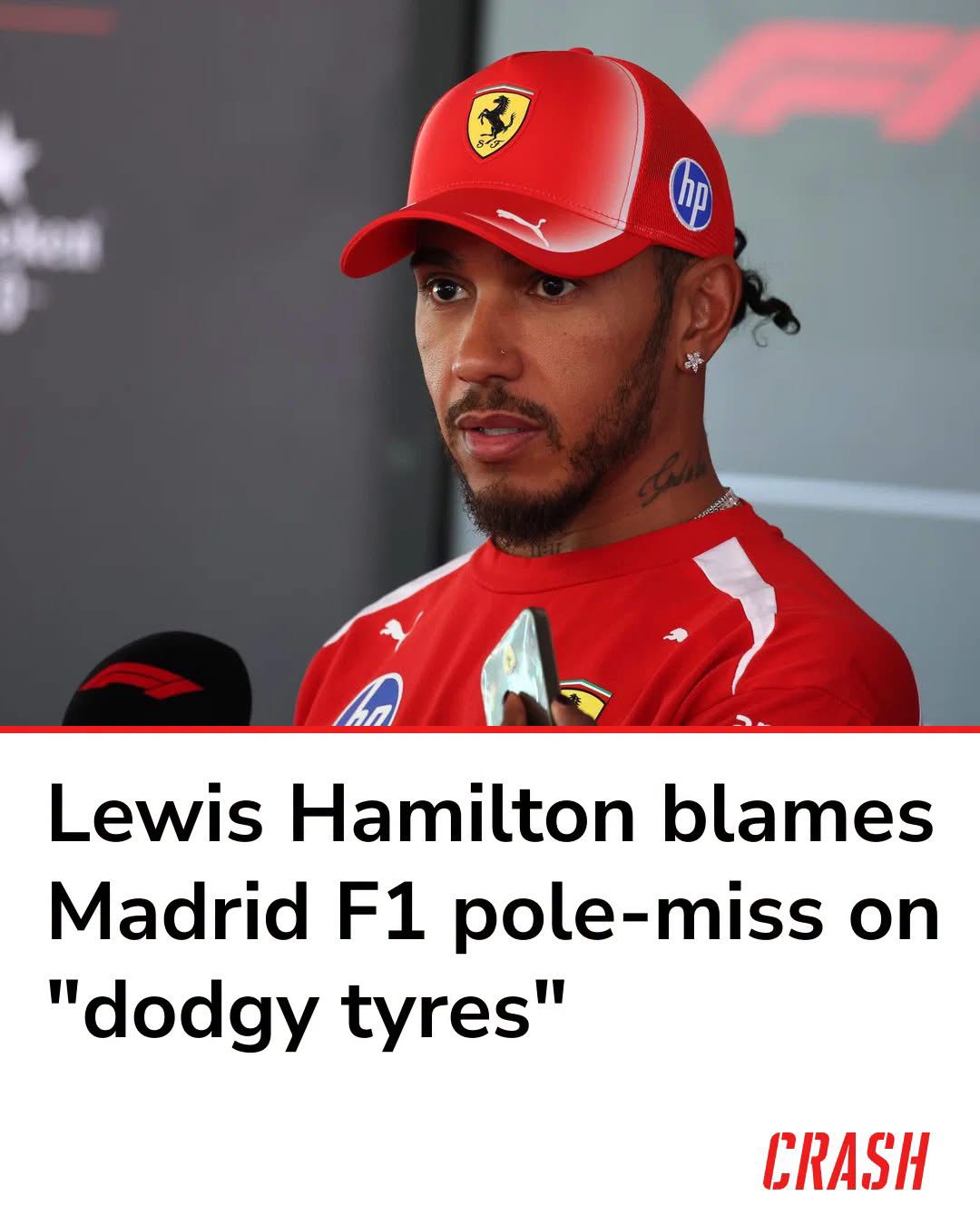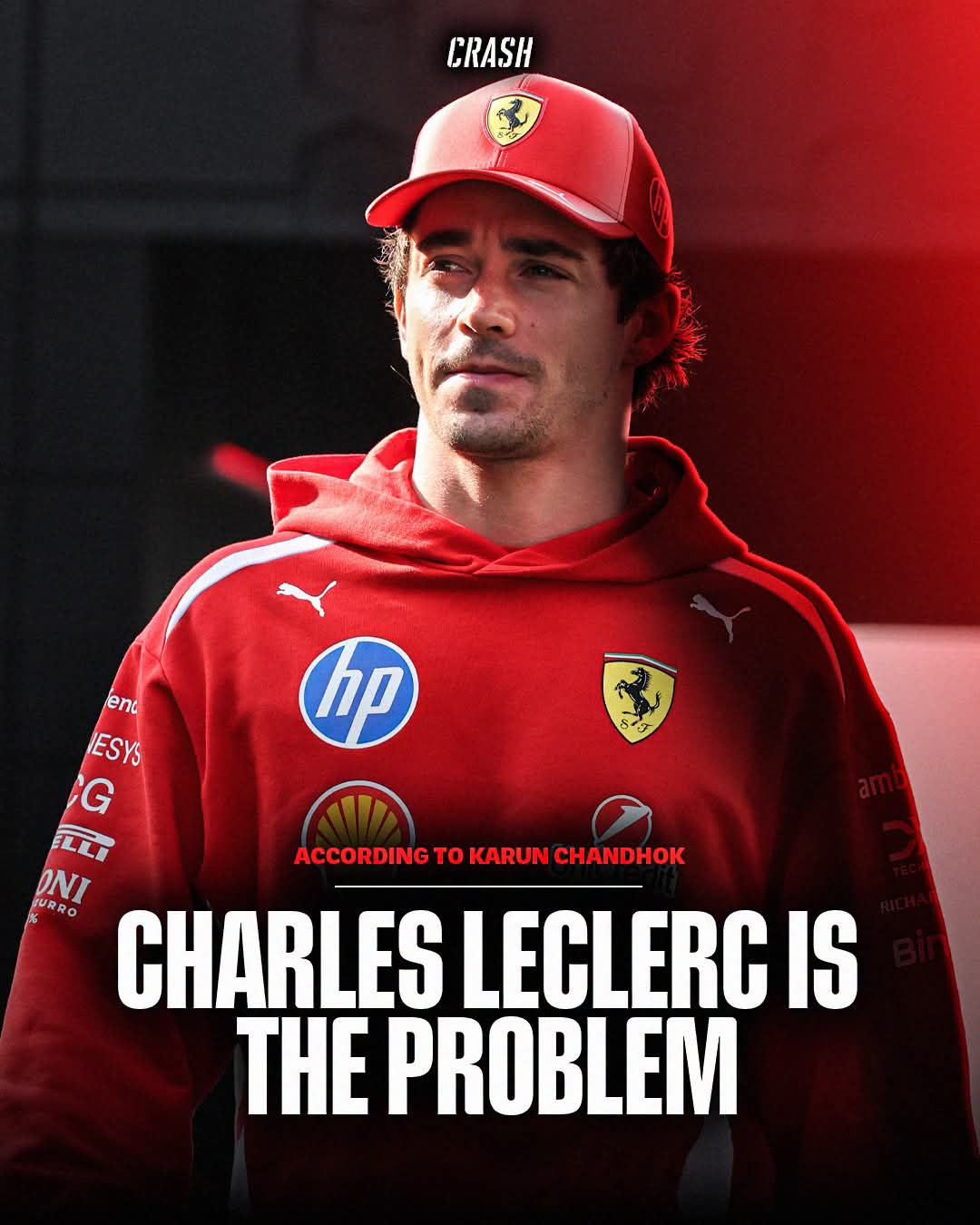
The growing tension inside Ferrari has taken another dramatic turn after former Formula 1 driver Karun Chandhok delivered a blunt assessment of Charles Leclerc following his controversial battle with Lewis Hamilton at the Mexico City Grand Prix. Chandhok believes the Monegasque must change his approach to racing his teammate, warning that Ferrari could continue paying a heavy price if the situation remains unresolved.
The latest criticism arrives at a particularly sensitive moment for Ferrari, with Hamilton openly demanding serious discussions following the incident in Mexico. The seven-time world champion believes the aggressive confrontation cost the Scuderia a potential victory and possibly a one-two finish, raising fresh questions about whether Ferrari’s two leading drivers can operate together without damaging the team’s championship ambitions.
KARUN CHANDHOK GIVES A DIRECT ANSWER ON LECLERC
During the latest episode of the F1 Show podcast, Sky Sports F1 commentator David Croft asked Chandhok whether Leclerc was the problem following Ferrari’s latest internal controversy.
Chandhok’s response was immediate.
“Yes,” he said.
The former Formula 1 driver subsequently explained that Leclerc’s aggressive approach had created situations in which Hamilton suffered the consequences, while Ferrari itself lost valuable opportunities.
According to Chandhok, the Mexico incident was not an isolated concern. He pointed towards previous clashes between the Ferrari teammates, suggesting that a pattern was beginning to emerge whenever the two drivers found themselves fighting closely on track.
His criticism was particularly significant because it focused not simply on Hamilton’s frustration but on the broader consequences for Ferrari.
When teammates battle aggressively, the damage can extend beyond lost positions. A confrontation between two drivers competing for the same team can compromise strategy, expose the car to unnecessary risks and potentially hand victories to rival constructors.
For a team with Ferrari’s ambitions, those consequences are becoming increasingly difficult to ignore.
WHAT REALLY HAPPENED BETWEEN HAMILTON AND LECLERC IN MEXICO?
The controversy unfolded during the opening lap of the Mexico City Grand Prix, when Leclerc attempted an aggressive move around the outside of Hamilton at Turn 4.
The Ferrari teammates found themselves fighting intensely, with Leclerc cutting the corner during the manoeuvre and emerging ahead. Hamilton subsequently lost ground in the confusion, allowing Max Verstappen to take advantage of the situation.
The incident immediately became one of the biggest talking points of the race.
Leclerc received a five-second penalty for the corner-cutting incident, eventually finishing fourth after Verstappen claimed victory and Hamilton secured second place.
Hamilton was particularly frustrated because he believed Ferrari had lost a potentially historic opportunity through its drivers fighting each other rather than protecting the team’s interests.
The seven-time world champion subsequently called for serious discussions within Ferrari, making it clear that he was unhappy with how the situation unfolded.
His accusation that Leclerc approaches certain battles with a “do or die” mentality further intensified the controversy.
WHY CHANDHOK BELIEVES LECLERC MUST CHANGE
Chandhok’s argument went beyond simply blaming Leclerc for the Mexico incident.
He acknowledged that Formula 1 drivers operate under extraordinary pressure, particularly during the opening lap when adrenaline levels are extremely high.
The former driver explained that racers can experience heart rates approaching 170 beats per minute during these moments, making instinctive reactions particularly important.
In those circumstances, drivers may not always make decisions with the same level of calculation they would demonstrate outside the cockpit.
However, Chandhok believes that understanding the circumstances does not eliminate Leclerc’s responsibility.
He suggested that the Ferrari driver needs to develop a calmer approach when racing Hamilton, particularly because the relationship between teammates is fundamentally different from a battle against an opponent from another team.
That distinction is crucial.
A driver might reasonably accept significant risks when fighting a Red Bull or Mercedes rival because the objective is to defeat a competing constructor.
Against a teammate, however, the consequences can become more complicated.
Both drivers are working towards the same team’s success, and an aggressive confrontation can undermine the collective objective.
Chandhok believes Leclerc must recognise that difference before another costly incident occurs.
FERRARI MAY NEED TO FORCE ITS DRIVERS INTO TEAM RULES
One of the most revealing aspects of Chandhok’s assessment was his suggestion that Ferrari may need to intervene more directly.
He believes Leclerc’s aggressive racing instincts do not naturally encourage him to treat Hamilton differently from other competitors.
That means Ferrari cannot necessarily rely on its drivers to resolve the problem themselves.
Chandhok argued that the team must become involved and actively encourage Leclerc to reconsider his approach when fighting his teammate.
This could involve clearer racing instructions, more defined expectations regarding wheel-to-wheel battles and stronger communication before races.
Ferrari’s management now faces a difficult balancing act.
Hamilton and Leclerc are both elite drivers with strong competitive instincts. Neither is likely to willingly surrender positions simply because they share the same garage.
However, allowing unrestricted battles between them could create consequences that outweigh any individual driver’s immediate advantage.
The challenge for Ferrari is establishing rules that protect the team’s interests without destroying the competitive freedom that makes both drivers successful.
NICO ROSBERG ALSO QUESTIONS LECLERC’S RACING APPROACH
Chandhok was not the only prominent Formula 1 figure to criticise Leclerc following the Mexico controversy.
Former world champion Nico Rosberg also delivered a sharp assessment of the Ferrari driver’s involvement in the incident.
Speaking to Sky Sports F1, Rosberg suggested that Leclerc had repeatedly been responsible for controversial confrontations with Hamilton.
He pointed towards the battles in Monza and Mexico, questioning why the Monegasque continued to find himself at the centre of such incidents.
Rosberg’s comments added another layer to the debate because they suggested the Mexico clash was part of a wider pattern rather than an isolated mistake.
However, the controversy also raises questions about whether Hamilton’s experience and competitive reputation are influencing how these incidents are interpreted.
Both drivers have their own perspectives, and Ferrari must examine the circumstances carefully rather than allowing public criticism to dictate its internal decisions.
LEWIS HAMILTON AND CHARLES LECLERC’S RELATIONSHIP UNDER PRESSURE
The Ferrari partnership was expected to become one of the most compelling combinations in modern Formula 1.
Hamilton brought championship experience, technical feedback and an extraordinary record of success, while Leclerc represented Ferrari’s long-term hopes and established himself as one of the fastest qualifying drivers on the grid.
Their combination was supposed to strengthen Ferrari’s chances of returning to championship-winning form.
Instead, the Mexico incident has placed their relationship under renewed scrutiny.
Hamilton’s frustration suggests that the seven-time champion believes the team must address the issue before it becomes more damaging.
For Leclerc, the criticism presents another challenge. He must demonstrate that his competitive aggression can coexist with Ferrari’s collective ambitions.
Neither driver can afford to allow the situation to become a personal battle that overshadows the team’s objectives.
If Ferrari’s management fails to establish a workable solution, the tension could become a recurring storyline throughout the remainder of the season.
FERRARI’S BIGGEST PROBLEM MAY NOT BE SPEED
Ferrari’s situation illustrates an important reality in Formula 1: having two exceptionally fast drivers does not automatically guarantee success.
The strongest teams are often those capable of managing their drivers’ ambitions while ensuring that individual battles do not compromise the overall result.
Mercedes, McLaren and Red Bull have all faced difficult moments involving teammates, demonstrating how quickly internal competition can become a major strategic issue.
Ferrari now needs to decide whether its current approach provides enough protection for the team’s objectives.
The Mexico Grand Prix demonstrated how a single opening-lap confrontation could change the competitive picture.
Instead of concentrating on maximising the result, Ferrari found itself dealing with penalties, lost positions and public criticism.
That is precisely the type of situation championship contenders must avoid.
THE BRAZILIAN GRAND PRIX COULD BECOME A CRUCIAL TEST
With the Brazilian Grand Prix approaching, Ferrari faces an immediate opportunity to demonstrate whether the Mexico controversy has produced meaningful changes.
The team does not necessarily need to eliminate competition between Hamilton and Leclerc.
Both drivers are expected to fight aggressively, and that competitive spirit remains essential to Formula 1.
What Ferrari needs is a clear understanding of where aggressive racing ends and unnecessary risks begin.
Chandhok’s comments suggest that Leclerc must take greater responsibility for managing those moments, particularly when Hamilton is involved.
The team’s management must also ensure that both drivers understand the consequences of damaging Ferrari’s results through internal battles.
The coming races could therefore become an important test of Ferrari’s ability to manage its biggest competitive asset and potentially its most difficult internal challenge.
If Hamilton and Leclerc can resolve their differences, Ferrari could emerge stronger.
If the tension continues, however, the Scuderia risks turning its driver pairing into a major distraction at precisely the moment when unity matters most.
For Chandhok, the message is unmistakable: Leclerc’s aggression may be part of what makes him an exceptional Formula 1 driver, but Ferrari cannot afford to let that instinct repeatedly undermine its own ambitions.