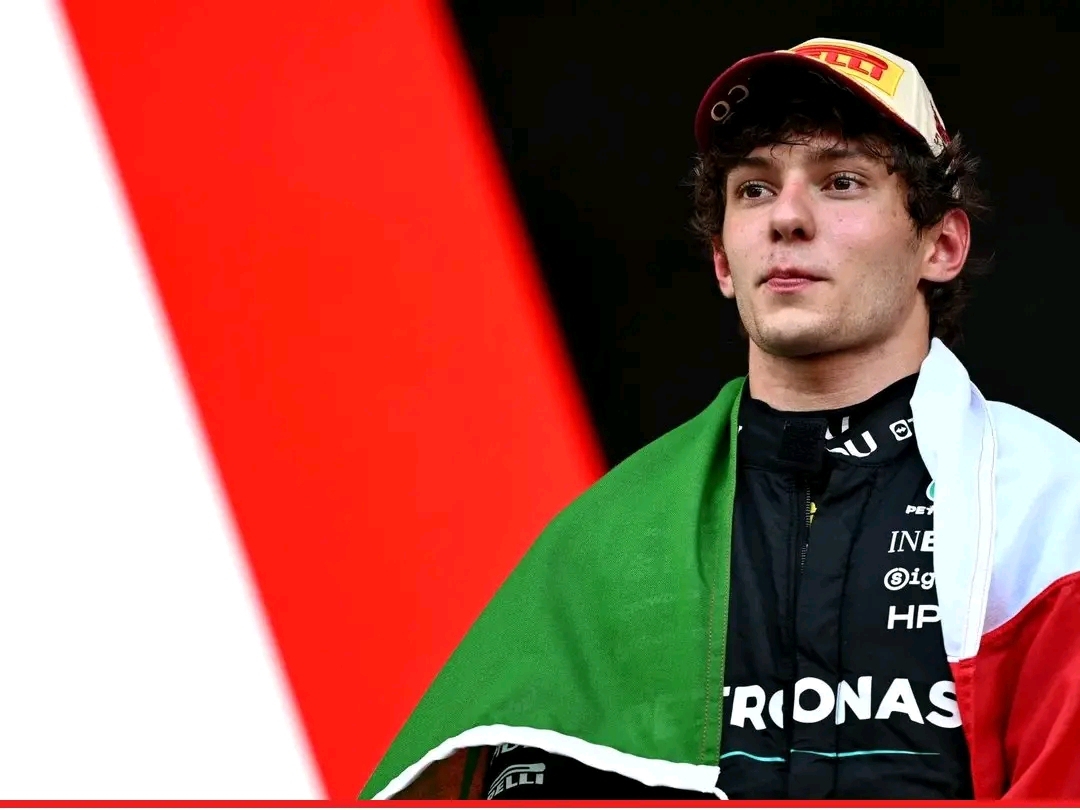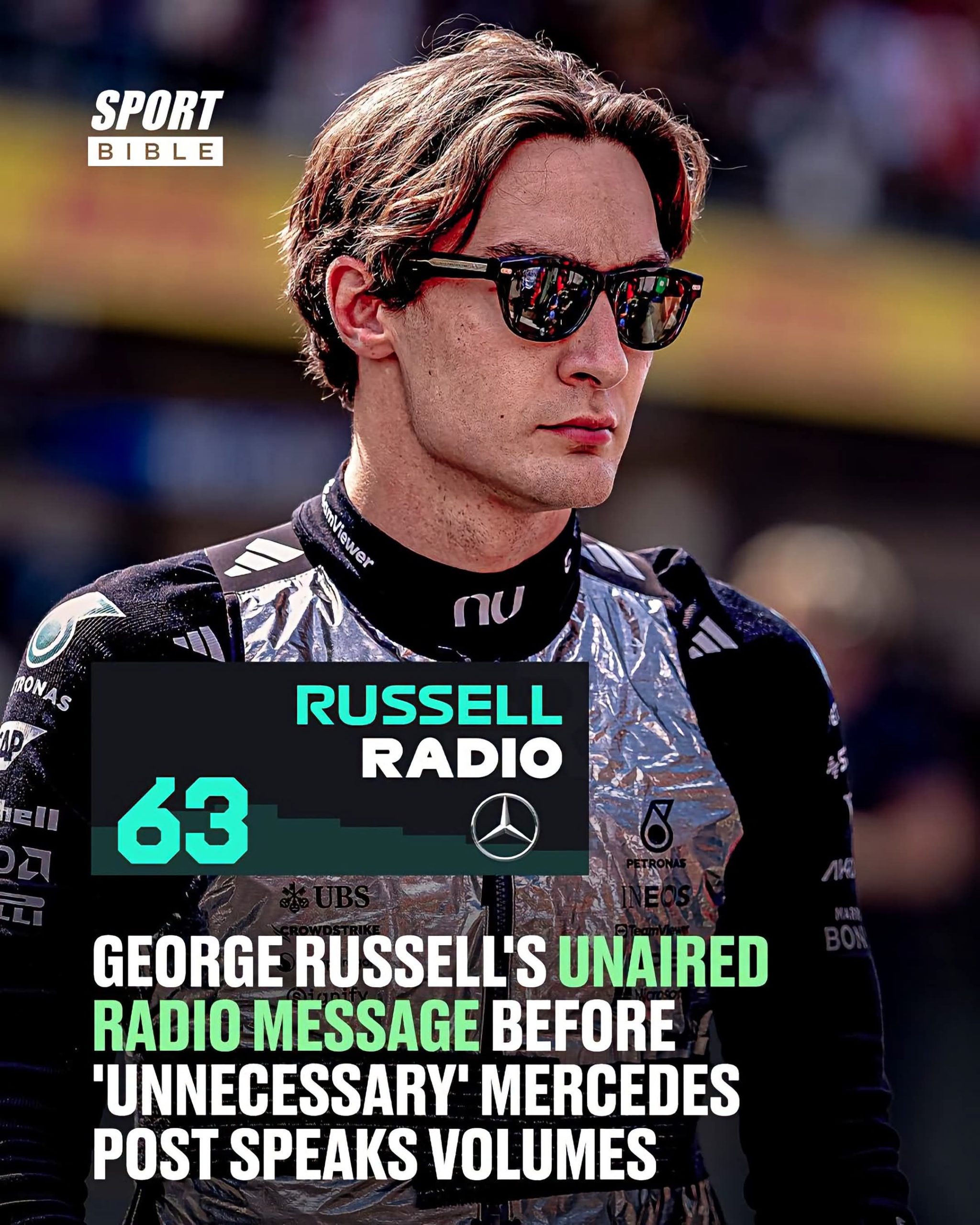
George Russell’s frustration at Mercedes reached a boiling point during the Mexican Grand Prix, with an unaired radio exchange revealing just how deeply the British driver was struggling after another devastating technical setback. While Kimi Antonelli celebrated becoming Formula 1’s youngest-ever world champion, Russell was left confronting another painful weekend that exposed the growing gap between his championship ambitions and the reality of his 2026 campaign.
The Mercedes driver finished sixth in Mexico after starting second, losing several positions almost immediately following a battery deployment problem that compromised his launch. His disappointment was compounded by a 10-second penalty for colliding with Isack Hadjar at Turn 6 on the opening lap, effectively destroying his chances of recovering a competitive result. However, the most revealing moment of the weekend came through a radio message that television viewers never heard during the live broadcast.
Russell’s reaction, combined with Toto Wolff’s apology over the team radio, has added another layer to the ongoing debate surrounding Mercedes’ reliability problems and the psychological pressure facing the driver who began the season as a serious championship contender.
GEORGE RUSSELL’S UNAIRED RADIO MESSAGE EXPOSES MERCEDES FRUSTRATION
The Mexican Grand Prix offered another painful reminder of how quickly a Formula 1 race can unravel when technical problems strike at the worst possible moment.
Russell arrived at Autodromo Hermanos Rodriguez with expectations of challenging at the front after securing second position on the starting grid. Instead, his race immediately descended into frustration when his Mercedes suffered a deployment problem on the opening straight.
The issue prevented him from using the full electrical power available during acceleration, leaving him vulnerable as the field charged toward Turn 1.
Russell quickly demanded answers from his race engineer, Marcus Dudley, questioning what had happened during the launch.
“Mate, what was..? What was that about?” Russell asked on the opening lap.
His frustration was understandable. Starting from the front row creates an opportunity to control the race, particularly at a circuit where positioning during the opening corners can significantly influence the remainder of the Grand Prix.
Instead, Russell found himself fighting to recover lost ground before the race had properly begun.
The situation became even more complicated following his collision with Hadjar, which resulted in a 10-second penalty and additional damage concerns.
Russell subsequently instructed Mercedes to inspect his front-left area and front wing, highlighting the immediate uncertainty surrounding his car.
However, his most emotional response came when he continued questioning the deployment failure.
“Mate, how is this..? Impossible! No. Ah. I’m gonna shut the f**k up,” Russell said.
The message captured a driver who appeared increasingly frustrated by circumstances outside his control.
TOTO WOLFF’S APOLOGY SPEAKS VOLUMES ABOUT THE MERCEDES SITUATION
One of the most significant moments in the radio exchange came when Mercedes team principal Toto Wolff intervened.
“Sorry, George, for that,” Wolff responded.
The apology was particularly revealing because Russell’s deployment issue was not an isolated incident during the 2026 campaign.
The British driver had previously experienced a similar problem at the Belgian Grand Prix, making the Mexican setback even more difficult to accept.
For a driver competing at the highest level, technical reliability is essential. Formula 1 cars depend on sophisticated energy deployment systems, and any malfunction can immediately compromise acceleration, overtaking opportunities and race strategy.
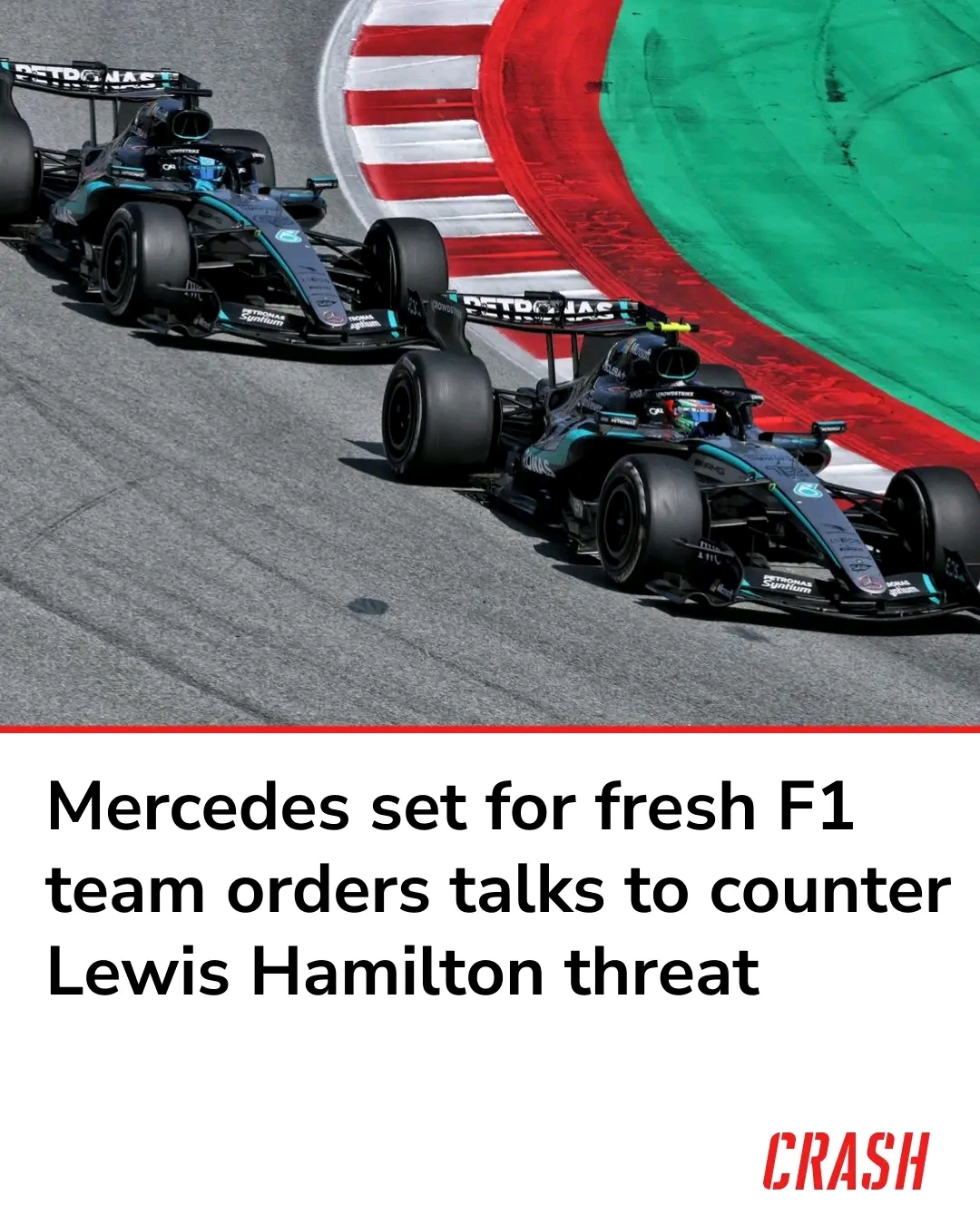
Mercedes’ championship-winning machinery has generally provided Antonelli with the platform to dominate the season, but Russell’s experience demonstrates that even a competitive car can become frustrating when its systems fail at critical moments.
The apology from Wolff may have been intended to acknowledge the team’s responsibility and calm his driver, but it also underlined how seriously Mercedes understood the impact of the failure.
Russell needed answers, not simply reassurance.
THE OPENING LAP THAT DESTROYED RUSSELL’S MEXICO GP
Russell’s problems began before he had the opportunity to establish himself in the race.
Starting second, he initially appeared well positioned to challenge for victory or at least a podium finish. However, the deployment failure immediately compromised his acceleration, allowing competitors to gain positions.
The opening lap then became increasingly chaotic.
Russell’s collision with Isack Hadjar at Turn 6 resulted in a 10-second penalty, leaving him with an additional obstacle in a race that was already slipping away.
The combination of lost positions, technical limitations and a penalty meant that Russell could no longer realistically fight for the result he had targeted.
Although sixth place still contributed valuable points toward Mercedes’ constructors’ championship campaign, it represented another disappointing outcome for a driver whose season had initially promised considerably more.
The frustration was not simply about finishing sixth.
It was about watching another race unravel before he could properly demonstrate his potential.
KIMI ANTONELLI’S WORLD TITLE CELEBRATION MADE RUSSELL’S DEFEAT EVEN MORE PAINFUL
The contrasting fortunes of Mercedes’ two drivers have become one of the defining stories of the 2026 Formula 1 season.
Antonelli arrived in Mexico on the verge of history and delivered the performance required to secure the championship.
His podium finish behind Max Verstappen and Lewis Hamilton confirmed his position as the youngest world champion in Formula 1 history, aged 20 years and 68 days.
For Mercedes, the achievement represented a remarkable reward after years of rebuilding following its previous championship dominance.
For Russell, however, the same weekend carried a completely different emotional meaning.
The British driver had entered the campaign with genuine championship ambitions and initially appeared capable of challenging for the title.
Instead, Antonelli emerged as the dominant force within the team, leaving Russell increasingly frustrated by technical problems, inconsistent performances and missed opportunities.
The difference between celebrating a championship and finishing sixth with another deployment issue could hardly have been more dramatic.
That contrast has inevitably intensified questions about Russell’s future position within Mercedes and whether he can recover the form required to challenge his younger teammate.
GEORGE RUSSELL’S EMOTIONAL MOMENT WITH TOTO WOLFF REVEALS THE PRESSURE
Following the Mexican Grand Prix, footage circulated on social media showing Wolff consoling an emotional Russell.
The moment attracted significant attention because it appeared to capture the human consequences of a difficult season.
Russell has spent years working toward a position where he could fight for the Formula 1 world championship. His progression through Williams and eventually into Mercedes was built around the expectation that he would become a leading contender once the team returned to competitive form.
The 2026 campaign initially appeared to offer precisely that opportunity.
However, the emergence of Antonelli as a championship-winning teammate has fundamentally changed the narrative surrounding Russell.
Instead of being celebrated as Mercedes’ leading championship challenger, he has increasingly found himself discussing missed opportunities and disappointing weekends.
Wolff’s decision to console him after Mexico reflected the emotional intensity of the situation.
It also demonstrated that Mercedes understands the importance of supporting Russell through a difficult period rather than allowing frustration to undermine the team’s broader objectives.
RUSSELL’S HEARTFELT STATEMENT CONFIRMS HIS 2026 NIGHTMARE
Russell’s emotional radio exchange was followed by an unusually honest reflection on his season.
Writing on Instagram ahead of the final four races, the British driver admitted that his campaign had quickly unravelled after an encouraging start.
“This season started off exactly how I had hoped but it very quickly unravelled with tough luck and poor performances,” Russell explained.
He also acknowledged that 2026 had become the first proper season of his career in which he experienced more bad days than good.
The admission was particularly striking because Russell has generally maintained a confident public image throughout his Formula 1 career.
His comments suggested that the accumulated pressure of technical setbacks, inconsistent performances and championship disappointment had become increasingly difficult to manage.
Russell also admitted that picking himself up week after week had been challenging, while confusion had frequently become part of his experience.
His conclusion was equally revealing.
“All I know is that I’ve given it my all and 2026 was not meant to be my year.”
That statement effectively closed the door on his championship ambitions while acknowledging the difficult circumstances that had shaped his season.
MERCEDES MUST ADDRESS RUSSELL’S PROBLEMS BEFORE THE BRAZIL GP
The Brazilian Grand Prix now represents another opportunity for Mercedes to restore confidence and demonstrate that its technical problems are being addressed.
With the constructors’ championship still a priority, Russell’s contribution remains important even though Antonelli has already secured the drivers’ title.
Mercedes cannot afford to overlook the importance of having both drivers consistently scoring strong results.
Russell remains an experienced competitor capable of winning races, and his three victories during the 2026 campaign demonstrate that his underlying ability has not disappeared.
However, another deployment failure in Brazil would inevitably intensify criticism of Mercedes’ reliability management.
The team must ensure that Russell receives the technical support necessary to compete without repeatedly encountering problems that compromise his races.
At the same time, Russell will need to demonstrate that he can recover psychologically from the disappointment of losing a championship battle to his teammate.
The final four races provide an opportunity to rebuild momentum, protect Mercedes’ constructors’ championship position and begin preparing for a much more demanding challenge in 2027.
THE BIG QUESTION: CAN GEORGE RUSSELL RECOVER FROM ANTONELLI’S HISTORIC SUCCESS?
Antonelli’s championship victory has created a defining moment in Russell’s career.
The British driver now faces the challenge of rebuilding his confidence while accepting that his teammate has achieved something extraordinary at an incredibly young age.
That does not automatically mean Russell’s Mercedes future is in danger, nor does it suggest that Antonelli’s success has permanently ended his own championship ambitions.
Formula 1 careers are often shaped by difficult seasons, and experienced drivers have repeatedly demonstrated the ability to return stronger after setbacks.
Martin Brundle has already suggested that Russell could be emotionally affected by the season, describing him as potentially “broken” and warning that he must find another level in 2027.
The challenge is therefore not simply about improving his qualifying performances or avoiding technical problems.
It is about rediscovering the confidence and consistency that made him a championship contender in the first place.
Mercedes has a world champion in Antonelli, but it also has a driver in Russell who desperately needs a fresh start.
The Brazilian Grand Prix will not erase the disappointment of Mexico, but it could provide the first meaningful step toward recovery.
For Russell, the remaining races are no longer about winning the 2026 championship.
They are about proving that one difficult season has not changed his ability to fight at the very top of Formula 1.